



According to DSHS, its ‘restoration services’ involve a combination of medical care and classes about legal proceedings
Last week, a group of 22 county prosecutors from around Washington filed a lawsuit against the Inslee Administration’s state Department of Social and Health Services (DSHS) over the agency’s decision to stop treating mentally-ill criminal defendants who’ve had their charges dropped because they’re not well enough to understand what’s going on in court.
According to DSHS, its “restoration services” involve a combination of medical care and classes about legal proceedings. If the state fails to provide that treatment, or if it fails to restore a criminal defendant to competency, then prosecutors can dismiss the charges against the defendant and try to get that person treatment through the civil side of the judicial system. The dismissal of charges makes the person a “civil conversion patient.”
Currently, incompetent criminal defendants in Washington wait about seven months before getting treatment at one of the state’s mental hospitals. State law and federal court orders call for a maximum wait time of seven days.
DSHS plans to release approximately 200 civil conversion patients statewide — and at least 45 in King County alone — by September 7, with little formal notice given to local authorities. One King County attorney referred to DSHS’s plan as a “fire sale release.” The earliest the counties’ lawsuit will go before a judge is September 8. The day after the fire sale.
In their lawsuit, the counties argue denying mental-health care to people whose charges have been dropped does several bad things:
- it violates state law on restoration of competence for criminal defendants (RCW 10.77.088);
- it places an untenable strain on county resources; and
- it puts public safety at risk.
The counties’ press release announcing the lawsuit went on to state:
“DSHS claims that its refusal to follow state law with conversion patients is the fault of the federal court. However, there is nothing in the court’s orders that interferes with DSHS’s obligation or ability to provide…restorative services.”
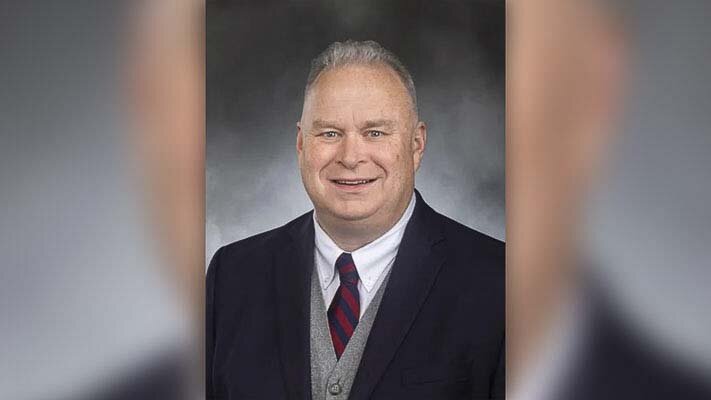
Having reviewed the counties’ lawsuit, WSRP Chairman Jim Walsh issued the following statement in response: “Another week, another lawsuit over the failures of the Inslee Administration. Right now, it’s 22 counties versus Inslee’s bureaucrats at DSHS.
“When charges are dropped against a criminal defendant who’s been found by the courts to be mentally incompetent — and the state won’t give that person mental-health care at a psychiatric facility like Western State Hospital — Inslee’s bureaucrats just send the person back to the streets.
“This latest lawsuit is separate from the older and higher-profile Trueblood v. DSHS case. But the two lawsuits are connected. A few months ago, the federal judge hearing the Trueblood case found the Inslee Administration and DSHS in contempt and ordered them to pay more than $100 million in fines for failing to provide timely psychiatric services to mentally-ill people forced to wait in jail. Now, the Inslee Administration is blaming that $100 million fine for its ongoing failures. Specifically, one of its spokespeople has said, in response to questions about the more-recent lawsuit from the counties: the ‘federal court has substantially impaired our ability to treat and care for [civil conversion] patients such as these.’ This finger-pointing is disappointing—but familiar. With the current governor, his failures are always someone else’s fault.
“And the story gets worse. In a January 2023 letter, the Washington Superior Court Judges’ Association (SCJA) informed DSHS that its failure to deliver care to civil conversion patients ‘may worsen Washington state’s public safety crisis’ and ‘contributes substantially to a scenario in which individuals requiring clinical treatment are released with no accountability for criminal, often violent, behavior.’ DSHS has ignored that warning.
“The people of Washington have suffered the Inslee Administration’s bureaucratic failures for too long. We’re living with the consequences—rampant drug abuse, inhumane treatment of mentally-ill people and violent crime rising in our neighborhoods. People who are too mentally ill to stand trial for their criminal actions shouldn’t be turned out into the streets. They should be in Western State Hospital.
“The Trueblood case and the more recent lawsuit from the 22 county prosecutors are the first steps in a reckoning. We need better state laws and public policy. We need a change in Olympia and better results out of D.C. We need a return to common sense in our beautiful state.”
The counties whose prosecutors have joined the recent lawsuit include: Asotin, Clallam, Cowlitz, Douglas, Grant, Grays Harbor, Island, Jefferson, King, Kitsap, Klickitat, Lewis, Lincoln, Pacific, Pierce, Skagit, Skamania, Snohomish, Spokane, Thurston, Whatcom, and Yakima Counties.
Also read:
- Fiscal fallout: $375 million bond debt indirectly funding operating budget
 Shifting $375 million from a loan fund impacts local infrastructure as Washington state covers operating costs with bond debt, prompting concern among officials and advocacy groups.
 - Lawsuit aims to block new eligibility requirements for WA sheriffs
 Four sheriffs are suing over a state law that sets new eligibility rules, arguing it undermines voter authority by allowing removal for certification issues.
 - Opinion: The growing gap between public voice and political power
 Todd Myers describes how large-scale protest and sign-ins often fail to sway state leaders, and argues authentic influence is most likely found through local action.
 - City of Battle Ground seeks applicants for Salary Commission vacancy
 Battle Ground seeks a resident to join its independent Salary Commission, which reviews compensation and health benefits for local elected officials through 2027.
 - Opinion: Who is winning the race for affordable power?
 Hydroelectric power keeps Washington competitive, but new laws and carbon pricing are driving up electricity costs for residents each year.
 - Vancouver Fire Department assists with Columbia River Marina fire response
 Vancouver Fire Department joined Clark-Cowlitz and Scappoose crews to help fight a vessel and dock fire at Goble Marina, assisting in river operations where one boat sank and another was partially submerged.
 - White House govt. Funding request for 2027 cuts $73 billion
 President Trump’s budget seeks to boost defense funding while cutting $73 billion from agencies like the EPA, NASA, and Agriculture, prompting sharp criticism from Democratic leaders.
 wpDiscuz
