


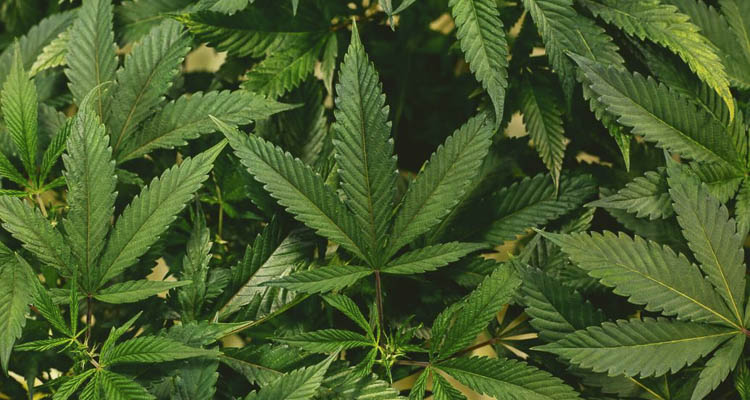
The Justice Department confirmed that the Drug Enforcement Agency is proposing to move marijuana from Schedule I status to Schedule III status under the Controlled Substances Act
Brett Davis
The Center Square Washington
The Biden administration’s move to reclassify marijuana as a lower-risk substance has broad implications for the cannabis industry at large, including in Washington state, a pioneer in the legal cannabis industry.
On Dec. 6, 2012, Washington became the first state in the nation to legalize recreational use of marijuana and the first to allow recreational marijuana sales, alongside Colorado. Washington had previously legalized medical marijuana in 1998.
On Tuesday, the Justice Department confirmed that the Drug Enforcement Agency, agreeing with the U.S. Department of Health and Human Services, is proposing to move marijuana from Schedule I status to Schedule III status under the Controlled Substances Act.
Schedule I status means the federal government thinks there is no accepted medical use and a high potential for abuse. Schedule I drugs include heroin and LSD. Federal law prohibits the cultivation and possession of Schedule I drugs, except for approved research studies.
Marijuana has been a Schedule I drug since 1970.
Schedule III substances are considered to have medical use and moderate to low potential for physical and psychological dependence. Prescription drugs such as anabolic steroids, ketamine and testosterone are in the Schedule III category.
The Justice Department’s proposal means the federal government would recognize the medical use of cannabis, but wouldn’t legalize it for recreational use.
Aaron Pickus, media relations head at the Washington CannaBusiness Association, an organization representing Washington’s licensed and regulated cannabis and hemp business, applauded the federal government’s expected change in marijuana classification.
“This is an important incremental step that will one day improve the lives of patients and better support economic opportunity for those working and investing in Washington’s safe, quality-controlled and regulated cannabis marketplace,” he said in an email to The Center Square.
According to Marijuana Business Daily, Washington’s marijuana market has cooled a little recently but is still robust.
The Evergreen State sold about $1.13 billion in adult-use marijuana through November 2023, down just slightly from the $1.18 billion it sold during the same period in 2022.
Pickus pointed out that moving marijuana to Schedule III has major tax policy implications for state-legal cannabis businesses. If reclassification is ultimately implemented, marijuana businesses can officially take federal tax deductions that they’ve been barred from under an Internal Revenue Service code known as 280E.
“This decision also begins the process to resolve the issue of 280E, a longstanding challenge for legal businesses who were blocked from making normal tax deductions on their federal returns,” Pickus explained.
However, he pointed out that the federal government still needs to address the fact that many financial institutions don’t want anything to do with money from the marijuana industry for fear it could expose them to legal trouble from the federal government.
“We call on lawmakers to advance additional opportunities to support a safe, viable legal marketplace that keeps products out of the hands of kids by adopting the SAFER Banking Act, removing Washington’s ban on access to capital for local businesses and further aligning the regulations governing the legal cannabis industry with the same expectations that workers and business owners in any other legal industry are afforded,” Pickus said.
The Secure and Fair Enforcement Regulations, or SAFER, Banking Act would allow banks to provide services to the cannabis industry in those states where it’s now legal.
Conventional wisdom is that marijuana businesses in Washington and other states are susceptible to and targeted by criminals because they are largely all-cash enterprises.
Another ongoing challenge faced by the marijuana industry in Washington is the growing potency of cannabis products.
This report was first published by The Center Square Washington.
Also read:
- Opinion: Workers need their wages more than the state’s paid-leave program does
 Washington’s paid-leave payroll tax stands at 1.13% and is projected to hit its 1.2% cap by 2027, with some lawmakers eyeing a 2% rate.
 - Opinion: Fatal flaws of Socialism – The knowledge problem
 Cargill argues no government, committee, or computer can possess the dispersed knowledge that markets coordinate through prices.
 - Battle Ground Public Schools seeks citizen advisory committee members
 Battle Ground Public Schools invites parents and residents to join its Citizens Advisory Committee, with open meetings Sept. 10 and Oct. 8.
 - Ridgefield Main Street unveils new Greely Building photo panels
 Large-scale photo panels on the Greely Building showcase Ridgefield’s wildlife refuge, Chinookan Plankhouse, and dragon boat traditions.
 - Vancouver Police investigate fatal collision
 A 74-year-old man in a motorized wheelchair died after a pickup truck struck him in a Vancouver intersection Wednesday evening.
 - Opinion: ‘It may be time for McCleary 2.0’
 Dick Rylander examines the Battle Ground School District’s proposed $116,830,000 three-year EP&O levy heading to the November 2026 ballot.
 - Washington Policy Center tax expert warns that new income tax will affect everyone
 Ryan Frost argues Washington’s new 9.9% income tax has a $1M deduction that a simple legislative majority could remove.