



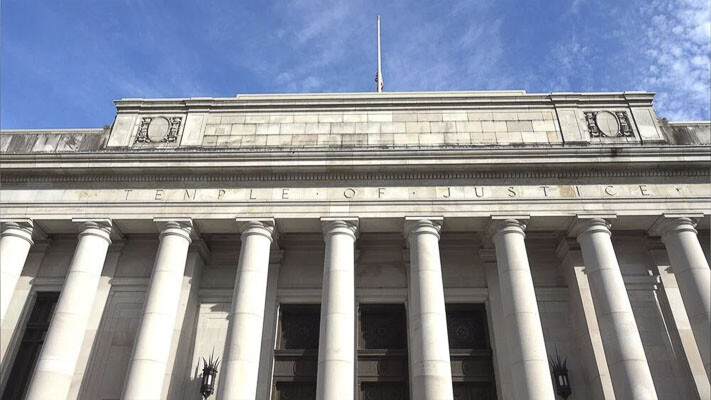
The state Legislature passed the capital gains tax in 2021; it creates a 7 percent tax on profits of more than $250,000 from the sale of some assets, such as stocks and bonds
Brett Davis
The Center Square Washington
The Washington State Supreme Court has upheld the constitutionality of the state’s capital gains tax. The court released its 7-2 ruling on Friday morning.
The state Legislature passed the capital gains tax in 2021, and Gov. Jay Inslee signed it into law. It creates a 7 percent tax on profits of more than $250,000 from the sale of some assets, such as stocks and bonds.
Last March, Douglas County Superior Court Judge Brian Huber ruled the tax was “properly characterized as an income tax…rather than as an excise tax as argued by the State” and struck it down. The state constitution’s uniformity clause does not allow income to be taxed at different rates.
State Attorney General Bob Ferguson directly appealed the decision to the Supreme Court, which in July agreed to hear the case.
In November, the Supreme Court allowed the state Department of Revenue to begin collecting the tax white it considers the state’s appeal.
Oral arguments were heard before the state’s highest court on Jan. 26.
Supporters of the tax contend the capital gains tax is an excise tax on a good or service and not an income or property tax, as opponents claim, because it applies to sales or transfers of assets.
Justice Debra Stephens sided with supporters in writing the court’s majority opinion.
“The capital gains tax is appropriately characterized as an excise because it is levied on the sale or exchange of capital assets, not on capital assets or gains themselves,” she wrote. “This understanding of the tax is consistent with a long line of precedent recognizing excise taxes as those levied on the exercise of rights associated with property ownership, such as the power to sell or exchange property, in contrast to property taxes levied on property itself.”
She continued, “Because the capital gains tax is an excise tax under Washington law, it is not subject to the uniformity and levy requirements of article VII [of the state constitution]. We further hold the capital gains tax is consistent with our state constitution’s Quinn v. State, No. 100769-8 4 privileges and immunities clause and the federal dormant commerce clause. We therefore reject Plaintiffs’ facial challenge to the capital gains tax and remand to the trial court for further proceedings consistent with this opinion.”
This report was first published by The Center Square Washington.
Also read:
- Opinion: Passing a cyclist – Law, myth and a little patience
 Most drivers can’t legally pass cyclists in-lane due to vehicle width versus road measurements.
 - County seeks public comment on plans tied to CDBG and HOME funding
 Clark County proposes $2.4 million in federal funding for dental care, affordable housing, and sidewalk improvements.
 - Opinion: The path to real tax reform requires a spending limit
 Washington Policy Center director argues constitutional spending caps would force real budget tradeoffs instead of endless tax increases.
 - Court battle set to begin over WA’s new income tax
 Former AG Rob McKenna leads constitutional challenge against 9.9% tax on earnings above $1 million starting Thursday.
 - Vancouver mayor counters IBR’s proposal for the only light rail stop to be at the waterfront
 Vancouver’s mayor wants light rail extended beyond the waterfront to connect with C-TRAN buses at Library Square.
 - Opinion: ‘Both states know they have seriously flawed voter registration’
 Lars Larson argues Oregon and Washington are suing DOJ to avoid cleaning up fraudulent voter rolls before elections.
 - Letter: Compassion without accountability is failing Clark County
 Sarah Mittelman calls for clear standards and measurable results in homelessness spending.
 wpDiscuz
