



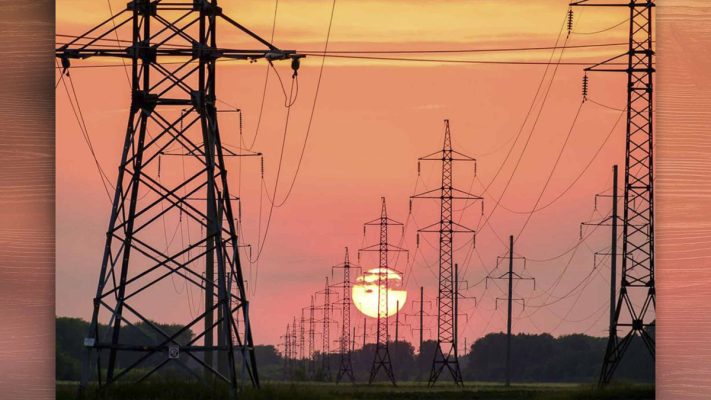
Washington residents might need proposed facility if the state is unable to meet future energy demands, which the company behind the project warns is growing more likely
TJ Martinell
The Center Square Washington
A proposed battery energy storage system near Goldendale under consideration by the Energy Facility Site Evaluation Council would, if ultimately approved by Gov. Jay Inslee, be able to provide 200,000 homes with electricity for up to four hours.
It’s a facility that Washington residents might need if the state is unable to meet future energy demands, which the company behind the project warns is growing more likely.
Tenaska is an independent power company based out of the Midwest and behind the proposed $250 million BESS, which would store excess electricity generated by the grid for later use. In an Aug. 13 presentation to EFSEC, company officials cautioned that “the region is increasingly at risk for rolling blackouts and brownouts,” which it blames in part to “aging transmission infrastructure that cannot meet current or projected demand.”
However, the presentation also noted that “data centers in the PNW, which are notorious for high energy use, are expected to more than double their electricity use in the coming years.”
Another contributor is the state’s transportation electrification efforts, with a ban on new fossil fuel vehicles taking effect in 2030. Currently, there are roughly 90,200 battery electric vehicles registered in Washington. Last year, light-duty electric vehicles consumed about 309,000 megawatt hours of electricity.
The dilemma facing Washington is twofold. The first is that its energy grid will require an additional 5,300-gigawatt hours by 2030 and 13,500 GWh by 2045 to meet demand, according to Tenaska’s presentation; one gigawatt is enough electricity to power 750,000 homes.
By 2050, electrical load growth is anticipated to increase by 92% compared to 2020 demand.
The second dilemma is that the new electricity must be from sources that conform to the state’s Clean Energy Transformation Act, which stipulates that utilities cannot use coal-based electricity starting next year, and by 2030 they can only use carbon neutral sources. By 2045, the energy will need to be from 100% renewable or “non-emitting” sources.
While Tenaska aims to have the BESS built in one year and operational by 2026, EFSEC has struggled to get final approval for a project that would generate clean energy needed to meet future demand. The Horse Heaven Energy Center was scheduled to begin construction in 2021 but has faced numerous delays, the latest of which came in May when Inslee sent the project back to EFSEC to increase its size and scope.
According to Inslee’s letter to the council, the original project would have generated 1,150 megawatts of electricity, 5% of the total needed to meet 2035 demand. Inslee wrote that 20 projects of similar energy generation will need to be built by 2035 if the state is to meet demand.
An E3 study released in 2019, the same year the law was enacted, warned that the Pacific Northwest region faced a near-term capacity shortage of up to 7,000 MW by 2025 and up to 10,000 MW by 2030.
“Planned resource additions do not fill this gap,” the study noted, adding that one of the causes of the energy gap was “renewable and storage additions with diminishing capacity benefit.”
A Pacific Northwest resource adequacy study released by E3 in March 2019 concluded that “it is possible to maintain resource adequacy for a deeply decarbonized Northwest electricity grid, as long as sufficient firm capacity is available during periods of low wind, solar, and hydro production” and that “natural gas generation is the most economic source of firm capacity today.”
This report was first published by The Center Square Washington.
Also read:
- School bus involved in crash in Vancouver on Friday
 A Pontiac G8 collided with an elementary school bus at NE 99th and NE 23rd Ave, but no children or drivers required hospitalization, according to officials.
 - Crown Point Country Museum Grand Opening set for Sat., March 21
 Visitors to Corbett’s new Crown Point Country Museum can explore the region’s early settlements, Wasco Nation heritage, art by Charles W. Post, and unique geological collections.
 - Opinion: Two ways to keep right
 Doug Dahl explains how Washington drivers must “keep right” differently depending on whether traffic flows in one direction or both, plus the exceptions that apply to two-way turn lanes.
 - Reps. Peter Abbarno and Ed Orcutt: Supplemental capital budget includes key investments for the 20th District
 Projects in the 20th District will benefit from millions in state funds, with local schools, community centers, and infrastructure improvements highlighted by Reps. Abbarno and Orcutt.
 - Opinion: A troubling end to a disruptive session
 Let’s Go Washington highlights multiple instances where legislative leaders dismissed historic public feedback, advanced controversial tax policies, and undermined constituent influence.
 - Single-vehicle crash investigated on 72nd Avenue
 Deputies say a northbound pickup struck a guardrail and became stuck atop a Jersey barrier, blocking several blocks of NE 72nd Avenue while emergency crews extricated the driver.
 - Opinion: Washington state is blowing up its no-income-tax advantage
 Lawmakers advanced SB 6346 with an emergency clause, aiming to end Washington’s no-income-tax reputation and prevent voters from seeking a referendum.
 wpDiscuz
