



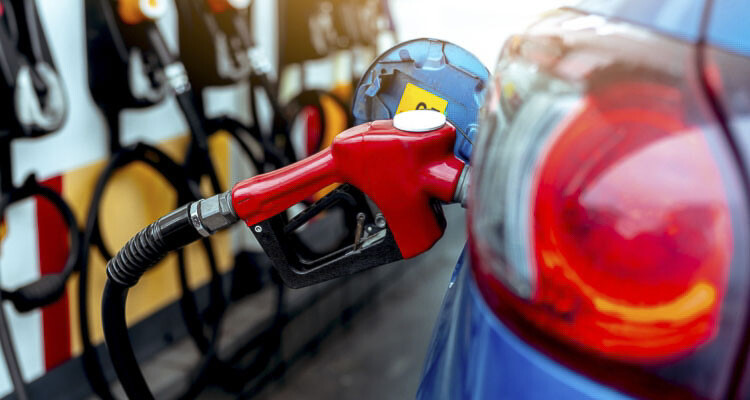
Washington’s $4.25 per gallon places it 78 cents per gallon higher than the national average of $3.47 per gallon
Timothy Schumann
The Center Square Washington
Monday marks the ninth week of price increases at the pump for Washingtonians since the new carbon tax was implemented earlier this year.
The average price of a gallon of regular unleaded was sitting at $4.25 statewide on Monday, up from $4.23 a week prior according to AAA data.
This two cent per gallon increase moved with the national average, which rose from $3.40 per gallon to $3.47 per gallon, a 7 cent per gallon increase, over the same time period.
“Less expensive oil and fewer people fueling usually combine to lower pump prices,” said AAA Spokesperson Andrew Gross in a statement, “However, there is some upward pricing pressure at the moment due to the switch to summer blend gasoline, which may add about five to ten cents per gallon. But if demand and oil costs remain low, this recent price bounce may fade.”
Residents of the Evergreen State have to dig deeper into their wallets than most. Washington’s pump prices again came in at fourth most expensive nationally, being beat out only by Nevada, Hawaii, and California, who filled out third to first on the list. For only the second week this year, California outpriced Hawaii as the most expensive state to fill your tank in.
Washington’s $4.25 per gallon places it 78 cents per gallon higher than the national average of $3.47 per gallon. That is $1.24 per gallon above the nation’s least expensive fuel costs of $3.01 per gallon, currently paid by Mississippi residents.
In Washington, intra-state variance remains high at $1.21 per gallon, remaining unchanged from the week prior. The outliers this week, again San Juan and Asotin counties, represent the most and least expensive gas prices statewide at $4.87 and $3.66 per gallon, respectively.
This price variance still largely follows the Cascade Range, with residents to the west paying a higher premium at the pump than residents to the east.
On top of these higher prices, as of Jan. 1 of this year, Washingtonians also have a new cap-and-trade system to pay for at the pump.
“The first auction of CO2 allowances [averaged] $48.50 per metric ton of CO2. This equates to about 39 cents per gallon of gasoline and 47 cents per gallon of diesel,” announced a report by the Washington Policy Center based on recently released Washington State Department of Ecology data.
That report has one state senator up in arms.
“We already have a system that’s aimed at getting after climate change,” said Sen. John Braun, R-Centralia, at a media event following the Department of Ecology’s auction results. “That’s the cap-and-trade system put into law a couple years ago and went into effect this year. And we know that’s already adding enormous costs to not just everything we do, including building.”
Braun also commented on the auction closing prices, saying “They’re over double what they were projected to be when it was put into place.”
It remains to be seen if higher auction prices will fuel further increases at the pump.
This report was first published by The Center Square Washington.
Also read:
- VIDEO: WA diesel hits record $6.53, crushing truckers and school budgets
 With diesel nearing $6.53 per gallon in Washington, trucking businesses and school districts now confront sharply higher fuel expenses affecting budgets and workers.
 - Opinion: In plain sight – yielding to pedestrians
 Drivers often fail to see pedestrians due to inattentional blindness, which highlights the need for more focused awareness at intersections and stronger safety practices.
 - Expect delays on SR 14 in Vancouver for guardrail repairs Wednesday
 State Route 14 travelers in Vancouver should plan for morning delays as WSDOT will close two eastbound lanes for guardrail repairs, affecting mileposts 6.0 to 7.0.
 - Overnight closure planned on westbound SR 14 Camas Slough Bridge Tuesday
 WSDOT crews will close westbound SR 14 at Exit 14 in Camas to collect bridge deck samples and plan future repairs; detours will be in effect.
 - Opinion: Stay in your lane – seriously, it’s the law
 Drivers must choose the nearest lane when turning in Washington, and left turns bring added risk. Even with signals, every driver must help prevent crashes by following law.
 wpDiscuz
