



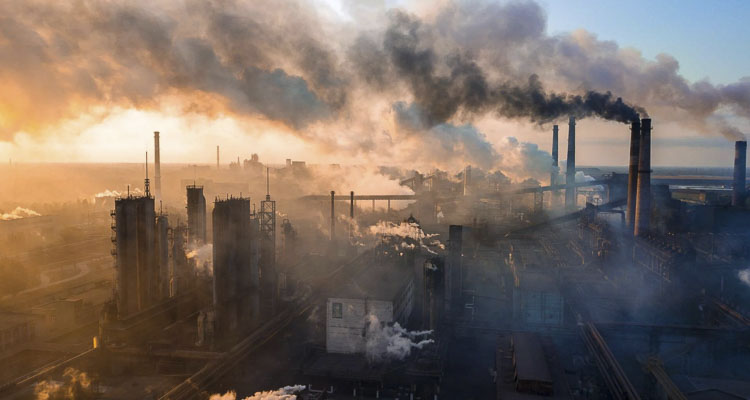
Launched by Inslee in 2013, Results Washington is meant to adopt private-sector methods and tools to improve state government performance in greenhouse gas reduction
Brett Davis
The Center Square Washington
Washington state government officials, including Gov. Jay Inslee, touted the reduction of greenhouse gas emission from state buildings and operations during Wednesday morning’s hybrid in-person/virtual meeting on the “Results Washington” initiative.
Launched by Inslee in 2013, Results Washington is meant to adopt private-sector methods and tools to improve state government performance in greenhouse gas reduction.
“So, I’m very excited to hear about the progress we’re making about our further ambitions, because we want to make sure as the state leads the nation, the state government of the state of Washington is leading the state,” Inslee said in opening remarks. “And I know we’re doing great work. I’m happy to hear about it, and I’m always looking for the next great horizon.”
Laura Watson, director of the state Department of Ecology, noted the state government’s obligation in this regard.
“Of course, today is all about how we within state government are setting an example with our own agencies,” she explained. “The Legislature requires us to reduce our carbon footprint and we have to report the results every two years.”
Stacey Waterman-Hoey, greenhouse gas emissions analyst for Ecology, provided some details on how the state is measuring up to baseline limits set in 2005.
“Here is the first look at our 2021 state agency emissions data,” she said, referencing a chart showing state agency historic emissions and future limits.
Per the chart, the limit for 2020 is 747,181 metric tons of carbon dioxide equivalent emissions, 483,470 metric tons in 2030, 219,759 metric tons in 2040, and 43,952 tons in 2050.
“Between 2019 and 2020, state agency emissions dropped 20%, largely due to the pandemic,” Waterman-Hoey explained. “As activity resumed over 2021, emissions rose 4%. In 2021, state agencies collectively remained 13% below the 2020 limit.”
Fifteen of the 21 state agencies were under the emissions limit in 2021, she pointed out, largely due to the impact of COVID-19.
In 2019, prior to the pandemic, Waterman-Hoey noted 12 of 21 state agencies were under the emissions limit.
“And the state family as a whole was only 4% over the limit,” she said.
Another chart showed the largest state agency emitters: Washington State Ferries, Washington State University, University of Washington, Department of Transportation (minus WSF), Department of Corrections, Central Washington University, Washington State Patrol, Department of Social and Health Services, Washington State Department of Veterans Affairs, Department of Fish & Wildlife, Department of Natural Resources, and Western Washington University.
Buildings and ferries are the two biggest sectors in terms of greenhouse gas emissions.
“Decarbonizing buildings will require aggressive investments in efficiency and a systemic shift to electrified campuses, especially district heating systems,” Waterman-Hoey said.
State agencies have already started using renewable energy systems in their buildings, she said.
Nine state agencies are using solar photovoltaics, the conversion of light into electricity using semiconducting materials, Waterman-Hoey said, adding that two state agencies report generating 335,000 kilowatts of energy from renewable energy systems and two agencies report using ground-source heat pumps.
WSF generates 64% of state government transportation emissions, she said, and accounts for 22% of total state government emissions.
The increasing use of alternative fuels and ongoing ferry electrification efforts should see fleet emissions drop some 75% by 2040, meeting emissions limits that year, Waterman-Hoey stated.
“State government is in a unique position to lead by example in reducing greenhouse gas emissions to combat climate change and build a more equitable and safe future,” she concluded.
This report was first published by The Center Square Washington.
Also read:
- Former WA Supreme Court justice joins legal effort against income tax
 Phil Talmadge and Rob McKenna have joined forces with the Citizens Action Defense Fund to oppose Washington’s new tax on high-income earners, raising legal and constitutional questions.
 - Makeover in store for Congress with flood of lawmakers headed for the exits
 A wave of exits from Congress—over 65 lawmakers—will usher in unfamiliar faces and decrease veteran expertise, shifting the political landscape in Washington.
 - Opinion: Sheriffs fight back
 Four county sheriffs are suing to block a new law giving a governor-appointed board power to decertify and remove sheriffs, bypassing voter oversight in Washington.
 - Obituary for Lucille ‘Erma’ Christenson Madore – April 22,1924-March 13, 2026
 Known for her love of music and family, Lucille ‘Erma’ Christenson Madore lived through nearly 102 years and leaves a large, grateful legacy in Vancouver.
 - Fiscal fallout: $375 million bond debt indirectly funding operating budget
 Shifting $375 million from a loan fund impacts local infrastructure as Washington state covers operating costs with bond debt, prompting concern among officials and advocacy groups.
 - Lawsuit aims to block new eligibility requirements for WA sheriffs
 Four sheriffs are suing over a state law that sets new eligibility rules, arguing it undermines voter authority by allowing removal for certification issues.
 - Opinion: The growing gap between public voice and political power
 Todd Myers describes how large-scale protest and sign-ins often fail to sway state leaders, and argues authentic influence is most likely found through local action.
 wpDiscuz
