



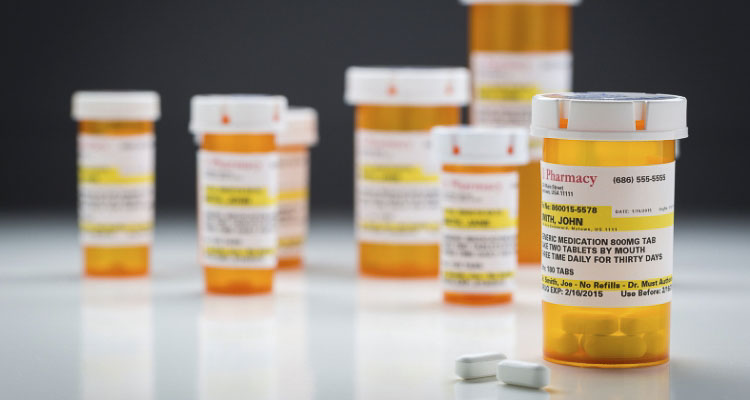
In February 2021, the state’s highest court struck down the statute that made possession of a controlled substance a felony punishable by up to five years in prison
Brett Davis
The Center Square Washington
The Substance Abuse Recovery Services Advisory Committee was updated Monday morning on investments and work related to legislation in response to the Washington State Supreme Court’s Blake decision nearly two years ago.
In February 2021, the state’s highest court struck down the statute that made possession of a controlled substance a felony punishable by up to five years in prison. The court ruled the statute unconstitutional because it allowed people to be convicted of possession even when they didn’t realize they had drugs in their possession.
The ruling came in the case of a Spokane woman, Shannon Blake, who had received a pair of jeans from a friend with a small bag of methamphetamine in a pocket.
In April 2021, the state Supreme Court rejected a request from the state to reconsider its Blake ruling. Later that month, the Legislature passed Senate Bill 5476, reclassifying drug possession as a gross misdemeanor with fines up to $125. Per the bill, first and second-time convictions that occurred before the Blake ruling would be vacated in retrial and defendants referred to treatment programs.
The legislation also created the Substance Use Recovery Services Advisory Committee, also known as the Blake Committee, tasked with creating a plan for the 2023 legislative session.
Gov. Jay Inslee signed SB 5476 into law the following month, vetoing a portion of the bill that would have created a state fund to reimburse local governments and individuals who incur legal fees resulting from resentencing under the Blake decision.
The bill’s drug possession provisions expire on July 1, 2023, necessitating a more permanent legislative fix related to how the state addresses drug and substance abuse disorders.
“I think it was somewhere around, including appropriations for Department of Commerce and the Administrative Office of the Courts, around $80 million was funded through the bill,” explained Tony Walton, acting adult substance use disorder section manager for the state Health Care Authority, during the virtual meeting.
More than $73 million goes to the Health Care Authority for fiscal years 2022 and 2023 for behavior health programs, contingency management, housing, medication, and recovery programs.
SB 5476 also set up some new statewide services, including expanded use of the Law Enforcement Assisted Diversion, a community-based program that originated in Washington that diverts people away from jail, referring them to services and treatment.
Walton pointed to some success of substance abuse treatment programs in Washington run by people who themselves have lived that experience. Several studies suggest that peer-oriented services result in positive recovery-based outcomes for people with behavioral health disorders.
“Through the funding in fiscal year ’22 and fiscal year ’23, able to have worked with 21 different providers for expansion and enhancement or implementation of a peer-run organization such as a recovery café or a recovery community organization,” he said, noting that is an increase from 11 different providers in the fiscal years 2021 and 2022.
“But we tried to ensure there was statewide coverage with the funding,” Walton added.
While the services set up in SB 5476 are just getting off the ground and are showing some promise in certain areas, challenges remain.
“But yeah, it is variable across the state,” Walton admitted. “I mean, thinking about 39 different counties all trying to implement a pre-arrest diversion program that includes elected officials, prosecuting attorneys, defense attorneys, all coming to agreement on which scenario somebody can be eligible to be diverted from the criminal system in their county or city, um, it’s not something that can happen in 18 months, 12 months.”
The Blake decision came up last week at a meeting of Senate Democratic Caucus leaders, including talk of how lawmakers would respond in the upcoming 2023 legislative session.
“I feel like there’s a consensus building to do something that’s public health focused but also a little bit of increased role of the criminal justice system from what we saw in the last version,” Majority Leader Andy Billig, D-Spokane, said at the time.
Next year’s 105-day legislative session runs from Jan. 9 through April 23.
This report was first published by The Center Square Washington.
Also read:
- Opinion: Lawsuit filed against the unconstitutional income tax in Washington state
 Former Attorney General Rob McKenna and Supreme Court Justice Phil Talmadge challenge the 9.9% income tax in Klickitat Superior Court.
 - Vancouver Police investigate domestic violence homicide
 Vancouver Police Major Crimes Unit investigating after woman found dead with knife wounds on NE Oakbrook Circle.
 - Letter: ‘Oregon and Washington aren’t refusing to clean their rolls — they’re contesting federal jurisdiction and timing’
 Camas resident challenges Lars Larson’s fraud claims, explaining legal disputes over federal jurisdiction.
 - County Council to hold hearing on preferred land use alternative for comprehensive plan update
 Clark County Council will select preferred land use alternative from three options studied in environmental review.
 - Opinion: ‘When are we going to get the full and complete details of the Interstate Bridge Replacement Program’s I-5 Bridge replacement project?’
 IBR team buried key details about light rail ending at waterfront with massive elevator system required.
 - POLL: Do you support extending light rail beyond the waterfront to connect with C-TRAN at Library Square?
 Readers can weigh in on Anne McEnerny-Ogle’s proposal to extend light rail beyond the waterfront to Library Square for improved C-TRAN connections.
 - Opinion: Passing a cyclist – Law, myth and a little patience
 Most drivers can’t legally pass cyclists in-lane due to vehicle width versus road measurements.
