



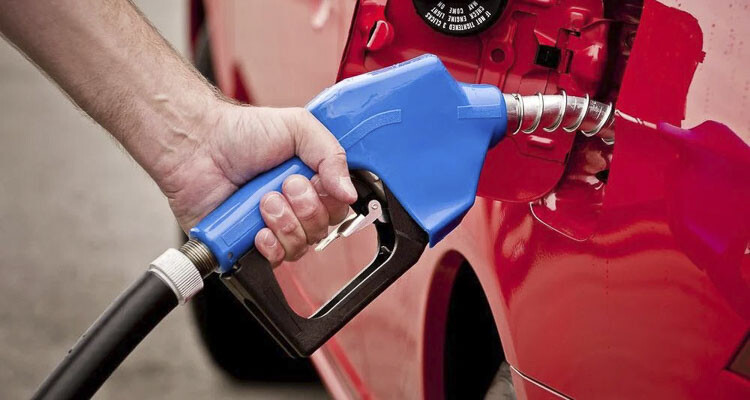
On Monday, the average price of a gallon of regular unleaded was $3.88 statewide
Timothy Schumann
The Center Square Washington
After over ten straight weeks of price declines Washington state fuel prices are still among the highest in the nation and rank fourth among the 50 states.
On Monday, the average price of a gallon of regular unleaded was $3.88 statewide, down from $3.94 the week prior, according to AAA data. This 6 cents per gallon decrease was markedly lower than last week’s decline of 16 cents per gallon.
Compared with the national average of $3.10 per gallon, Washington’s $3.88 price is 78 cents per gallon higher than the average. This is a full $1.24 off the nation’s least expensive fuel costs of $2.64 per gallon currently paid by Texans.
Again this week, Washington finds itself firmly in the top ten most expensive fuel markets nationwide. Holding at fourth from the week prior, Washington’s pump prices were only beat out by Nevada, California and Hawaii.
In the Evergreen State intra-state variance remains high, spanning a range of $1.09 per gallon. The outliers this week are, for only the second time since The Center Square began reporting on fuel prices in Washington state, both on the same side of the Cascade Range.
San Juan County and Skagit County, which are geographically adjacent separated only by portions of the Salish Sea, represent the most and least expensive gas prices statewide at $4.39 and $3.30 per gallon respectively.
Other than the exception of Skagit county, this price variance still largely follows the Cascade Range, with residents to the west paying a higher premium at the pump than residents to the east.
Washington state residents also have a new cap-and-trade tax that starts Jan. 1 which, as previously reported by The Center Square, would drive fuel costs up an estimated 46 cents per gallon. This will come on top of Washington’s current rate of 49.4 cents per gallon of state tax.
This report was first published by The Center Square Washington.
Also read:
- Letter: British Columbia’s new immersed tunnel can solve Interstate Bridge Replacement Program’s $17.7 billion problem
 Bob Ortblad argues that an immersed tunnel similar to a project underway in British Columbia could significantly reduce costs and impacts associated with the Interstate Bridge Replacement Program.
 - C-TRAN offering free service on Transit Equity Day, Feb. 4
 C-TRAN will offer free service across its entire system on February 4 in observance of Transit Equity Day, honoring the legacy of Rosa Parks.
 - Opinion: The many reminders not to speed
 Doug Dahl examines the many technological and policy-based reminders aimed at reducing speeding and explains why most drivers still choose not to use them voluntarily.
 - Rep. John Ley’s new bill calls for an independent audit of Interstate 5 Bridge Replacement Project
 Rep. John Ley introduced legislation requiring an independent audit of the Interstate 5 Bridge Replacement Project to review costs, management, and oversight.
 - Opinion: IBR’s evasive, misleading and dishonest excuses for higher cost
 Joe Cortright argues the Interstate Bridge Replacement Program has withheld detailed cost estimates while offering contradictory explanations for rising costs tied to the I-5 Bridge project.

“Washington state residents also have a new cap-and-trade tax that starts Jan. 1 which, as previously reported by The Center Square, would drive fuel costs up an estimated 46 cents per gallon. This will come on top of Washington’s current rate of 49.4 cents per gallon of state tax.”
Nearly $1 per gallon in gas taxes starting Jan. 1. Happy New Year for bigger government, brought to WA by the Democrat governor and democrat majority in the legislature.
Taxes in Washington State have sure gone up quite a bit the last few years. Take a look at vehicle registration – If you have an efficient Hybrid or electric vehicle you pay an additional $75/year. Some cities like Washougal will add another $20/yr. As I’ve said before, we’ve got more government than we know what to do with……………