



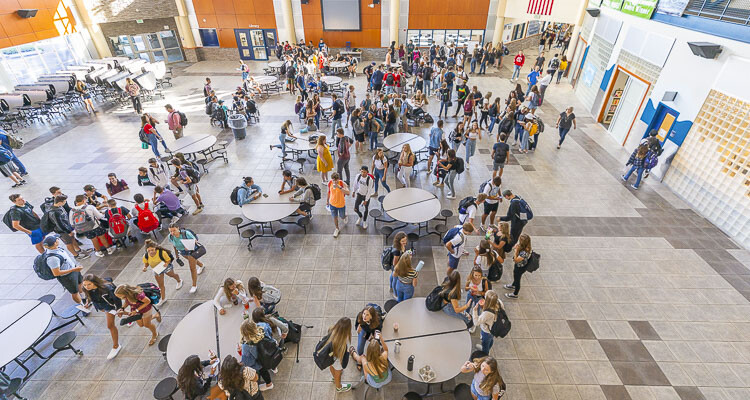
The capital gains tax, passed in 2021, added a 7 percent charge on profits of more than $250,000 from selling or exchanging assets like stocks, bonds, business interests, and more
Logan Washburn
The Center Square Washington
The state of Washington collected nearly $600 million more in capital gains tax than expected for its schools.
When legislators passed the state budget for 2023 to 2025, they planned to collect $248 million from the new capital gains tax, according to The Seattle Times. But by May 9, the state had collected $601 million more than expected, totaling $849 million.
“I don’t know why the state underestimated the revenue from this tax by so much,” said Liv Finne, director of the Center for Education at the Washington Policy Center. “Experience shows lawmakers often minimize the burden of any proposed tax.”
The capital gains tax, passed in 2021, added a 7% charge on profits of more than $250,000 from selling or exchanging assets like stocks, bonds, business interests, and more. The state Supreme Court ruled the tax constitutional in March.
The first $500 million collected from the tax will go to the state’s Education Legacy Trust Account, according to The Seattle Times. Funds beyond that will go to one-time school construction projects.
“We have very ambitious plans for our capital budget,” said Katy Payne, director of communications for the state Office of Superintendent of Public Instruction. “Additional capital gains revenue will make a big difference for our schools, particularly for districts in rural communities who face the biggest challenges in raising funds for school construction.”
In the 2017-18 school year, state data shows Washington public schools contained more than 192,000 staff and spent more than $13,000 per student for a year’s enrollment. In the 2022-23 school year, however, the state’s public schools contained more than 203,000 total staff, and spent more than $19,000 per student for a year’s enrollment.
More than 60 of the state’s superintendents made more than $250,000 in the 2021-22 school year, the highest-paid of which made more than $559,000.
“There are no accountability measures in state law which define whether schools are ‘fully funded,’” said Finne, who published some of these numbers with the WPC.
Since Washington had increased its education funding by June 2018, the state Supreme Court ruled in McCleary, et. al. v. The State of Washington that the state complied with an order to provide a “statutory program of basic education.”
This report was first published by The Center Square Washington.
Also read:
- High school girls basketball: Union Titans give Brooklynn Haywood a homecoming in Alaska
 Union traveled to Anchorage for two games that allowed Brooklynn Haywood to play in front of her hometown crowd while the Titans bonded through travel, cold weather, and on-court adversity.
 - WATCH – Detransitioner to providers: ‘Please just stop’ gender surgeries on minors
 Detransitioner Soren Aldaco shared her experience and urged providers to stop encouraging gender surgeries on minors as HHS moves to restrict federal funding for such procedures.
 - Without pennies, should retailers round up or down?
 As the penny disappears from circulation, states and retailers are grappling with how cash purchases should be rounded and who should benefit from those decisions.
 - Opinion: IBR promotes ‘giving away’ historic interstate bridges while withholding cost estimate for replacement
 Neighbors for a Better Crossing argues the IBR program is promoting demolition of the historic Interstate Bridges without releasing updated cost estimates or current seismic data to justify replacement.
 - Opinion: Solving Washington’s deficit without tax increases
 Ryan Frost argues Washington’s budget shortfall is driven by rapid spending growth rather than insufficient tax revenue, calling for slower spending and program reductions instead of new taxes.
 - Washington State Patrol loses 34th trooper in the line of duty
 Washington State Patrol Trooper Tara-Marysa Guting was killed while investigating a crash on State Route 509 in Tacoma, marking the 34th line-of-duty death in the agency’s history.
 - Opinion: Bikes in crosswalks
 Doug Dahl explains how Washington law treats bicycles as both vehicles and pedestrians, depending on where and how they are being ridden.
 wpDiscuz
