



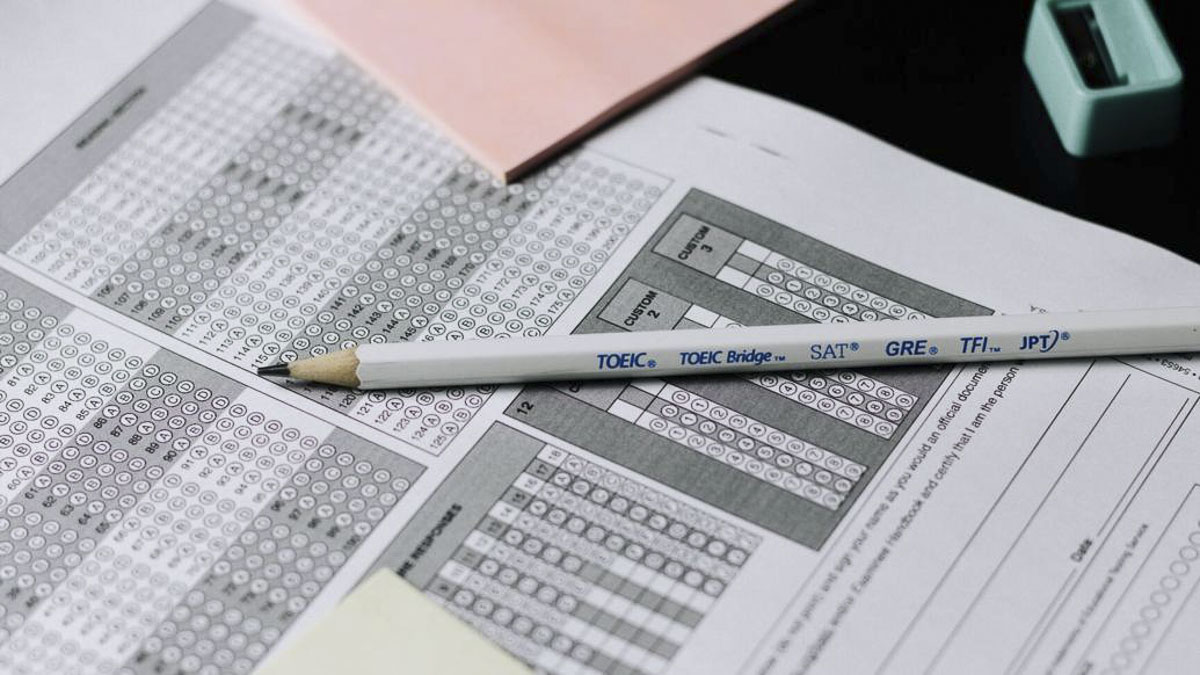
The National Assessment of Educational Progress released its 2024 assessment results on Wednesday, showing some improvement in fourth-grade math but declines in reading comprehension
Brendan Clarey
The Center Square
Despite slight progress in mathematics, students have not yet seen enough academic gains to recover the learning lost during school closures during the COVID-19 pandemic, according to the latest release of national test score data.
The National Assessment of Educational Progress (NAEP) released its 2024 assessment results on Wednesday, showing some improvement in fourth-grade math but declines in reading comprehension.
“Overall, student achievement has not returned to pre-pandemic performance,” said Peggy G. Carr, National Center for Education Statistics commissioner, in a press release. “Where there are signs of recovery, they are mostly in math and largely driven by higher-performing students. Lower-performing students are struggling, especially in reading.”
Fourth-grade students gained two points on the math assessment between 2022 and 2024. There was no difference during that time for eighth-grade math.
However, reading comprehension suffered, according to the NAEP, often called The Nation’s Report Card. The NAEP said the average reading score in both grades was five points lower than in 2019 and two points lower than in 2022.
“In 2024, the percentage of eighth-graders’ reading below NAEP Basic was the largest in the assessment’s history, and the percentage of fourth-graders who scored below NAEP Basic was the largest in 20 years,” the press release said.
The NAEP said that the gap between higher- and lower-performing students continues to increase as higher-performing learners continue to recover and lower-performing students decline or make no progress.
It said the largest gap was in eighth-grade math, which is why the score did not significantly change from 2022.
The Trump Department of Education issued a statement on the test scores.
“Today’s NAEP results reveal a heartbreaking reality for American students and confirm our worst fears: not only did most students not recover from pandemic-related learning loss, but those students who were the most behind and needed the most support have fallen even further behind,” the department statement reads.
“Despite the billions of dollars that the federal government invests in K-12 education annually, and the approximately $190 billion in federal pandemic funds, our education system continues to fail students across the nation,” it continues. “We must do better for our students.”
The department said it would continue to change the nation’s education system. This week, the agency said it would celebrate National School Choice Week, which it said was in line with President Donald Trump’s “unwavering commitment to expanding school choice.”
“The Trump Administration is committed to reorienting our education system to fully empower states, to prioritize meaningful learning, and provide universal access to high-quality instruction,” the department’s statement continued. “Change must happen, and it must happen now.”
Margaret Spellings, president and CEO of the Bipartisan Policy Center and former secretary of education, said the NAEP scores are a wake-up call for accountability.
“We are failing America’s children,” Spellings said in a statement Wednesday. “Too many American children can’t read at grade level, and math proficiencies aren’t making necessary progress. This is a national crisis and one we cannot afford to ignore.”
Spellings said that the declines show a lack of focus on “academic achievement in the foundational subjects of reading and math” and that the COVID-era closures “only accelerated the decline.”
This story first published at Chalkboard News which, like The Center Square, is published by the Franklin News Foundation
Also read:
- Fiscal fallout: $375 million bond debt indirectly funding operating budget
 Shifting $375 million from a loan fund impacts local infrastructure as Washington state covers operating costs with bond debt, prompting concern among officials and advocacy groups.
 - Lawsuit aims to block new eligibility requirements for WA sheriffs
 Four sheriffs are suing over a state law that sets new eligibility rules, arguing it undermines voter authority by allowing removal for certification issues.
 - Opinion: The growing gap between public voice and political power
 Todd Myers describes how large-scale protest and sign-ins often fail to sway state leaders, and argues authentic influence is most likely found through local action.
 - City of Battle Ground seeks applicants for Salary Commission vacancy
 Battle Ground seeks a resident to join its independent Salary Commission, which reviews compensation and health benefits for local elected officials through 2027.
 - Opinion: Who is winning the race for affordable power?
 Hydroelectric power keeps Washington competitive, but new laws and carbon pricing are driving up electricity costs for residents each year.
 - Vancouver Fire Department assists with Columbia River Marina fire response
 Vancouver Fire Department joined Clark-Cowlitz and Scappoose crews to help fight a vessel and dock fire at Goble Marina, assisting in river operations where one boat sank and another was partially submerged.
 - White House govt. Funding request for 2027 cuts $73 billion
 President Trump’s budget seeks to boost defense funding while cutting $73 billion from agencies like the EPA, NASA, and Agriculture, prompting sharp criticism from Democratic leaders.
