



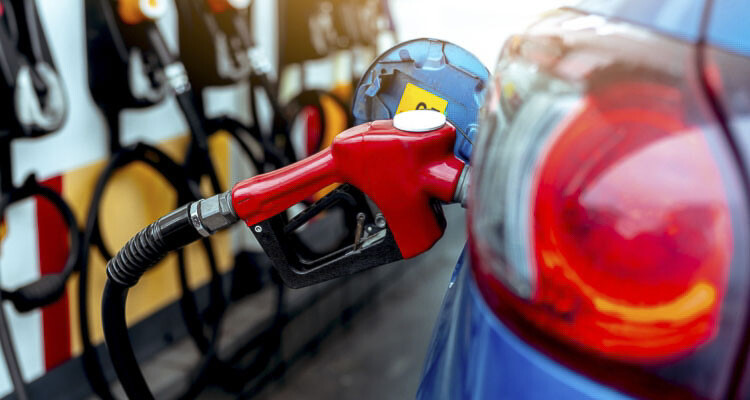
Ultimately, the full impact of the new carbon tax won’t be known until regular auctions occur
Timothy Schumann
The Center Square Washington
After five straight weeks of price increases, and last week remaining stagnant, average fuel prices in Washington are again on the rise week over week.
The average price of a gallon of regular unleaded was sitting at $4.18 statewide on Monday, up from $4.13 a week prior according to AAA data.
While fuel prices have been rising slightly for the last few weeks when looking at the national average, this week the price remains flat from the week prior.
“The national average for pump prices dipped to $3.41 before creeping a bit higher over the past two days, and this trend of small increases could persist into next week,” said AAA spokesperson Andrew Gross in a statement.
Citizens of the Evergreen State have to dig deeper into their wallets than most. Washington’s pump prices came in at fourth most expensive nationally being beat out only by Nevada, California, and Hawaii, who filled out third to first on the list.
Washington’s $4.18 per gallon places it 77 cents per gallon higher than the national average of $3.41 per gallon. That is $1.18 per gallon above the nation’s least expensive fuel costs of $3.00 per gallon, currently paid by Texans.
In Washington, intra-state variance remains high at $1.33 per gallon, up from last week’s $1.24 per gallon. The outliers this week, San Juan and Asotin counties, represent the most and least expensive gas prices statewide at $4.94 and $3.61 per gallon, respectively.
This price variance still largely follows the Cascade Range, with residents to the west paying a higher premium at the pump than residents to the east.
On top of these higher prices, as of Jan. 1 of this year, Washingtonians also have a new cap-and-trade system to pay for at the pump.
According to a recent report by the Washington Policy Center’s Environmental Director Todd Myers, gas prices in Washington have already spiked 10 cents per gallon relative to California and Oregon.
“What the data show is that prices in Washington state jumped suddenly over the last two weeks much more than the other states on the West Coast,” the report stated.
Ultimately, the full impact of the new carbon tax won’t be known until regular auctions occur. The report notes that the new law “sets a minimum price of $22/metric ton of CO2, which translates to 17 cents per gallon. The price could go as high as $81/MT which would be 65 cents per gallon.”
This report was first published by The Center Square Washington.
Also read:
- State Representatives McClintock and Ley answer questions at town hall in Battle Ground
 Residents voiced rising concerns about property taxes, school funding debates, the impact of new income tax legislation, and major costs tied to the Interstate Bridge plan.
 - As Washington gets an income tax, the fight to overturn it begins
 Opponents are organizing lawsuits and potential ballot measures to challenge the new 9.9% income tax on Washington households earning over $1 million.
 - Battle Ground Police arrest suspect in fatal 2025 crash
 Laboratory results from a blood sample collected in 2025 provided probable cause for police to arrest Michael T. Smith, more than a year after the Battle Ground crash.
 - Vancouver Police seeking missing person
 Vancouver Police are searching for 62-year-old Carrie Ann Winters, who was last known to be near Frenchman’s Bar in west Vancouver. She has distinctive tattoos.
 - VIDEO: WA diesel hits record $6.53, crushing truckers and school budgets
 With diesel nearing $6.53 per gallon in Washington, trucking businesses and school districts now confront sharply higher fuel expenses affecting budgets and workers.
 - WA’s status solidifies as one of the most expensive places in US
 A new study shows Washington outpaces most states on cost of living, with metrics revealing a sharp rise in daily expenses and major metro areas ranking among the nation’s most expensive.
 - Opinion: Someone explain the Democrat Party to me please
 Lars Larson criticizes Democrat politicians for shutdown threats, Homeland Security funding refusals, and positions on election laws, housing, and gun rights.
