



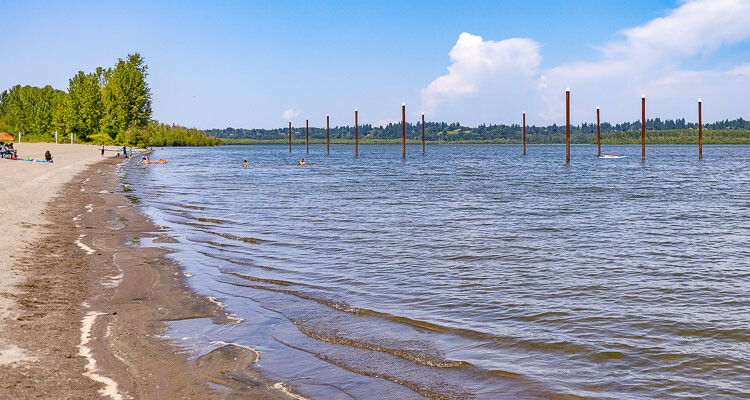
Test results for one of five water samples collected at Vancouver Lake on Tuesday showed elevated levels of E. coli bacteria
VANCOUVER – Clark County Public Health has issued a swim beach warning at Vancouver Lake after routine testing showed elevated levels of E. coli bacteria. E. coli bacteria can cause serious gastrointestinal illness when water is accidentally swallowed.
Test results for one of five water samples collected at Vancouver Lake on Tuesday showed elevated levels of E. coli bacteria. The other samples had bacteria levels within acceptable water quality standards.
Warning signs are being posted at the lake. While the warning is in place, Public Health advises against swimming and wading, especially for young children who are more likely to accidentally swallow water. People who have contact with the water at the swim beach should rinse off after.
Public Health will collect additional water samples on Monday. If results show the water quality has improved, the beach warning will be lifted.
Public Health began routine monitoring of the designated swim beaches at Vancouver Lake, Klineline Pond and Battle Ground Lake this week. While visiting Vancouver Lake, Public Health staff spotted a harmful algal bloom at the swim beach. Water samples were collected to test toxin levels. Those results are expected this week and may result in an additional advisory.
As long as blooms of harmful algae are present, toxin levels can change as the weather and lake conditions change. People should avoid areas of floating scum when swimming or recreating in the water, and pets should not go into or drink the water.
Vancouver Lake Regional Park remains open. Water in park restrooms and shelters is not affected by lake water and remains safe to drink. Park visitors may continue to catch and consume fish caught in the lake but should thoroughly clean all fish and equipment. Fish should be cooked and not eaten raw.
Information about current advisories is available on the Public Health public beaches website.
Information about E. coli
E. coli is a common kind of bacteria that lives in the intestines of animals and people. The presence of E. coli in Vancouver Lake water indicates that the water may contain bacteria found in animal or human feces. Some of these bacteria are capable of causing severe gastrointestinal illness.
Depending on the cause, people with gastrointestinal infections may experience fever, abdominal pain, nausea, vomiting and/or diarrhea beginning several hours to several days or longer after exposure. Some infections may cause bloody diarrhea.
People who experience bloody diarrhea or persistent gastrointestinal symptoms should call their physician or other health care provider.
Information provided by Clark Co. WA Communications.
Also read:
- ‘Our new normal’: WA confronts another year of drought
 Casey Sixkiller says every watershed in Washington has dropped below 75% of normal water supply.
 - Schools expect minimal impact with Title IX pacts rescinded
 Federal officials rescinded agreements with six school districts, saying previous administrations misapplied Title IX protections.
 - Area Agency on Aging & Disabilities in Southwest Washington announces the Senior Farmers Market Nutrition Program
 AAADSW opens applications for $80 benefit cards to help eligible seniors buy fresh produce at farmers markets.
 - Free in-person workshops promote composting and sustainable living
 Clark County’s free workshops teach residents worm composting, green cleaning, and smart recycling through April and May.
 - Keeping afloat: A bittersweet chronicle of two women who endured the sinking of the Titanic
 Local historian Peri Muchich shares the story of Pacific Northwest Titanic survivor Anna Warren at Sunday’s museum event.
 - Letter: ‘This is the worst thing that ever happened to the region’
 A Hayden Island resident Sam Churchill is criticized in a letter calling the $14 billion Interstate Bridge Replacement project a “boondoggle” that destroys local businesses.
 - Washougal ramps up efforts to support small businesses
 Washougal launches Gateway to Success Series with free workshops starting April 15 at Best Western Plus Convention Center.
