



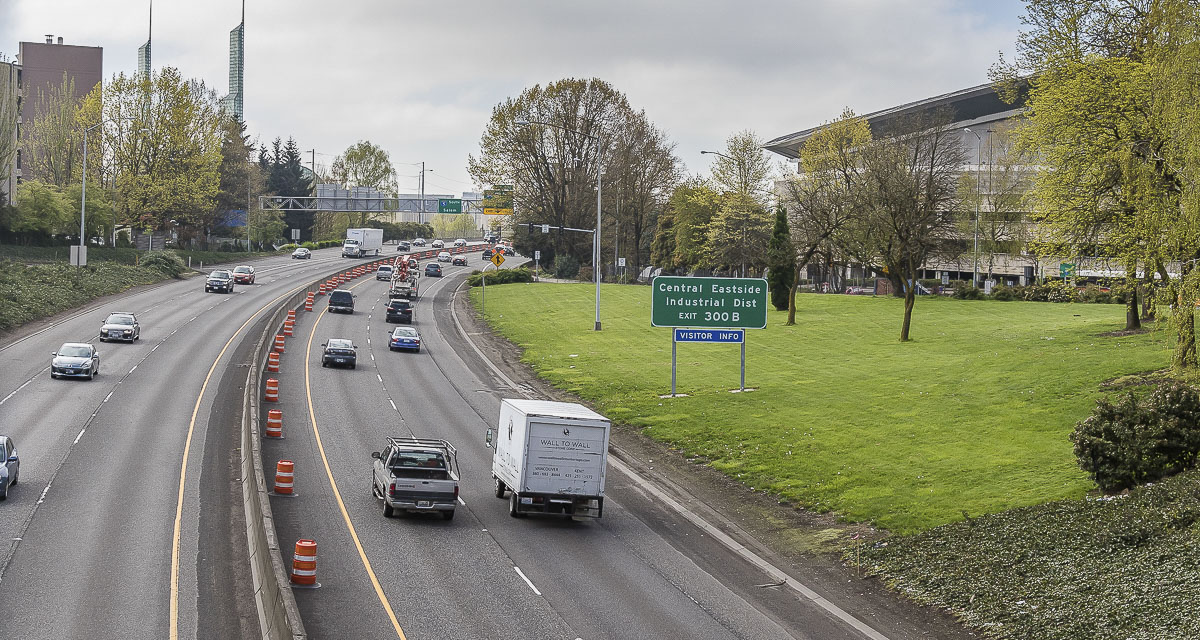
Kotek’s direction Wednesday comes after a volunteer effort led by Republican lawmakers and an anti-tax group gathered enough signatures to refer parts of the $4.3 billion plan to the November ballot
Alex Baumhardt
Washington State Standard
 See Grok’s analysis of this story
Oregon Gov. Tina Kotek spent months cajoling the state Legislature to provide billions for transportation infrastructure, safety and jobs. Now, she’s asking them to repeal that plan and start fresh.
Kotek’s direction Wednesday comes after a volunteer effort led by Republican lawmakers and an anti-tax group gathered enough signatures to refer parts of the $4.3 billion plan to the November ballot. That effort paused scheduled increases to the state gas tax, title and registration fees and a payroll tax to fund transit.
Kotek unveiled her strategy, characterized as “redirect, repeal, and rebuild” at a Wednesday meeting of the Oregon Transportation Forum, a nonprofit trade organization representing public and private transportation stakeholders. She also explained her change in tune.
“After a long summer and many twists and turns, the Legislature passed House Bill 3991, increasing funding for ODOT, local governments, and transit districts through changes to the gas tax, payroll tax, and registration fees,” she explained to the forum. “But you all know the score today. Those funding solutions are frozen following a signature-gathering campaign led by legislative Republicans and Oregon Taxpayers United.”
Kotek is asking lawmakers to repeal House Bill 3991, which passed during a special session in September.
She wants them to use the upcoming short session, which begins Feb. 2 and must conclude by March 8, to redirect existing transportation funding “core to operations and maintenance” while they come up with a different package in 2027.
Republican State Rep. Ed Diehl, of Scio, who is among those leading the referendum effort, said Kotek’s announcement is an admission that she “failed in an epic way.”
He said he’s opposed to the package being repealed in its entirety — he supports in particular a provision that requires an audit of the Department of Transportation’s spending and project costs — and that he wants voters to have the chance in November to weigh in on proposed tax and fee changes.
“This feels more like a campaign season, election move to deny voters the opportunity to weigh in,” he said. “It’s a mistake to repeal the bill without coming up with a real solution. She’s trying to make it moot for the election and then she’ll deal with it later.”
The $4.3 billion package passed in September, a reduction from grander plans that fell short during the 2025 legislative session, was meant to keep the transportation department operational and to prevent hundreds of layoffs, Kotek said. But with the ballot measure halting new revenue sources, the package is effectively an unfunded mandate to make new investments without any money.
“Leaving the law in place forces ODOT to bear implementation costs without new resources, prolongs instability, and delays the real conversation we need to have about long-term solutions,” Kotek said to the forum.
Kotek called the redirection of existing transportation dollars an “emergency action” needed to prevent layoffs during the spring and to maintain basic road services during the winter months.
She said every transportation program dollar should be on the table, with the exception of payroll tax revenues that fund local transit districts’ buses and trains.
“We cannot gut transit districts by redirecting existing payroll tax revenue. That would devastate service and harm those who can least afford it,” she said.
The transportation department’s budget gap has shrunk in recent months as employees have voluntarily left. Kotek said this was due to ongoing instability over potential layoffs. Notices were sent in July to hundreds of employees, then rescinded in September, then floated again as the ballot referral was underway.
“We lost engineers, maintenance workers, project managers, and critical IT staff. Service has continued to degrade, and our services are more vulnerable than ever,” she said.
Allocating any money from the general fund to cover costs is not an option, she added, due to expected budget deficits caused by the tax and spending megalaw passed by congressional Republicans during the summer. The state Legislature will begin the session accounting for a two-year budget that could be short $63 million under the state’s most recent economic forecast.
“The decisions we make in the coming weeks will determine whether Oregon’s transportation system continues to decline or whether we can restore certainty in needed essential services that Oregonians rely on,” Kotek said in a statement. “These decisions won’t be easy. There will be tradeoffs and consequences. Hundreds of people will be laid off this spring if we are not successful. Giving up is not an option.”
This story was originally produced by Oregon Capital Chronicle, which is part of States Newsroom, a nonprofit news network which includes Washington State Standard, and is supported by grants and a coalition of donors as a 501c(3) public charity.

This independent analysis was created with Grok, an AI model from xAI. It is not written or edited by ClarkCountyToday.com and is provided to help readers evaluate the article’s sourcing and context.
Quick summary
Oregon Gov. Tina Kotek has called for repealing the $4.3 billion transportation funding package (House Bill 3991) she supported in September 2025 after a signature drive triggered a November ballot referral and paused the package’s tax and fee increases. Kotek says the state should redirect existing funds to core operations and then work toward a new long‑term plan in 2027.
What Grok notices
- Quotes Kotek describing a “redirect, repeal, and rebuild” approach and ties her shift to the practical effects of the referendum pausing new revenue sources.
- Provides background on HB 3991, including the types of taxes and fees that were expected to increase and how the pause affects the Oregon Department of Transportation’s planning and staffing.
- Frames the situation as ongoing instability for ODOT, including the possibility of layoffs and reduced services, which adds urgency to short‑term funding decisions.
- Includes a response from Rep. Ed Diehl that emphasizes disagreement with repeal, arguments about letting voters decide, and concerns about losing provisions such as audits.
- Suggests follow‑ups for readers, including tracking the referendum’s ballot language and watching what lawmakers do in the next session regarding interim funding and a longer‑term replacement plan.
Questions worth asking
- In the short term, which maintenance, operations, or transit services would be most affected by redirecting existing funds, and what trade‑offs would follow?
- Looking toward 2027, what alternative revenue sources or package designs could lawmakers consider that might be less vulnerable to another successful referendum campaign?
- How has employee turnover at ODOT affected project delivery, safety priorities, and contracting capacity over the last several years?
- How do Oregon’s transportation‑funding pressures compare with neighboring states facing similar declines in gas‑tax purchasing power and rising construction costs?
- What role could federal infrastructure dollars play in bridging gaps, and what limitations exist on using federal funds for routine operations versus capital projects?
Research this topic more
- Oregon Department of Transportation – budget updates and information on funding impacts
- Oregon Legislature (OLIS) – bill text, amendments, and history for HB 3991
- Oregon Secretary of State – referendum petitions, ballot measures, and election timelines
- Oregon Transportation Commission – agendas and materials on statewide transportation funding
- Federal Highway Administration Oregon Division – federal aid information and state infrastructure reports
Also read:
- VIDEO: WA diesel hits record $6.53, crushing truckers and school budgets
 With diesel nearing $6.53 per gallon in Washington, trucking businesses and school districts now confront sharply higher fuel expenses affecting budgets and workers.
 - Opinion: In plain sight – yielding to pedestrians
 Drivers often fail to see pedestrians due to inattentional blindness, which highlights the need for more focused awareness at intersections and stronger safety practices.
 - Expect delays on SR 14 in Vancouver for guardrail repairs Wednesday
 State Route 14 travelers in Vancouver should plan for morning delays as WSDOT will close two eastbound lanes for guardrail repairs, affecting mileposts 6.0 to 7.0.
 - Overnight closure planned on westbound SR 14 Camas Slough Bridge Tuesday
 WSDOT crews will close westbound SR 14 at Exit 14 in Camas to collect bridge deck samples and plan future repairs; detours will be in effect.
 - Opinion: Stay in your lane – seriously, it’s the law
 Drivers must choose the nearest lane when turning in Washington, and left turns bring added risk. Even with signals, every driver must help prevent crashes by following law.
