



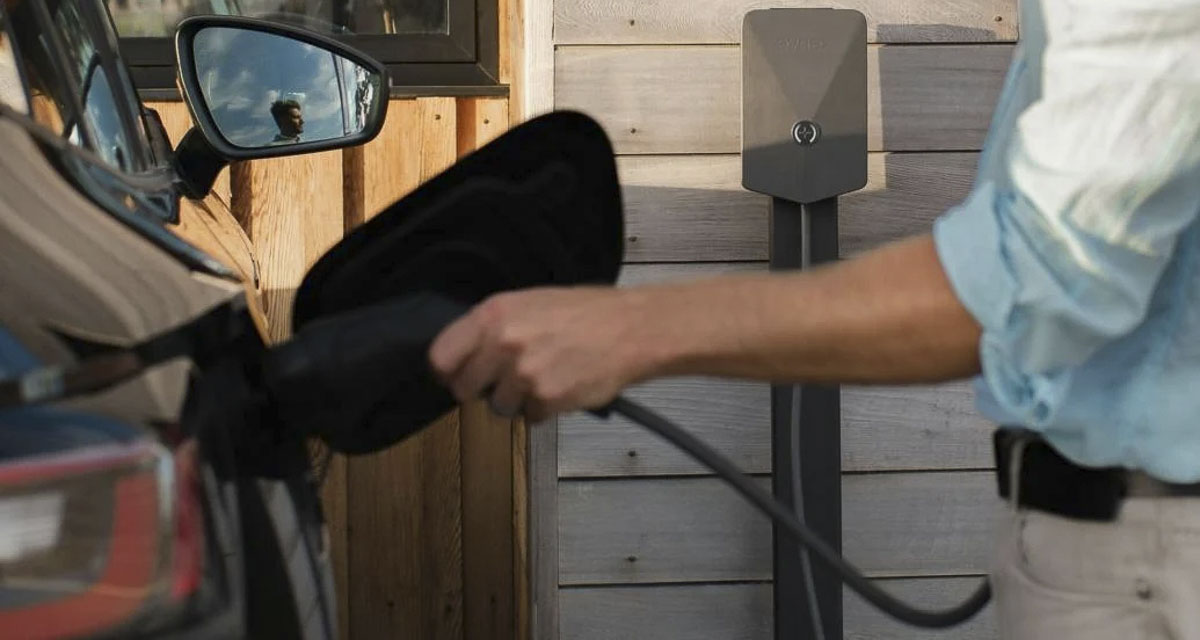
Some state agencies are reporting that their staff are hesitant to use EVs
TJ Martinell
The Center Square Washington
If you’re a Washington resident reluctant to buy or drive an electric vehicle due to the lack of charging infrastructure around the state or in cold weather conditions, you’re not alone.
Some state agencies are reporting that their staff are hesitant to use EVs for that same reason, highlighting an ongoing challenge for Gov. Jay Inslee’s efforts to electrify the public transportation sector. Most agencies are not on track to meet the state’s 2025 objectives.
Inslee in November 2021 signed an executive order directing the state agencies to transition away from fossil fuel vehicles and replace them with EVs. As part of that order, the cabinet agencies were tasked with meeting certain criteria regarding their light duty vehicle fleet.
The requirement is that they be:
- 40% EV by 2025
- 75% by 2030
- 100% by 2035
For medium and heavy duty vehicles (Class 2b and higher), the agency fleets must be 100% EV by 2040.
According to State Efficiency and Environmental Performance Office Director Hanna Waterstrat, five of the 24 cabinet agencies are either on track or exceeding the 2025 target of 40% EVs: the Governor’s Office, Puget Sound Partnership, the Department of Retirement Services, the Department of Commerce, and the Liquor and Cannabis Board.
“Vehicle availability has been tough especially starting out but things are really improving,” she told the Electric Vehicle Coordinating Council at its Wednesday meeting. She noted that “DES [Department of Enterprise Services] has been managing some funding for agency EV charging projects, but the demand has exceeded the available funding so far and we still have plenty of projects to do.”
The lack of public charging, and copper wire thefts disabling them, has proved a significant barrier for EV adoption. According to Waterstrat, Department of Commerce staff “are uncomfortable driving long distances or in poor weather in EVs, and sometimes opt to use gas powered daily trip rentals from the DES motor pool as an alternative. That said, we’ve developed brochures for each vehicle and for how to charge and we’re working on a series of educational videos that support our transition to EVs as well.”
The issues around inadequate charging ports was also noted by William Hannah, risk and budget manager for the Department of Ecology. He told the council that “the number one thing that we have with staff adopting EVs is the various charging infrastructure that is out there. Standardized charging infrastructure would be a huge help in training staff and getting them comfortable to take the EVs on long trips.”
Yet, he observed that “once staff were trained on how to use EV and how to use infrastructure, they commonly will respond that the EVs exceed expectations, that they’re quite nice to drive, and really meet the business need.”
According to a Thursday letter from the council to Inslee’s office, “charging infrastructure Data indicates that EV charging infrastructure is lagging. Washington is ahead of where it needs to be on public Level 2 charging (slower charging typically at a rate of 25 miles per hour) but well behind in fast charging (can charge from 20 to 80% battery capacity in about 20-30 minutes).”
As part of the upcoming 2025-2027 budget, the council’s member agencies have collectively submitted requests of funding of $499 to $537 million in Green Transportation Capital projects, including charging infrastructure.
Department of Commerce Clean Transportation Managing Director Steven Hershkowitz told colleagues at Wednesday’s meeting that they needed to push harder regarding legislative funding requests. “If we’re not achieving our goals as state agencies, we can’t be expecting other entities across the state, whether they’re local governments or private entities to be meeting the state standards.”
This report was first published by The Center Square Washington.
Also read:
- VIDEO: WA diesel hits record $6.53, crushing truckers and school budgets
 With diesel nearing $6.53 per gallon in Washington, trucking businesses and school districts now confront sharply higher fuel expenses affecting budgets and workers.
 - Opinion: In plain sight – yielding to pedestrians
 Drivers often fail to see pedestrians due to inattentional blindness, which highlights the need for more focused awareness at intersections and stronger safety practices.
 - Expect delays on SR 14 in Vancouver for guardrail repairs Wednesday
 State Route 14 travelers in Vancouver should plan for morning delays as WSDOT will close two eastbound lanes for guardrail repairs, affecting mileposts 6.0 to 7.0.
 - Overnight closure planned on westbound SR 14 Camas Slough Bridge Tuesday
 WSDOT crews will close westbound SR 14 at Exit 14 in Camas to collect bridge deck samples and plan future repairs; detours will be in effect.
 - Opinion: Stay in your lane – seriously, it’s the law
 Drivers must choose the nearest lane when turning in Washington, and left turns bring added risk. Even with signals, every driver must help prevent crashes by following law.
 wpDiscuz
