



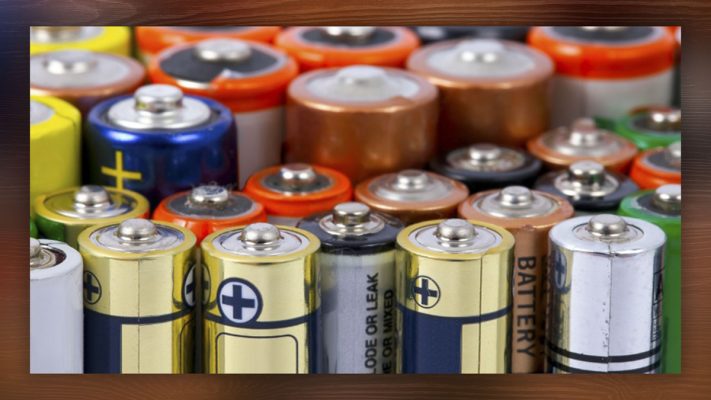
Batteries that end up in household garbage or inside recycling carts can explode, posing significant fire risks during transportation and at transfer stations
VANCOUVER — Clark County Public Health’s Solid Waste & Recycling team encourages residents to celebrate National Battery Day on Feb. 18 by recycling their used batteries at one of several safe, convenient drop-off locations across the county.
Batteries power countless everyday devices that make lives easier and more efficient. However, improperly disposing of batteries can have serious consequences. Batteries that end up in household garbage or inside recycling carts can explode, posing significant fire risks during transportation and at transfer stations. These fires can cause serious harm to sanitation workers and can damage costly equipment at Clark County transfer stations.
Clark County Battery Drop-Off program
Residents can drop off household batteries for free at several participating sites throughout Clark County. Drop-offs are limited to 10 batteries per person per day. Larger quantities must be dropped off at the household hazardous waste (HHW) locations at the transfer stations.
Battery drop-off sites accept:
- Alkaline
- Button and coin cell batteries
- Carbon zinc
- Lithium-ion (Li-Ion)
- Lithium primary
- Nickel cadmium (Ni-Cd)
- Nickel metal hydride (Ni-MH)
- Nickel zinc (Ni-Zn)
- Small-sealed lead acid under 5 pounds (SSLA/Pb)
- All cellphones regardless of size, make, model or age
Battery drop-off sites do not accept:
- Batteries from businesses
- Batteries larger than 300Wh
- Battery-containing products (except cellphones)
- Never attempt to remove batteries that are embedded or built into devices if not readily accessible. Damaging these inner batteries can pose serious health and safety risks, including fire and combustion hazards.
- Damaged, defective, or recalled batteries*
- Vaping or e-cigarette devices and products*
- Vehicle batteries*
- Other hazardous waste*
*These items can be dropped off at the HHW drop-off locations at the transfer stations.
Batteries must be individually bagged or have the ends taped to prevent hazards. To find a nearby drop-off location, go to RecyclingA-Z.com or download the RecycleRight mobile app (downloadable on Apple and Android). Larger quantities and certain specialized batteries can be dropped off at a household hazardous waste facility.
The battery drop-off program is provided by Clark County Public Health and Waste Connections of Washington. For more information, contact solidwaste@clark.wa.gov.
Information provided by Clark Co. WA Communications.
Also read:
- Dollars flowing into a pair of hotly contested WA congressional races
 Amanda McKinney leads 4th District GOP field with $523,892 raised, while Braun trails significantly behind incumbent.
 - Final Supplemental Environmental Impact Statement published for Interstate Bridge Replacement Program
 Federal agencies published the final environmental impact statement for the Interstate Bridge replacement project.
 - Belkot appeals judge’s decision to dismiss her case against Clark County
 Belkot’s attorney says the federal appeals court will hear the case in several months after judge dismissed all five claims.
 - Union baseball, softball teams honor military, veterans, and first responders
 Baseball and softball teams combined efforts to recognize military heroes and first responders with ceremonial pitches.
 - Union baseball, softball teams honor military, veterans, and first responders
 Baseball and softball teams combined efforts to recognize military heroes and first responders with ceremonial pitches.
 - Speed cameras designed to bring added safety to work zones
 WSP issued 65,000 infractions in first year, with 59,000 being penalty-free first offenses as program expands statewide.
 - Cathy Doriot retiring as the Ridgefield Chief of Police
 Chief Cathy Doriot expanded Ridgefield PD with detective, sergeants, officers and drone program during her tenure.
