



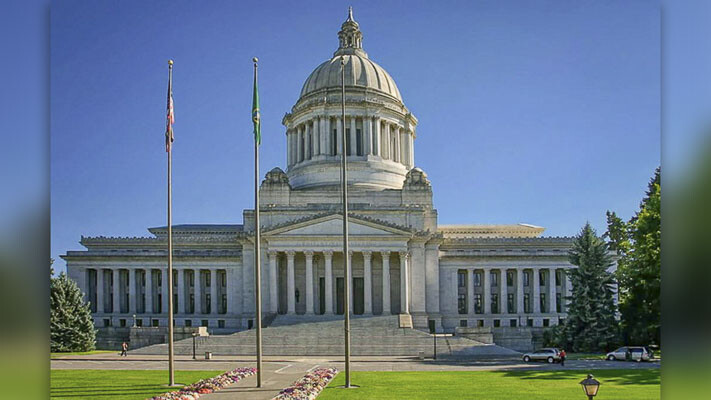
The House’s proposed operating budget is similar to a $69.2 billion plan released by the Senate last week
Brett Davis
The Center Square Washington
The Washington State House of Representatives has rolled out its proposed $69.5 billion operating budget for the 2023-25 biennium that makes investments in housing, education and behavioral health.
“This budget is the ‘Resilient Washington’ budget and it reflects the values of our House Democratic caucus and the people of Washington state,” Rep. Timm Ormsby, D-Spokane, chair of the House Appropriations Committee, said during Monday’s press conference unveiling the budget.
The House’s proposed operating budget is similar to a $69.2 billion plan released by the Senate last week.
Perhaps the biggest difference between the two budgets is the fact that the House version assumes passage of Gov. Jay Inslee’s proposed statewide voter referendum that would allow lawmakers to fund a six-year, $4 billion housing construction program through bonds.
If approved by voters, the measure – part of Inslee’s proposed $70.4 billion operating budget released in December – would allow the state to issue bonds outside Washington’s debt limit.
According to the proposal, the additional money would pay for approximately 5,300 housing units in the upcoming biennium and 19,000 more in the ensuing three biennia.
“Our members want to see a greater level of effort on affordable housing and providing access to affordable housing across the state,” House Majority Leader Rep. Joe Fitzgibbon, D-Burien, said at the press conference.
He added the governor’s bond proposal would remain under consideration, noting that it’s likely to be discussed until the end of session next month.
Inslee expressed his support on social media for the House’s proposed operating budget.
“I’m very encouraged to see the House propose larger investments to avert more homelessness in our state,” he tweeted Monday afternoon. “The stage is now set for discussions between the House and the Senate to develop a budget that will go big so people can go home.”
The House budget does not include any new taxes, although legislation increasing the real estate excise tax is still making its way through the Legislature.
House budget writers maintained a 9.8% reserve, or $3.2 billion, Ormsby said.
After the two budgets pass their respective chambers, House and Senate budget writers will negotiate to come to an agreement for a final budget that can pass the full Legislature before the April 23 end of session.
This report was first published by The Center Square Washington.
Also read:
- Opinion: ‘When are we going to get the full and complete details of the Interstate Bridge Replacement Program’s I-5 Bridge replacement project?’
 IBR team buried key details about light rail ending at waterfront with massive elevator system required.
 - POLL: Do you support extending light rail beyond the waterfront to connect with C-TRAN at Library Square?
 Readers can weigh in on Anne McEnerny-Ogle’s proposal to extend light rail beyond the waterfront to Library Square for improved C-TRAN connections.
 - Opinion: Passing a cyclist – Law, myth and a little patience
 Most drivers can’t legally pass cyclists in-lane due to vehicle width versus road measurements.
 - County seeks public comment on plans tied to CDBG and HOME funding
 Clark County proposes $2.4 million in federal funding for dental care, affordable housing, and sidewalk improvements.
 - Opinion: The path to real tax reform requires a spending limit
 Washington Policy Center director argues constitutional spending caps would force real budget tradeoffs instead of endless tax increases.
 - Court battle set to begin over WA’s new income tax
 Former AG Rob McKenna leads constitutional challenge against 9.9% tax on earnings above $1 million starting Thursday.
 - Vancouver mayor counters IBR’s proposal for the only light rail stop to be at the waterfront
 Vancouver’s mayor wants light rail extended beyond the waterfront to connect with C-TRAN buses at Library Square.
