



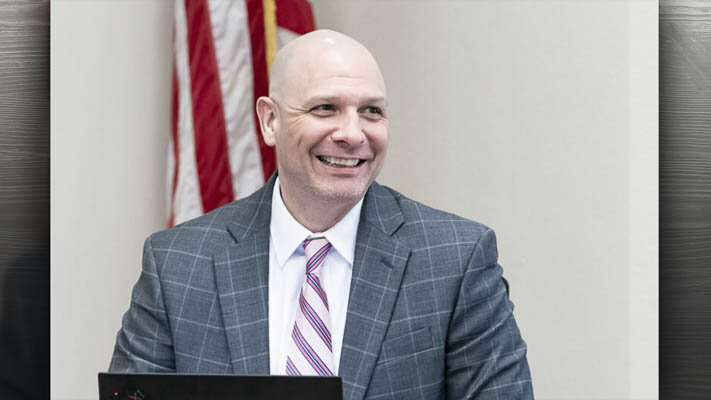
The legislation would have extended and doubled the existing public utility tax and business and occupation tax credits for employers who hire a veteran
Washington’s veteran-hire tax credits expired on July 1 after the House Democratic majority failed to bring House Bill 1005 to the floor for a vote during the 2023 legislative session.
The legislation by Rep. Peter Abbarno would have extended and doubled the existing public utility tax (PUT) and business and occupation (B&O) tax credits for employers who hire a veteran, spouse of a veteran, or spouse of an active-duty military member for a full-time position for at least two consecutive full-calendar quarters.
“Helping veterans and local businesses should have been a top priority during the 2023 session,” said Abbarno, R-Centralia. “Veterans and their families have already given so much to our community – this policy helps them with financial security and helps business fill much needed positions with highly qualified individuals.”
The Legislature established the tax credits in 2015 with the passage of Senate Bill 6057. In 2020, the Joint Legislative Audit and Review Committee (JLARC) performed a review on the two tax credits and recommended the Legislature modify the preferences to better serve unemployed veterans.
Following the committee’s recommendations, Abbarno’s legislation would have extended the program until July 1, 2033 and doubled the tax credit amount from $1,500 to $3,000. It would also have expanded the credit to veteran spouses and spouses of active-duty military members on the heels of some of the worst recruitment outcomes seen by the Defense Department service branches in decades.
Additionally, the bill would have ended the requirement that veterans be unemployed for at least 30 days and expanded eligibility to seasonal employers.
“In the upcoming session, we should bring this effort to the forefront and do the right thing for our veterans and military families,” added Abbarno. “This is not a partisan issue and should not be treated as such. We have so many talented and experienced military families and small businesses that can benefit from the incentives in this program. Active military, reservists, veterans, and their families should be recognized for their sacrifices made both domestic and abroad.”
November is National Veterans and Military Families Month. Veterans Day is Saturday, November 11.
The 2024 legislative session is scheduled to convene on January 8.
Information provided by Washington State House Republicans houserepublicans.wa.gov.
Also read:
- White House govt. Funding request for 2027 cuts $73 billion
 President Trump’s budget seeks to boost defense funding while cutting $73 billion from agencies like the EPA, NASA, and Agriculture, prompting sharp criticism from Democratic leaders.
 - Heywood asks WA Supreme Court to allow referendum effort on income tax
 Brian Heywood is petitioning the state Supreme Court after the Secretary of State rejected a referendum to repeal Washington’s new 9.9% tax on income over $1 million.
 - Opinion: Half the road, full stop – Understanding pedestrian right-of-way
 Doug Dahl explains how Washington’s law requires drivers to stop when a pedestrian is within one lane of their half of the road, not just when directly in front.
 - Clark County seeks volunteer for Law and Justice Council
 Applicants with experience in mental health services are encouraged to help guide Clark County’s coordination of local criminal justice and corrections planning.
 - VIDEO: Families at center of WA transgender sports debate face-to-face with OSPI
 Two Washington high school students and their parents met with Superintendent Chris Reykdal to discuss concerns about sports policies after one student faced an investigation for harassment.
 - As Washington lawmakers punt on school cellphone ban, some want more action
 At Robert Eagle Staff Middle School, all-day phone removal led to fewer conflicts and more student engagement, but some parents and lawmakers argue a ban should not be imposed statewide.
 - Opinion: The state’s RFK-proofing bill comes with a cost
 Mandates like HB 2242 can lead to higher premiums as insurance companies absorb costs for new preventive services, affecting affordability statewide.
 wpDiscuz
