



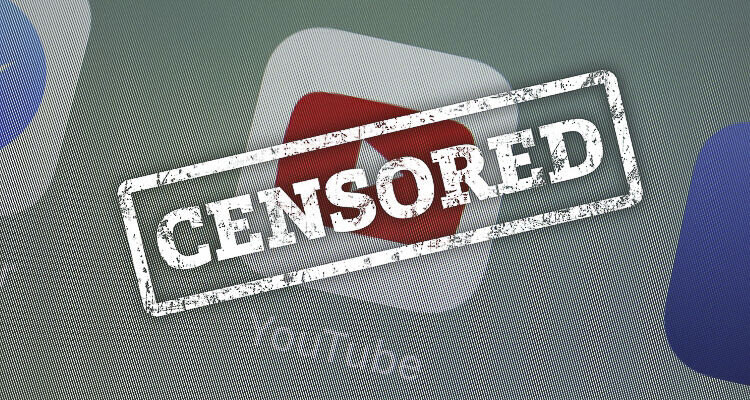
Now have to get approval from lawyers
Jason Cohen
Daily Caller News Foundation
The formerly strong coalition including government agencies and technology platforms, which collaborated to censor perceived disinformation, is dismayed due to its dissolution following years of sustained Republican pushback and recent court rulings, NBC News reported on Friday.
Republicans began publicly criticizing this coalition’s efforts during the 2020 election when social media users experienced significant censorship, according to NBC. The discourse eventually led to legal efforts and government investigations, which have now successfully halted nearly all collaboration between the government and social media companies, to the point where they allegedly need preemptive approval from lawyers.
Two U.S. technology platforms, which were previously accustomed to frequent briefings from the FBI’s Foreign Influence Task Force, have not received any contact from the bureau for months, employees told NBC. Moreover, any engagements between the FBI and the platforms must receive prior approval and oversight from Department of Justice lawyers, individuals familiar with the situation told NBC.
The relationship between the FBI and social media companies in response to the Missouri v. Biden free speech lawsuit rulings has drastically transformed, FBI Director Christopher Wray recently indicated in testimony before the Senate Homeland Security and Governmental Affairs Committee.
“We’re having some interaction with social media companies,” Wray stated. “But all of those interactions have changed fundamentally in the wake of the court rulings.”
A federal judge and appeals court found that certain government agencies and officials should be barred from coordinating with social media platforms to censor posts. The Supreme Court paused the injunction blocking these efforts but has agreed to take up the case.
“This is the worst possible outcome in terms of the injunction,” a U.S. official familiar with the situation told NBC. “The symbiotic relationship between the government and the social media companies has definitely been fractured.”
Department of Homeland Security (DHS) Secretary Alejandro Mayorkas told lawmakers in 2022 that the department had established a Disinformation Governance Board to counter misinformation and disinformation aimed at minority communities. The board, headed by Nina Jankowicz, received significant scrutiny from Republicans and the DHS halted it.
“I understand we don’t want to interdict constitutionally protected speech, but what is constitutionally protected speech?” Republican Utah Sen. Mitt Romney recently stated. “Certainly foreign agents don’t have constitutionally protected speech because they’re not subject to our Constitution. I presume bots don’t have constitutionally protected speech. American citizens do.”
“If you’re the one who’s raising the alarm about foreign interference or about something that is disenfranchising people and letting the platforms know, but it might cost you your job or your safety and security, you think twice about doing that,” Jankowicz stated, according to NBC.
The DHS’ Cybersecurity and Infrastructure Security Agency (CISA) has also ceased its coordination with social media platforms, a current CISA employee told NBC.
“Some of these efforts really are designed to isolate people and make them feel like they can’t communicate with CISA, like they can’t communicate with their peers in other states,” an individual employed in state election administration told NBC. “People feel that things are really, really fraught, and common sense does not rule today.”
CISA Director Jen Easterly withdrew from social media following conservative criticism, two individuals familiar with CISA told NBC. “At this point in time, I do not think the risk of us dealing with social media platforms is worth any benefit, quite frankly,” Easterly said, according to NBC. “I made a decision not to do that. So we are not doing that. Local election officials can give that to the platforms themselves, and I think that’s the right place for us to be.”
A current anonymous employee at billionaire Elon Musk’s X — formerly Twitter — expressed a lack of confidence regarding the platform’s ability to tackle propaganda efforts. “The company no longer has the team, the tools, or the capabilities to identify and mitigate these attacks,” the employee told NBC.
The FBI, DHS, CISA and X did not immediately respond to the Daily Caller News Foundation’s request for comment.
This story originally was published by the Daily Caller News Foundation.
Also read:
- White House govt. Funding request for 2027 cuts $73 billion
 President Trump’s budget seeks to boost defense funding while cutting $73 billion from agencies like the EPA, NASA, and Agriculture, prompting sharp criticism from Democratic leaders.
 - Heywood asks WA Supreme Court to allow referendum effort on income tax
 Brian Heywood is petitioning the state Supreme Court after the Secretary of State rejected a referendum to repeal Washington’s new 9.9% tax on income over $1 million.
 - Opinion: Half the road, full stop – Understanding pedestrian right-of-way
 Doug Dahl explains how Washington’s law requires drivers to stop when a pedestrian is within one lane of their half of the road, not just when directly in front.
 - Clark County seeks volunteer for Law and Justice Council
 Applicants with experience in mental health services are encouraged to help guide Clark County’s coordination of local criminal justice and corrections planning.
 - VIDEO: Families at center of WA transgender sports debate face-to-face with OSPI
 Two Washington high school students and their parents met with Superintendent Chris Reykdal to discuss concerns about sports policies after one student faced an investigation for harassment.
 - As Washington lawmakers punt on school cellphone ban, some want more action
 At Robert Eagle Staff Middle School, all-day phone removal led to fewer conflicts and more student engagement, but some parents and lawmakers argue a ban should not be imposed statewide.
 - Opinion: The state’s RFK-proofing bill comes with a cost
 Mandates like HB 2242 can lead to higher premiums as insurance companies absorb costs for new preventive services, affecting affordability statewide.
 wpDiscuz
