



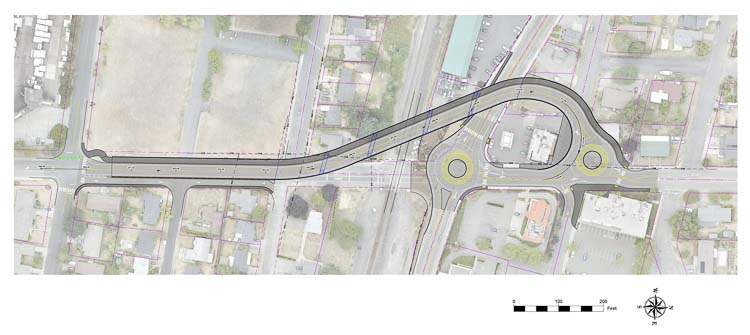
An average of 32 trains and 5,728 vehicles cross the Burlington Northern Sante Fe (BNSF) railroad tracks daily – making it one of the busiest rail crossings in Washington
As of March 2026, the city of Washougal is advancing an overcrossing design for the 32nd St Rail Crossing Project to transform a critical quarter mile segment of 32nd Street into a modern, mixed-use roadway without a rail crossing conflict. An average of 32 trains and 5,728 vehicles cross the Burlington Northern Sante Fe (BNSF) railroad tracks daily – making it one of the busiest rail crossings in Washington. Trains frequently block the crossing, creating traffic backups and safety risks.
Over the past few months, the city has evaluated two different options for the design of the 32nd St Rail Crossing Project – an undercrossing design where travelers would use a tunnel to pass under the railroad tracks, and an overcrossing design where travelers would use a bridge to cross over the tracks.
Part of the process of evaluating project alternatives includes assessing potential risks for each design to determine which design is the most cost effective. The city has worked with partners at BNSF railway to understand what risks and impacts to BNSF operations are associated with the undercrossing design, as well as conducted subsurface investigation of the area around the crossing (including drilling, sampling, and geophysical testing in the soil and rock) which identified increased risk associated with working under the railroad tracks.
Based on the results of this risk assessment, the city determined that the overcrossing design has significantly less risk, making it the most cost-effective option. The risks associated with the undercrossing design are unpredictable, creating increased potential for unexpected costs, and could pose barriers to project completion. The undercrossing design could cost up to $18 million dollars more than the overcrossing design.
In addition to minimizing risk and lowering cost, the overcrossing design allows for a shorter and more reliable construction schedule, results in improved pedestrian access south of the railroad tracks and requires fewer commercial property acquisitions.
Next, the city will evaluate the impacts of the overcrossing design as part of an environmental analysis under the National Environmental Protect Act (NEPA) and share results at an Open House later this spring.
Once complete, the 32nd St Rail Crossing Project will improve safety by separating trains from people driving, walking, and rolling and allowing for unimpeded emergency access. It will also eliminate railroad crossing delays, reduce emissions from idling vehicles, add capacity for a future third railroad track to increase freight and economic opportunity, and minimize flood risk with improved stormwater infrastructure.
For project updates and to sign up for the 32nd Street Rail Crossing newsletter, visit https://cityofwashougal.us/RailCrossing.
Information provided by the city of Washougal.
Also read:
- VIDEO: WA diesel hits record $6.53, crushing truckers and school budgets
 With diesel nearing $6.53 per gallon in Washington, trucking businesses and school districts now confront sharply higher fuel expenses affecting budgets and workers.
 - Opinion: In plain sight – yielding to pedestrians
 Drivers often fail to see pedestrians due to inattentional blindness, which highlights the need for more focused awareness at intersections and stronger safety practices.
 - Expect delays on SR 14 in Vancouver for guardrail repairs Wednesday
 State Route 14 travelers in Vancouver should plan for morning delays as WSDOT will close two eastbound lanes for guardrail repairs, affecting mileposts 6.0 to 7.0.
 - Overnight closure planned on westbound SR 14 Camas Slough Bridge Tuesday
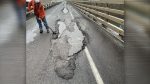 WSDOT crews will close westbound SR 14 at Exit 14 in Camas to collect bridge deck samples and plan future repairs; detours will be in effect.
 - Opinion: Stay in your lane – seriously, it’s the law
 Drivers must choose the nearest lane when turning in Washington, and left turns bring added risk. Even with signals, every driver must help prevent crashes by following law.
