



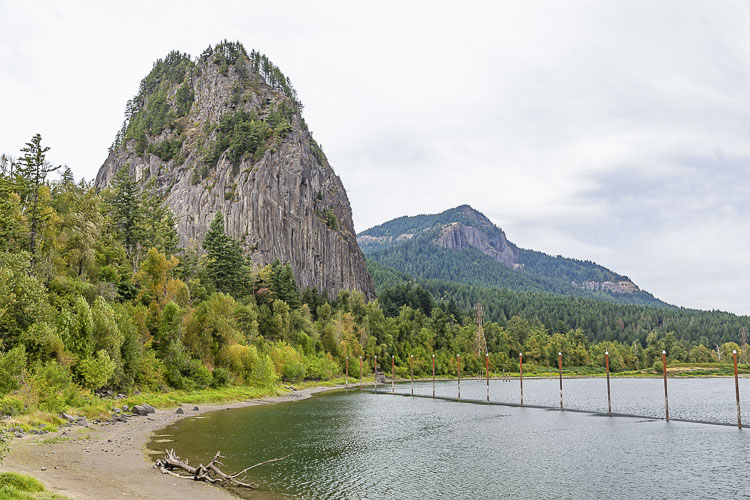
A reminder that fireworks are prohibited year-round at all WDFW wildlife and water access areas around the state
Before leaving for a camping or hiking trip for the long 4th of July weekend, be sure you are familiar with campfires and other restrictions on public lands in eastern Washington. Depending upon regional fire conditions, varying restrictions are in place to reduce the chance of wildfires on properties managed by the Washington Department of Fish and Wildlife (WDFW).
While wildfire risk is increasing, it is still moderate in most places in eastern Washington. Areas with greater risk already have campfire restrictions in place, such as within the Green Dot system of recreational areas in Yakima, Kittitas, and Chelan counties. Those areas observe fire restrictions between April 15 and Oct. 15 each year. WDFW properties within the Green Dot system include the Oak Creek, Colockum, and Wenas wildlife areas, and the LT Murray wildlife area, which includes the Quilomene and Whiskey Dick wildlife units.
Campfire restrictions are currently in place throughout the Columbia Basin, Chelan, Big Bend, Wells, Sagebrush Flat, and Klickitat wildlife areas as well. As a reminder, campfires are restricted year-round on the Sunnyside-Snake River Wildlife Area.
Additional restrictions are expected to go into place at the remainder of WDFW eastern Washington properties following the holiday weekend according to the observed fire risk.
“Early July is the traditional time for emergency fire restrictions to take effect in eastern Washington, outside of the areas with set annual closures,” said Cynthia Wilkerson, WDFW Lands Division Manager. “That said, the cool, wet spring means that current wildfire risk remains low in some areas of the state including the southeast and northeast corners. As such, we have decided not to enact restrictions on all WDFW lands in eastern Washington at this time and will continue to monitor the fire risk closely. We expect to adopt additional restrictions to reduce the chances of human-caused wildfire soon.”
A reminder that fireworks are prohibited year-round at all WDFW wildlife and water access areas around the state. Please also be careful not to drive or park on dry grass. With the wet spring, there are more areas of tall grass. When dry, it can present a fire danger if sparks land in it.
Other public land managers are also putting fire restrictions into effect or considering them. The Department of Natural Resources (DNR) is restricting campfires and other activities at its properties statewide as of July 1. The United States Forest Service (USFS) does not currently have public use restrictions in place for the Umatilla, Okanogan-Wenatchee, and Colville national forests; USFS phases in restrictions as conditions warrant.
The Washington Department of Fish and Wildlife works to preserve, protect, and perpetuate fish, wildlife and ecosystems while providing sustainable fish and wildlife recreational and commercial opportunities. The Department manages more than a million acres of public land (including over 700 in eastern Washington), with 33 wildlife areas and more than 450 water access areas around the state. These public lands help sustain wildlife habitat and public recreation opportunities for current and future generations.
Also read:
- Vancouver Police arrest barricaded man
 Terry Meyers, 58, faces multiple assault charges after pointing firearm at neighbor and barricading himself.
 - 49th Legislative District Democrats share their reasons for backing state income tax at Town Hall
 Three Democrat legislators defended the new income tax affecting only those earning over $1 million annually.
 - Letter: Freeze the scope and build the bridge
 Vancouver resident calls for project discipline after 22 years of planning and nearly half a billion in costs.
 - Ekklesia Theatre presents ‘Every Brilliant Thing’
 Interactive theatre production donates 50% of ticket sales to local counseling services.
 - Opinion: Public workers’ First Amendment rights are getting attention – in Idaho, not Washington
 Idaho moves to stop public schools from collecting union dues through government payroll while Washington continues favoring unions over worker choice.
 - Opinion: Lawsuit filed against the unconstitutional income tax in Washington state
 Former Attorney General Rob McKenna and Supreme Court Justice Phil Talmadge challenge the 9.9% income tax in Klickitat Superior Court.
 - Vancouver Police investigate domestic violence homicide
 Vancouver Police Major Crimes Unit investigating after woman found dead with knife wounds on NE Oakbrook Circle.
