



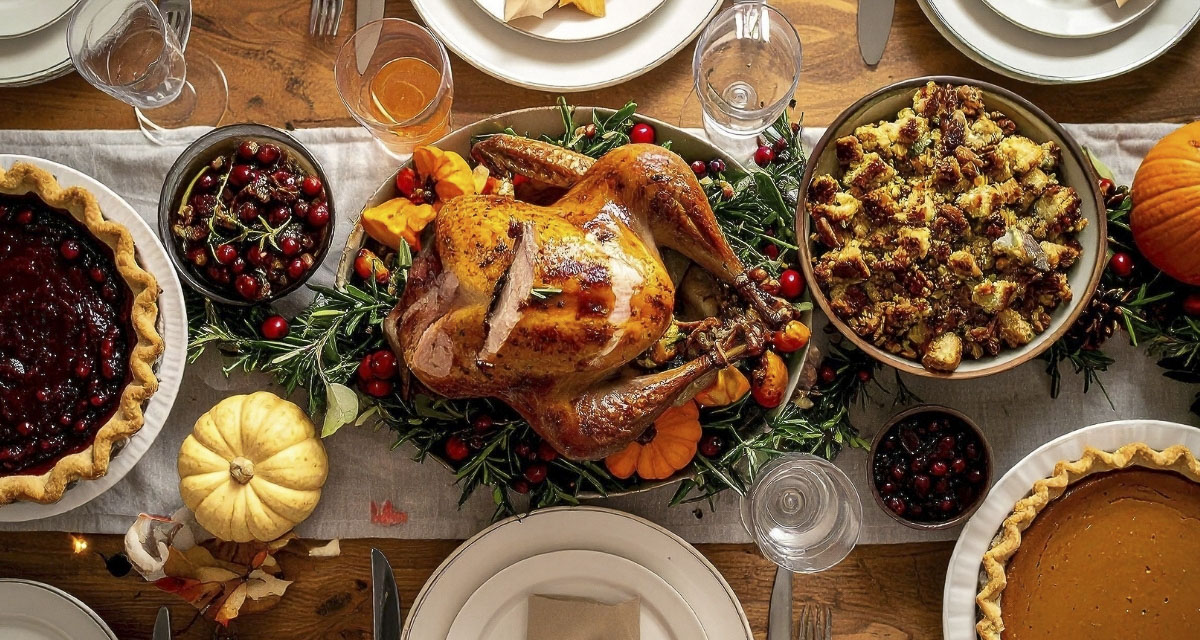
Each year, 30-40% of the food supply in the United States is thrown away
VANCOUVER – While residents are preparing for holiday meals, they may not know that food waste is a big problem. Each year, 30-40% of the food supply in the United States is thrown away. Clark County residents alone generate an average of 35,000 tons of edible food waste each year. The EPA estimates that reducing food waste could save a family of four nearly $3,000 annually, about $728 per person. In addition to wasting money, tossing food in the garbage contributes to climate change. As food breaks down in landfills, it releases methane, a potent greenhouse gas. Wasting food is one of the biggest contributors to a person’s environmental footprint.
Residents can reduce food waste this holiday season by taking some simple steps as they plan for and clean up after a holiday meal.
- Shopping: Food waste prevention starts with not buying more than is needed or can be eaten before it spoils. To prevent over-buying, recommendations include taking inventory of what is available on hand, using a tool like the “Guest-imator” to know how much is needed for parties of various sizes, making a list, and only purchasing items on the list when at the grocery store.
- Storage: Properly storing groceries can minimize spoilage. Dry goods should be stored in labeled, air-tight containers. Onions and apples should be stored separately from other foods, as they emit a gas that causes other foods to spoil faster. Local and in-season produce tends to last longer before spoiling because it requires less time in transport.
- Leftovers: Waste from leftovers can be reduced by sending guests home with leftovers in reusable containers. Using leftovers creatively can also reduce food waste. Examples include using mashed potatoes to make shepherd’s pie, topping oatmeal with cranberry sauce, and boiling bones to create nutrient-rich broths. To prevent foodborne illness, leftovers should be enjoyed within three to four days or frozen in air-tight containers to be enjoyed later.
- Composting: Food scraps can be composted instead of tossed in the garbage. Composting returns nutrients to the soil, reducing the need for synthetic fertilizers. Composting also reduces greenhouse gas emissions. In Clark County, composting options for residents without backyard composting systems include:
- Composting at the curb: Waste Connections customers in the cities of Vancouver and Ridgefield who subscribe to the organics service can dispose of food scraps in their organics carts.
- Food scrap drop-off: All residents can drop off food waste at a We Compost Community Hub location for composting. The service is free and available at locations throughout Clark County. Find locations on the We Compost Community Hub webpage.
More food waste prevention tips and resources are available on the Clark County Green Neighbors webpage, and a video is available on the county’s YouTube channel.
For information about road and park projects, closures, opportunities for community input, and more, residents can follow Public Works on X (formerly known as Twitter), Facebook and Instagram and view information on Nextdoor. Residents can also visit clark.wa.gov/public-works to sign up for email notifications.
Go to clark.wa.gov/public-works/news to read this information in another language. Click the button in the top right of the page that says “Change language” next to a globe icon and choose your preferred language.
Information provided by Clark Co. WA Communications.
Also read:
- Clark County mourns loss of hometown hero and humanitarian Greg Biffle
 Clark County is mourning Greg Biffle, the Camas High School graduate and NASCAR champion remembered not only for his racing career but for his humanitarian work and disaster relief efforts.
 - Opinion: IBR still holding and lying about coming billions in cost overruns
 Joe Cortright argues that Interstate Bridge Replacement officials are deliberately delaying the release of an updated cost estimate that he says could push the project toward $10 billion.
 - Opinion: Another problem with strike pay from the UI fund – Potential double-dipping, overpayments
 Elizabeth New (Hovde) argues that Washington’s new strike pay law risks overpayments and double-dipping unless workers are clearly warned at the point of applying for unemployment benefits.
 - Vancouver firefighters spread Christmas cheer through 2nd annual toy drive
 Vancouver firefighters collected and distributed more than 650 donated toys to students at six Evergreen Public School District elementary schools during their second annual holiday toy drive.
 - Person rescued after jumping from I-205 Bridge
 Vancouver fire crews and a Port of Portland rescue boat pulled a man from the Columbia River after he jumped from the I-205 Bridge and rushed him to a local hospital.
 - Weather update: Heavy rains and strong wind gusts expected for the rest of Thursday
 Heavy rain, wind gusts up to 45 mph, and ongoing flood risks are forecast for Southwest Washington as utilities continue restoring power after earlier storm damage.
 - BPA responding to widespread weather-related outages
 Bonneville Power Administration crews are responding to more than 40 transmission outages caused by extreme weather across the Northwest.
