



Warning is in effect until 11 a.m. Wednesday
The National Weather Service in Portland has issued a Flood Watch for the Columbia River at Vancouver affecting the greater Vancouver area. The Flood Watch warning will go into effect at 3 a.m. Sunday (June 12) and continue until 11 a.m. Wednesday.
Periods of heavy rain over the past 48 hours combined with melting snowpack in the mountains has resulted in rising river levels. Flows in rivers may increase quickly and reach critical levels. Residents and those with interests near the river should monitor rising water levels and be prepared for possible flood warnings.
Those who are in the watch area should remain alert to possible flooding. Additional information is available at www.weather.gov.
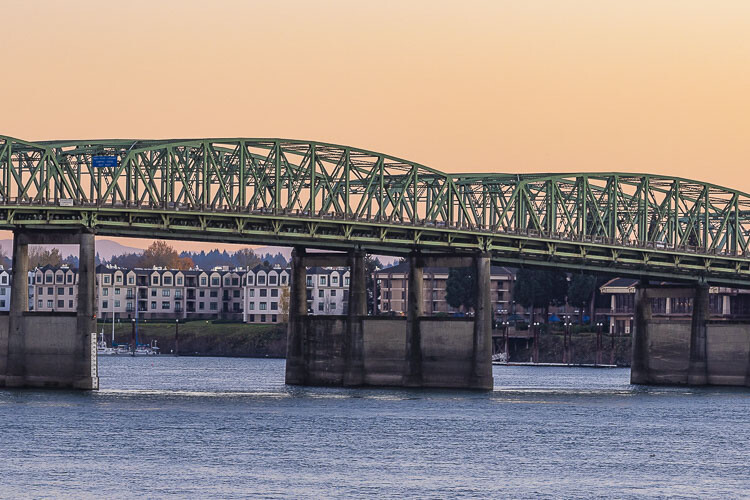
According to the Oregon Department of Transportation, travelers on Interstate 5 should expect more frequent lifts of the Interstate Bridge in the days ahead because of the increased level of the Columbia River.
The river level is expected to exceed 15 feet by early next week. The flood stage at that point on the river is 16 feet. That will mean longer lifts of the bridge spans as both upstream and downstream river traffic must use greater caution in navigating through the faster water.
The river level at the Interstate Bridge is generally six to seven feet.
Bridge lifts can sometimes be completed in six to eight minutes but lifts now are expected to last up to 20 minutes.
The increased river level has reduced the clearance at the high span, which is at the hump in the bridge at mid-river. That causes more marine traffic to use the lift span along the north side of the river. More lifts bring more delays on I-5.
Under maritime law, marine traffic has priority over I-5 highway traffic. However, no lifts are allowed during the morning and evening commute times weekdays from 6:30 a.m. to 9 a.m. and again from 2:30 p.m. to 6 p.m. except for federal holidays.
Recent rain throughout the Columbia River Basin has contributed to the high water. The Columbia River dams help regulate river volume.
The Columbia River reached the flood stage at the Interstate Bridge in 2017, when it reached 18 feet, and in 2011 when it reached 19 feet. The highest level in recent years came in 1996 when the river reached 24 feet.
The Interstate Bridge is jointly owned by Oregon and Washington and is operated and maintained by ODOT. The northbound span opened Feb. 14, 1917 and the southbound span July 1, 1958.
Also read:
- A Christmas Message from Clark County Today
 This Christmas message from Clark County Today reflects on the Nativity and the birth of Jesus Christ.
 - Vancouver hires former Los Angeles City Fire Department leader as its new fire chief
 The city of Vancouver has selected John L. Drake II, a former Los Angeles City Fire Department leader, to serve as its new fire chief beginning Dec. 29.
 - Opinion: Hard work is being done to try to trade one bad health care system for another
 Elizabeth New (Hovde) cautions that efforts to create a universal, taxpayer-financed health care system in Washington risk replacing existing problems with new challenges tied to cost, access, and centralized control.
 - Play area at Hazel Dell Community Park closed January through March for installation of new play equipment
 Play areas at Hazel Dell Community Park will close from January through March for removal of old equipment and installation of new, community-selected play features.
 - Opinion: The progressive attack on Washington’s sheriffs
 Nancy Churchill argues that proposed legislation would shift power over county sheriffs away from voters and concentrate control within state government.
 - Letter: Is Secretary of State Hobbs really JUST protecting your voter information?
 Camas resident Rick Vermeers questions the Washington secretary of state’s refusal to provide voter roll data to the U.S. Department of Justice and raises concerns about voter list transparency and compliance with federal law.
 - VIDEO: WA GOP budget lead blasts Ferguson’s fiscal plan as ‘a complete joke’
 Republican lawmakers sharply criticized Gov. Bob Ferguson’s proposed 2026 supplemental budget, arguing it fails to meet Washington’s four-year balanced budget requirement and masks deeper fiscal problems.
 wpDiscuz
