



Despite the challenges of the pandemic, FSS participants have been making progress toward their professional and financial goals
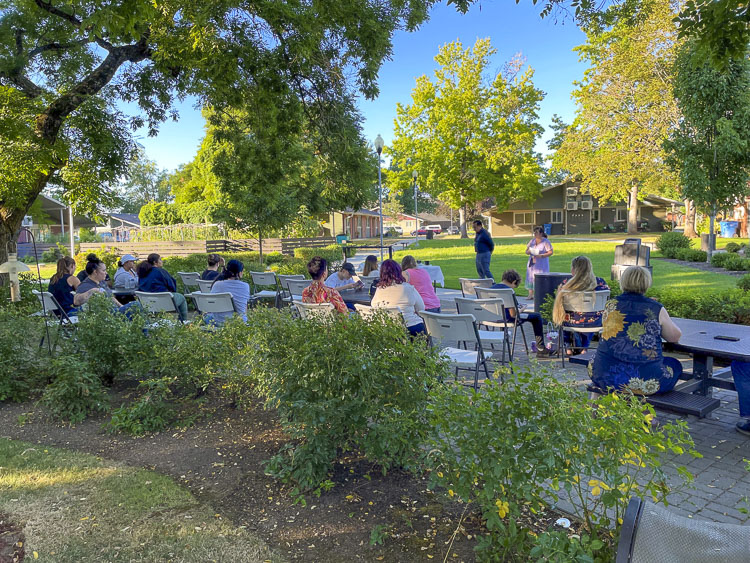
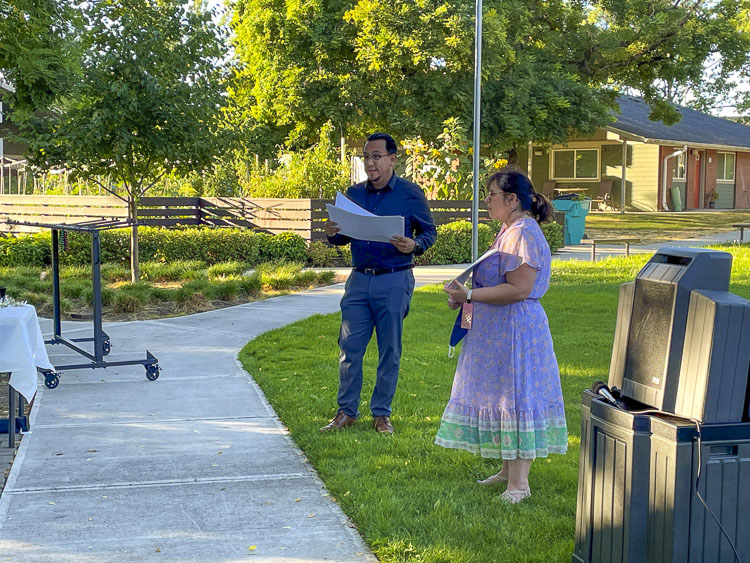
On Aug. 23, Bridgeview Resource Center held a small ceremony where graduates of the Family Self-Sufficiency Program received big checks. The checks represent money earned by participating in the program aimed at building independence and financial literacy.
It was the first time in years Bridgeview held an in-person graduation due to the COVID-19 pandemic. Despite the challenges of the pandemic, FSS participants have been making progress toward their professional and financial goals.
Tatyana Fernandez Kolomiyets’ goals were to improve her credit score, get an associate’s degree in technology, earn enough money to support her family without assistance and become a homeowner.
“It was definitely not an easy road to that success, but it was possible when you have the support,” she said. “I know my worth and know that I can accomplish whatever I set my mind to no matter the obstacles as long as I try my best.”
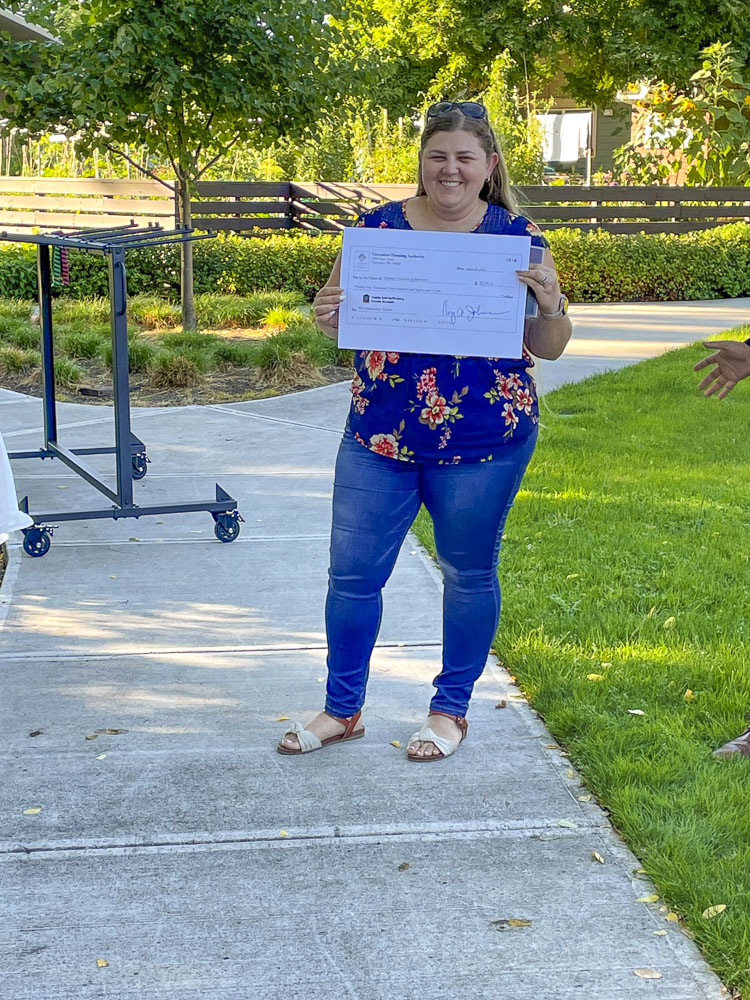
The FSS program is open to households using Housing Choice Vouchers (which reduce rent costs for those who cannot afford market-rate rents). An interest-bearing escrow account is established in their name and grows through earned income and accomplishing milestones throughout the program. Upon completion, graduates can use their checks however they see fit; typically it goes toward schooling costs, debt reduction, purchasing a vehicle or even putting a down payment on a home. One recent grad earned $40,000 in escrow.
All 19 of the 2021 and 2022 graduates are employed full time. They no longer use rental subsidies or Temporary Assistance for Needy Families (TANF), a government program providing cash assistance to low-income families. Twelve graduates head single-parent households.
“With this program I was able — because I had low rent — to go to school full time,” graduate Laurie Brown said. “I don’t think that I would be successful today without the program.”
Brown got an accounting job, learned how to be financially stable and in July purchased a home.
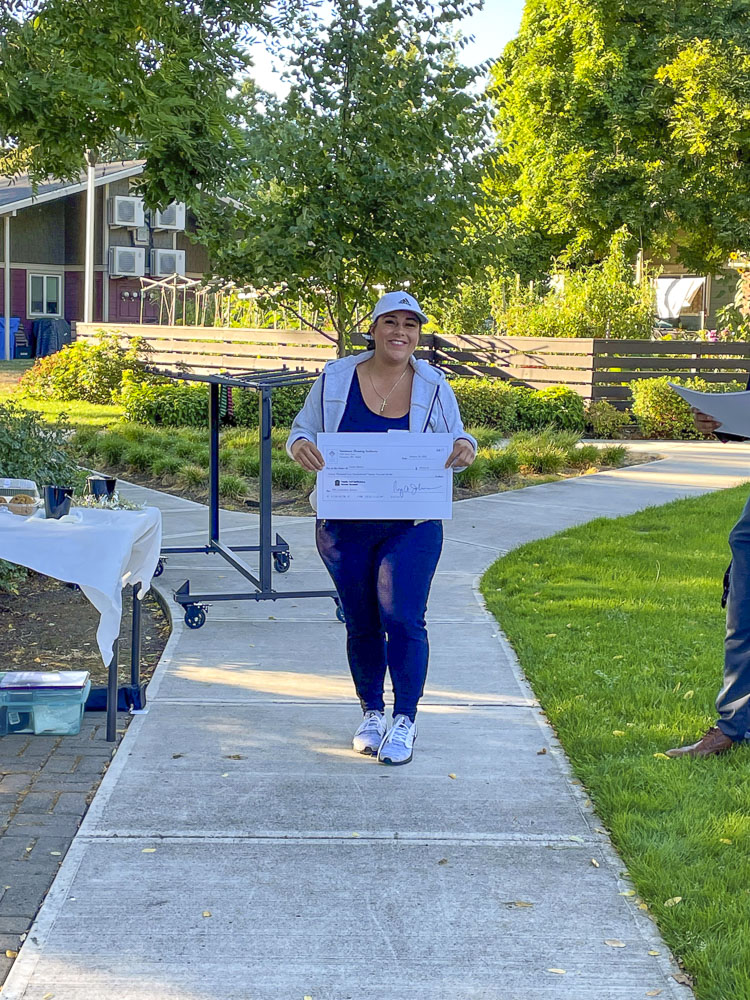
Since 2017, 18 graduates have purchased homes. Their escrow money is one piece of that financial achievement; FSS staff connect them with down payment assistance and first time homebuyer programs.
About 100 households participate in FSS each year. The current average annual income is about $30,000. Seventy percent of those working their way through the program are working at least part time.
FSS is funded by the U.S. Department of Housing and Urban Development. Bridgeview puts on the program in partnership with Vancouver Housing Authority.
“This unique program truly is an example of commitment, support and partnership between participants and community partners who are invested not only in their outcomes but their futures,” said Sean Moore, Bridgeview board member.
Bridgeview Executive Director Angie Sytsma said FSS is a prime example of how the nonprofit breaks the cycle of intergenerational poverty. Many graduates are the first in their families to be homeowners or complete higher education.
“That’s what Bridgeview is all about,” Sytsma said.
Program participation is five years, but people can graduate early. One participant completed the program in five months. It’s highly individualized and depends upon set goals.
Although the FSS program is restricted to those receiving subsidized rent in Clark County, anyone in the community can use the services and resources at Bridgeview Resource Center.
Information provided by Vancouver Housing Authority.
Also read:
- Evergreen Habitat for Humanity raises funds for 132nd Cottage Homes Project
 Evergreen Habitat’s Taste of Home event raised over $120,000 for 32 affordable cottage homes in Vancouver.
 - Commission on Aging to discuss implementation of ADA transportation standards in smaller cities
 Transportation engineers from Battle Ground and Ridgefield will address ADA compliance challenges facing smaller cities.
 - Letter: Congress quietly advances U.S.-Israel military integration through NDAA – Section 224
 Justin Forsman calls for public debate on NDAA Section 224 and U.S.-Israel military technology integration.
 - AGO memo says ‘realistic possibility’ a wealth tax would be overturned
 A March 2025 AGO memo warns a wealth tax’s $50M threshold exemption risks violating Washington’s uniformity clause.
 - Opinion: Governor Ferguson warns of upcoming shortfall after years of overspending
 Washington’s $80.2B budget grew more than twice as fast as population and inflation combined since 2013.
 - Opinion: High stakes, hidden election
 Five Washington Supreme Court seats are on the 2026 ballot — shaping income tax law, pension raids, and sheriff authority.
 - Opinion: Transportation officials may be pivoting as costs explode on interstate bridge replacement
 Rail’s share of the I-5 bridge budget may be far larger than the 14% figure officials are citing.
