



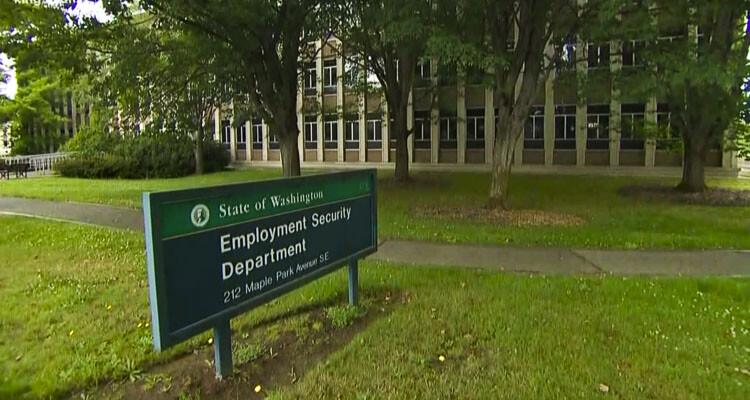
Mark Harmsworth of the Washington Policy Center shares conclusions made by the Auditor’s office performance audit
Mark Harmsworth
Washington Policy Center
The Washington State Auditor has completed a performance audit of the Employment Security Department (ESD) and has found the agency still has not corrected its systemic performance and fraud problems uncovered during the COVID-19 pandemic.

After the complete failure of the agency to handle pandemic unemployment claims, which culminated in the resignation of ESD Commissioner Suzi LeVine in 2021, Washington lawmakers passed several key pieces of legislation to require the agency to reform many of its internal processes and increase transparency to both the public and the legislature. Many of these recommendations were made by the Washington Policy Center in October 2020.
The auditors office has concluded that despite the appointment of Commissioner Cami Feek in June of 2021, ESD still has not implemented the required training or transparency controls required by the law passed in 2021.
In fact, the audit concludes that the main reason wait times have decreased is not because of an improvement in staff training or a streamlining of internal processes, but because the workload on the agency has decreased.
In conclusion, the auditor’s office stated,
‘We found ESD has partially met the law’s new requirements. However, the customer experience appears to have been minimally affected by those efforts. For example, we found that the decline in claims volume as the pandemic has subsided, rather than the agency’s strategic changes, has had far more of an effect on the amount of time people wait for their first benefit payment or to talk to a customer service representative. We made a series of recommendations to ESD to help it maximize the results of its reforms, including fully meeting legislative requirements, measurably improving the customer experience, and improving performance management.’
Additionally, the audit calls out a lack of management oversight and leadership in tying the strategic plan back to measurable results. In other words, ESD created a plan and didn’t bother to implement anything that would hold the agency accountable for actually fixing the problems.
The Employment Security Department leadership, led by Commissioner Cami Feek needs to fully comply with the legislation passed by lawmakers and implement the recommendations of the State Auditor. Additionally, ESD needs to consider improvements beyond the auditors findings, including better fund reporting transparency and individual unemployment accounts.
Maybe then ESD can avoid future problems should Washington experience another unexpected increase in unemployment claims.
Mark Harmsworth is the director of the Small Business Center at the Washington Policy Center.

Also read:
- Opinion: Stay in your lane – seriously, it’s the law
 Drivers must choose the nearest lane when turning in Washington, and left turns bring added risk. Even with signals, every driver must help prevent crashes by following law.
 - POLL: After hearing state leaders describe the I-5 Bridge as vulnerable in an earthquake, what is your reaction?
 State and local leaders describe the I-5 Bridge as structurally at risk but recommend drivers continue crossing it while complex replacement plans unfold.
 - Opinion: Historical state income tax and another massive operating budget highlight the end of the 2026 legislative session
 Rep. John Ley details the passage of a state income tax, an expanding $80 billion budget, and new Clark County infrastructure funding following the 2026 legislative session.
 - Opinion: Fighting for transparency in Washington government
 A recent court decision allows Washington lawmakers broad new secrecy over internal records, as advocates report rising obstacles to government transparency and public engagement.
 - Opinion: Attacking Democracy in the name of Democracy
 Ryan Frost critiques several 2024 legislative bills, warning unchecked Democrat dominance enables policies that erode local accountability, block referenda, and threaten citizen participation.
