



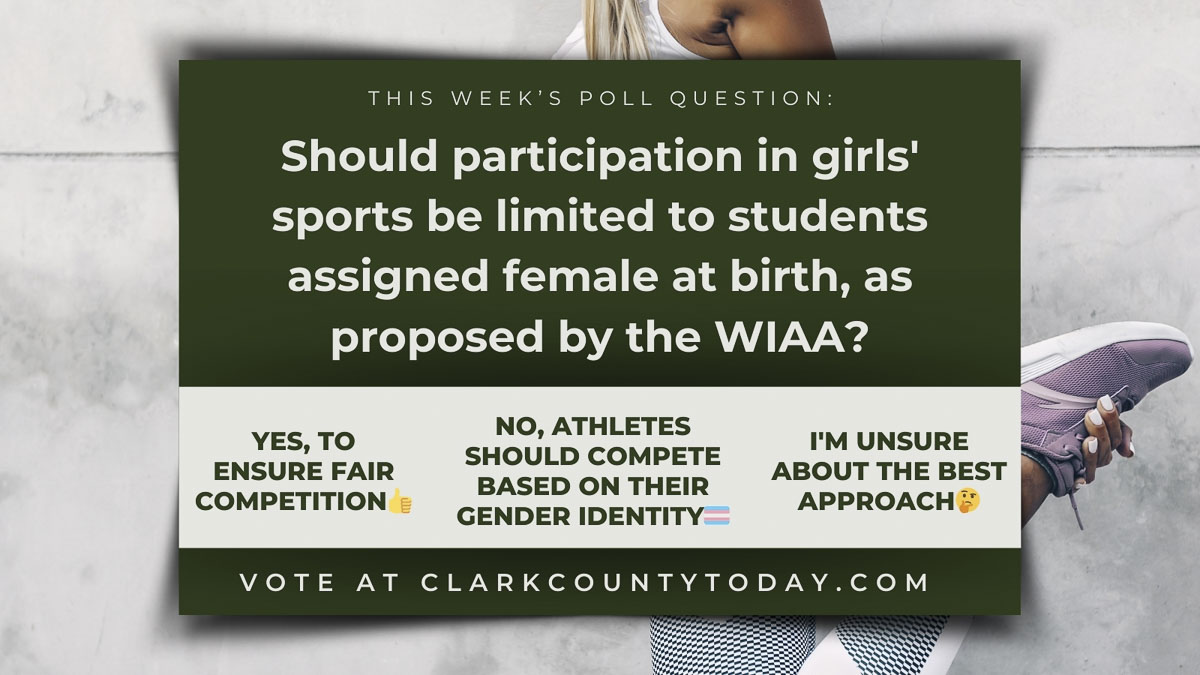
The Washington Interscholastic Activities Association (WIAA) has proposed a significant policy change that could reshape the landscape of high school sports. The proposal aims to limit participation in girls’ sports to students assigned female at birth while creating an open division for athletes of all gender identities. This potential shift has sparked debate across the state, with opinions ranging from support for fairness in competition to concerns about inclusivity.
We want to hear your thoughts! Take a moment to participate in our latest poll:
This is a complex and sensitive issue that impacts athletes, schools, and communities. For a deeper dive into the details of the WIAA’s proposal, check out our full story here:
WIAA board proposes to keep men out of women’s sports, create ‘open division’ for all gender identities

Your input matters, and we’d love to know where you stand on this important topic. Let us know your thoughts in the poll and share your perspective in the comments!

Also read:
- Opinion: Stalin would be proud – Clark County Socialists gathered for ‘No Kings’
 Reform Clark County’s Rob Anderson criticizes local and national groups for organizing protests that featured Auditor Greg Kimsey as a keynote, raising concerns about public trust and political partisanship.
 - Letter: Vancouver Mayor Anne McEnerny-Ogle makes several serious and incorrect engineering statements
 Bob Ortblad critiques engineering claims by Vancouver Mayor Anne McEnerny-Ogle, highlighting cost and safety advantages of an immersed tunnel for the I-5 crossing.
 - Opinion: The beginning of the end of anchor babies
 Lars Larson argues the Constitution excludes children born to non-legal residents, as the Supreme Court debates birthright citizenship and public opinion data shows limited support.
 - Opinion: Defend bail now or face more chaos on our streets
 A proposed Washington court rule would cap bail for most misdemeanors and allow defendants to bypass bondsmen, raising concerns about accountability and public safety.
 - Opinion: Some worker rights get a poster, others get fine print
 Elizabeth New questions why Washington state highlights some workplace protections while Janus First Amendment rights for public employees remain hidden in official materials.
 wpDiscuz
