



Council’s 3-2 vote on ICE resolution sparks heated exchanges, emotional public comment, and disagreement over the county’s role
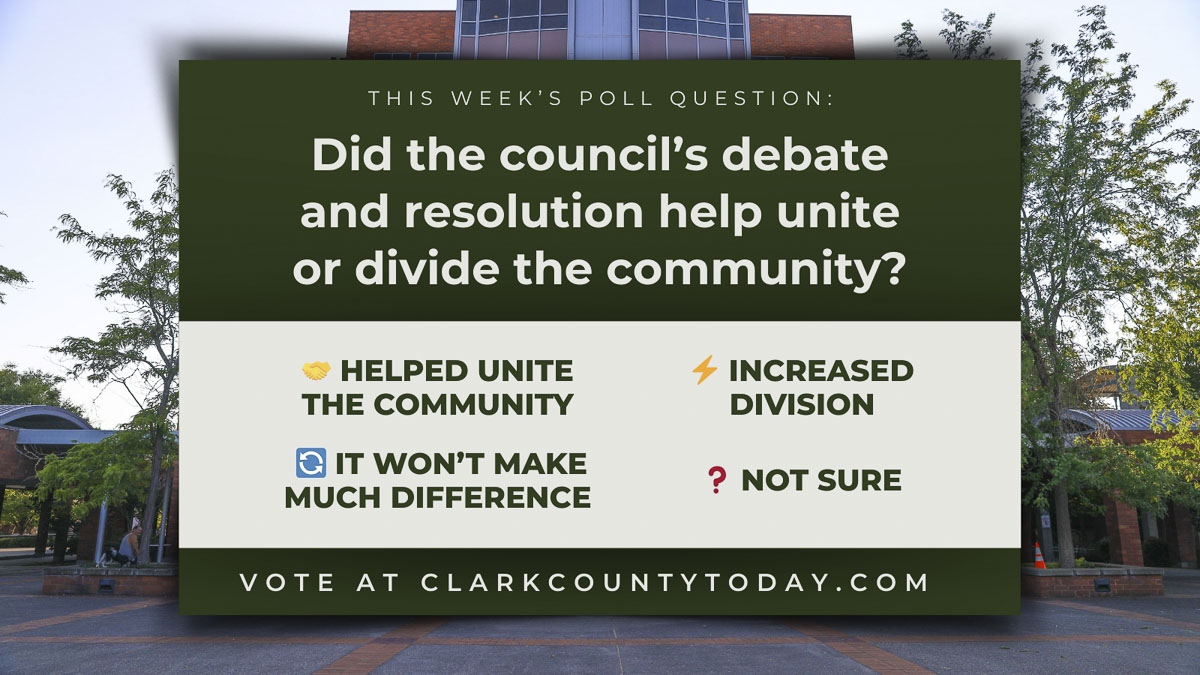
The Clark County Council voted 3-2 to move forward with a modified resolution addressing federal immigration enforcement activities, but not before more than an hour of intense public comment and a lengthy debate among councilors. Some anti-ICE activists said the language did not go far enough, while several law enforcement supporters argued the resolution risks dividing the community. Councilors also clashed over jurisdiction, racial profiling language, support for local law enforcement, and whether the county should “condemn” or simply say it is “alarmed” by reported ICE tactics. As the resolution heads toward a formal reading at the Feb. 17 meeting, we want to know: Did this debate and decision help unite Clark County — or deepen divisions?
More info:
Clark County Council modifies language on its resolution on ICE activities in the region


Also read:
- With more state financial stress on horizon, Ferguson signs WA budget
 Washington’s latest $79.4 billion state budget taps rainy day funds, reduces child care provider payments, and defers big tax collections, setting up a deficit in 2028.
 - Gov. Ferguson signs controversial law tightening standards for WA sheriffs
 Sheriffs must now meet strict standards or risk removal, with local officials appointing replacements instead of voter recall, amid ongoing debate over constitutionality.
 - Opinion: Stalin would be proud – Clark County Socialists gathered for ‘No Kings’
 Reform Clark County’s Rob Anderson criticizes local and national groups for organizing protests that featured Auditor Greg Kimsey as a keynote, raising concerns about public trust and political partisanship.
 - Opinion: The beginning of the end of anchor babies
 Lars Larson argues the Constitution excludes children born to non-legal residents, as the Supreme Court debates birthright citizenship and public opinion data shows limited support.
 - VIDEO: Rejected – WA SOS will not process referendum to repeal income tax law
 State officials stopped Let’s Go Washington’s referendum to overturn the new tax, citing constitutional limits. Legal and political battles, including a Supreme Court challenge, are expected next.
 wpDiscuz
