



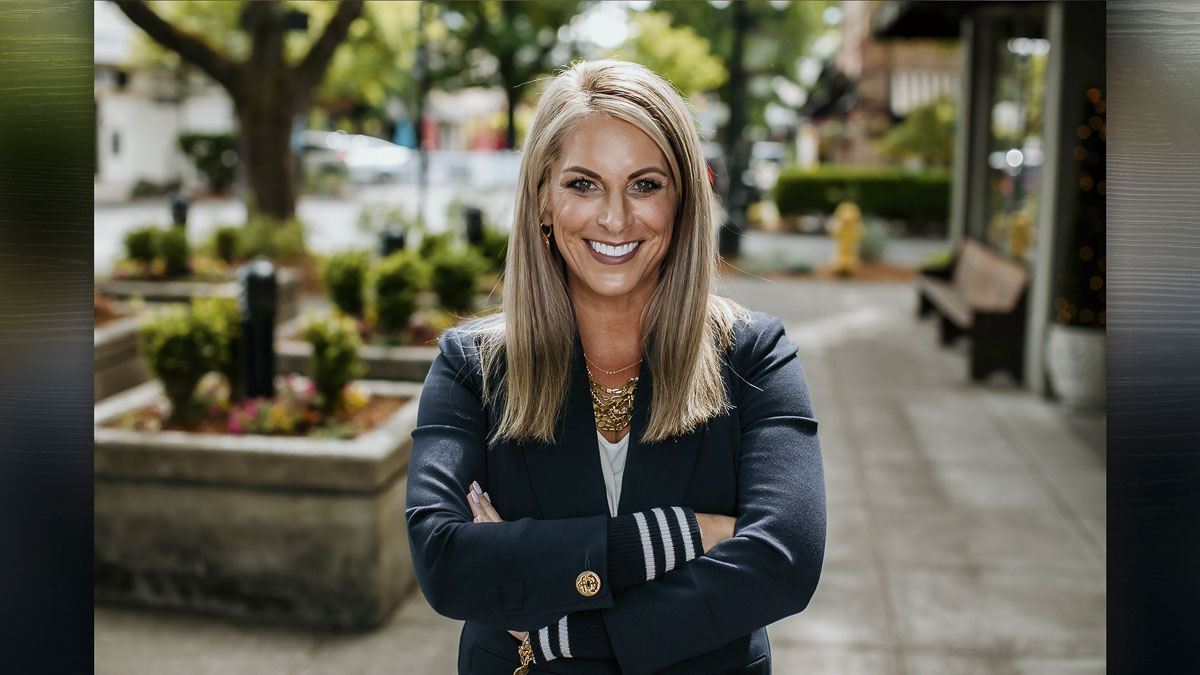
Leslie Lewallen says ‘the money won’t follow failure — and neither will the trust of the people’
Editor’s note: These opinions belong to Leslie Lewallen personally, and are not a reflection of the Camas City Council.
Leslie Lewallen
for Clark County Today
The homelessness crisis has devastated communities across Washington—morally, socially, and financially. As a Camas City Councilmember, I’ve seen firsthand the toll this crisis takes on families, businesses, and our local budgets. Municipalities are being stretched to the breaking point—forced to divert millions in taxpayer resources toward emergency responses, encampment cleanups, public safety calls, and homelessness-related medical and fire emergencies.
In Camas, like cities across Southwest Washington, our local police and fire departments have seen rising call volumes tied directly to untreated addiction and homeless encampments—fires started for warmth, medical calls for overdoses, and vandalism of public spaces. These aren’t isolated incidents — they are the natural consequence of a system that continues to fund failure under the guise of “compassion.”
We need to face facts: the “housing first” model without accountability has not worked. It was well-intentioned, but it has too often become a revolving door — placing individuals in temporary housing with little to no expectations for sobriety, treatment, or long-term stability. It’s a one-size-fits-all approach that ignores the reality that addiction and untreated mental illness are the root causes of chronic homelessness.
Now, a new federal executive order is holding cities accountable — and Washington isn’t ready. The order ties funding from critical agencies like HUD, HHS, DOT, and DOJ to cities and states that prioritize enforcement. That means: no more tolerance for open-air drug use, no more permanent encampments, and no more harm-reduction programs that enable addiction without requiring treatment.
What’s at stake? A lot.
Washington could lose tens of millions in homelessness response grants, addiction recovery funds, and criminal justice diversion programs. But what hasn’t been talked about enough is how much our infrastructure projects could also suffer.
Why? Because federal transportation funding is now tied to public safety. Transit hubs and large infrastructure projects — like the $7.5 billion Interstate Bridge Replacement (IBR) between Vancouver and Portland — are magnets for encampments, open-air drug use, and public safety concerns. The feds have made it clear: if we want their investment, we have to show we can keep those spaces safe and clean.
So far, the IBR has secured more than $2.1 billion in federal funding, including a $1.5 billion grant. But over $500 million in additional funds are still on the table — and Washington’s failure to enforce its own laws could put it all at risk.
This isn’t theoretical. Under Governor Ferguson’s leadership, we’ve seen a rollback of enforcement priorities, despite a $12 billion budget deficit. Encampment resolution programs have been slashed, and cities like Olympia and Tacoma continue to deprioritize drug enforcement. Meanwhile, the same state leaders are pushing forward with a light rail expansion as part of the IBR, even though it invites further public safety challenges and increases long-term maintenance costs.
Whether or not you support President Trump, his administration’s latest move to condition funding on enforcement is a wake-up call. There can be no more blank checks for broken systems.
I believe in compassionate care — but compassion without accountability is chaos. We need a system that supports recovery, not dependency. Temporary shelter with treatment requirements. Pathways to sobriety. Real consequences for lawbreaking behavior.
The message from Washington, D.C. is clear: Reform or lose funding. Accountability or decline. We owe it to our neighbors, our families, and our future to choose the path of responsible compassion — not blind tolerance.
The money won’t follow failure — and neither will the trust of the people.

Also read:
- Letter: Freeze the scope and build the bridge
 Vancouver resident calls for project discipline after 22 years of planning and nearly half a billion in costs.
 - Opinion: Public workers’ First Amendment rights are getting attention – in Idaho, not Washington
 Idaho moves to stop public schools from collecting union dues through government payroll while Washington continues favoring unions over worker choice.
 - Opinion: Lawsuit filed against the unconstitutional income tax in Washington state
 Former Attorney General Rob McKenna and Supreme Court Justice Phil Talmadge challenge the 9.9% income tax in Klickitat Superior Court.
 - Letter: ‘Oregon and Washington aren’t refusing to clean their rolls — they’re contesting federal jurisdiction and timing’
 Camas resident challenges Lars Larson’s fraud claims, explaining legal disputes over federal jurisdiction.
 - Opinion: ‘When are we going to get the full and complete details of the Interstate Bridge Replacement Program’s I-5 Bridge replacement project?’
 IBR team buried key details about light rail ending at waterfront with massive elevator system required.
