



Mark Harmsworth of the Washington Policy Center believes a simple change will reverse the negative housing availability trend, all without increasing taxes
Mark Harmsworth
Washington Policy Center
According to the Washington State Department of Commerce, Washington is expected to need an additional one million homes over the next 20 years.

The shortage was avoidable and in the most part created by legislation passed in 1990 called the Growth Management Act (GMA) which restricted how much and where you could build homes.
Passage of the GMA was driven by the perceived concerns about the effects of both population and economic growth on the environment. The Act was based on a philosophy of preventing affordable new housing from being built in open spaces outside existing built-up areas.
The primary goal was to promote density in existing cities and towns. The majority of lawmakers and Governor Booth Gardner, who signed the bill, gave little consideration to how it would drive up the cost of housing. New building growth, which usually occurs on the urban periphery, has laid the political foundation for a continuing movement to restrict and further control the pace and pattern of land development. Many Growth Management Act advocates argued that state and local land-use planning should actively shape the built environment for local citizens through zoning and various forms of centralized social control. This type of control, invariably, increases the cost of housing. GMA advocates and the lawmakers who voted for it knew it would drive up home prices, but they believed that “preserving open spaces” was more important. The high home prices Washingtonians see today are part of that legacy.
The legislature needs to pass legislation that promotes the availability of new housing rather than subsidizing the housing that is already built. Simple changes to the GMA, by modifying the arbitrary growth boundaries and population density goals set by the Puget Sound Regional Council (PSRC) will increase available land and the ability for more affordable housing to be built.
A simple change will reverse the negative housing availability trend, all without increasing taxes.
Mark Harmsworth is the director of the Small Business Center at the Washington Policy Center.

Also read:
- Opinion: Were Republican voters just sleeping during the August primary election?
 CCRP Chairman Matt Bumala says 60% of primary no-shows in the 17th and 18th districts were Republicans.
 - Opinion: WA Cares’ launch showcased care WA Cares did not provide
 Gov. Ferguson showcased a caregiving arrangement at the WA Cares launch that the program had not paid for a single day of.
 - Opinion: Portland’s War on Cars Part 4 – A smarter automobile strategy to end gridlock
 O’Toole argues fuel wasted in Portland-area congestion has sextupled since 1982, generating 250,000 tons of extra greenhouse gases annually.
 - Opinion: The Tooth Fairy’s secrets to making brushing & flossing magical
 Delta Dental of Washington’s Tooth Fairy Experience offers free resources to help children build lifelong brushing and flossing habits.
 - Opinion: Transit ridership trends are dismal but regional plans are oblivious
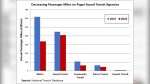 Puget Sound transit passenger-miles fell 31% from 2015 to 2024 despite a half-million-resident population increase.
 wpDiscuz