



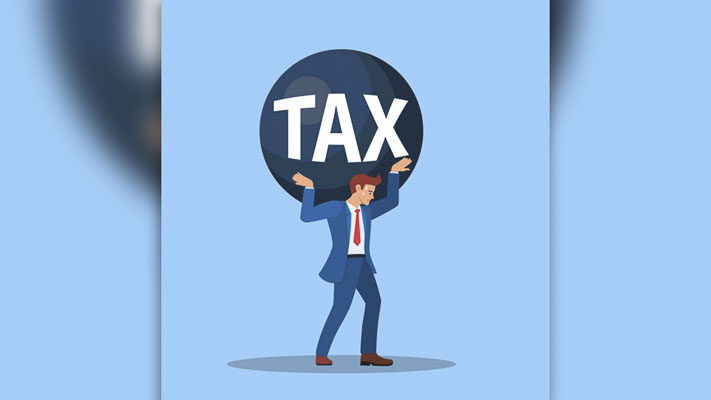
Mark Harmsworth of the Washington Policy Center explains that reducing the regulations and taxes on business will reduce consumer prices and provide budgetary relief
Mark Harmsworth
Washington Policy Center
The annual Ernst and Young report to the Council on State Taxation (COST) continues to illustrate the struggle business owners in Washington state are having to meet the ever increasing tax burden and maze of regulations that the state legislature mandates.

Ultimately, a new regulation or tax on a small business is passed onto the consumer as a price increase in products and services provided.
The report highlights that business paid $23.5 billion in total state and local taxes in fiscal year 2020. The average taxes paid per employee by a business to the state $8,100. Washington continues to rely heavily on its businesses for tax revenue, with Washington businesses paying nearly half the tax revenue collected by state and local government agencies.
Washington is ranked 9th highest in the nation on the business un-friendly list, even outranking California.
Hidden in the numbers are the costs to comply with tax filing, state regulations, state audit costs and government mandates on small business. Some businesses have full time employees just to deal with government regulation. Over burdensome regulations and taxes, such as the proportional sales tax, municipal head tax on employees and unemployment taxes create a compliance nightmare for small business that do not have the time or revenue to dedicate an employee for the filing requirements.
One of the most punitive taxes, hidden from consumers and baked into in the cost of a producing product or providing a service, is the state Business and Occupation (B&O) tax. This tax represents 19.1% of the taxes a business pays and is calculated on gross revenue, allowing no deductions for costs. Even a business that looses money has to pay B&O tax on any revenue generated.
Business taxes are not a tax that someone else pays, ultimately the tax is passed onto the consumer as no business could be profitable without doing so.
Reducing the regulations and taxes on business, particularly small business will reduce consumer prices and provide budgetary relief. This is particularly needed during the continued inflationary pressure caused by the policies of both Washington State and the Federal government.
Mark Harmsworth is the director of the Small Business Center at the Washington Policy Center.

Also read:
- Opinion: IBR’s evasive, misleading and dishonest excuses for higher cost
 Joe Cortright argues the Interstate Bridge Replacement Program has withheld detailed cost estimates while offering contradictory explanations for rising costs tied to the I-5 Bridge project.
 - Opinion: The limits for drug-impaired driving
 Target Zero Manager Doug Dahl explains how Washington law defines drug-impaired driving and how officers are trained to recognize impairment beyond alcohol limits.
 - Opinion: ‘Please make your voice heard by taking my legislative priorities survey’
 Rep. John Ley invites Clark County residents to share their views by participating in a legislative priorities survey during the 2026 session.
 - POLL: Do the proposed changes to the Clark County Council’s Rules of Procedure suggest the council lacked authority in 2025?
 A new reader poll asks whether proposed changes to the Clark County Council’s Rules of Procedure indicate the council lacked clear authority during a 2025 board removal.
 - Letter: ‘HSD needs to give a detailed line-item accounting of where the last levy went, and of how they plan to use this one’
 Randall Schultz-Rathbun urges Hockinson School District to provide detailed, transparent accounting of past and proposed levy spending before asking voters for additional funds.
 wpDiscuz
