



Elizabeth New (Hovde) points out that many workers don’t benefit at all from the paid family and medical leave fund and are just going without wages they could be using for other life needs
Elizabeth New (Hovde)
Washington Policy Center
“The paid family and medical leave (PFML) premium rate will increase to 0.92% in 2025,” Emily Makings with the Washington Research Council reported Wednesday afternoon. “The Employment Security Department (ESD) made the announcement during today’s meeting of the PFML Advisory Committee.”
The 2025 rate is significantly higher than the rate that accompanied the program when it first began in 2019 at .40%. The fund is not paying its way as Washingtonians were sold.
In addition to a more than doubling of the tax rate, PFML has already received a general fund bailout of $200 million. Short-term deficits in the PFML account beginning early in 2025 and continuing intermittently through 2026 could require another bailout. Lawmakers have also questioned if they set the rate too low for this “if you build it they will come” taxpayer-financed benefit.
Employers and employees pay into this fund that allows workers taxpayer-paid time off with new babies or time off for people with medical needs of their own or others. Employers pay 28.57% of the total PFML tax and employees pay 71.43%. In 2025, employers will pay 28.48% of the premium and employees will pay 71.52%, writes Makings.
Many workers, of course, don’t benefit at all from this fund and are just going without wages they could be using for other life needs. My research has also shown that PFML is no safety net. Middle- and upper-income wage earners use the program more than those with lower incomes. In fact, people making $60 or more an hour used the fund about twice as much as the lowest wage-earners.
Elizabeth New (Hovde) is a policy analyst and the director of the Centers for Health Care and Worker Rights at the Washington Policy Center. She is a Clark County resident.

Also read:
- Opinion: Were Republican voters just sleeping during the August primary election?
 CCRP Chairman Matt Bumala says 60% of primary no-shows in the 17th and 18th districts were Republicans.
 - Opinion: WA Cares’ launch showcased care WA Cares did not provide
 Gov. Ferguson showcased a caregiving arrangement at the WA Cares launch that the program had not paid for a single day of.
 - Opinion: Portland’s War on Cars Part 4 – A smarter automobile strategy to end gridlock
 O’Toole argues fuel wasted in Portland-area congestion has sextupled since 1982, generating 250,000 tons of extra greenhouse gases annually.
 - Opinion: The Tooth Fairy’s secrets to making brushing & flossing magical
 Delta Dental of Washington’s Tooth Fairy Experience offers free resources to help children build lifelong brushing and flossing habits.
 - Opinion: Transit ridership trends are dismal but regional plans are oblivious
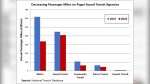 Puget Sound transit passenger-miles fell 31% from 2015 to 2024 despite a half-million-resident population increase.