


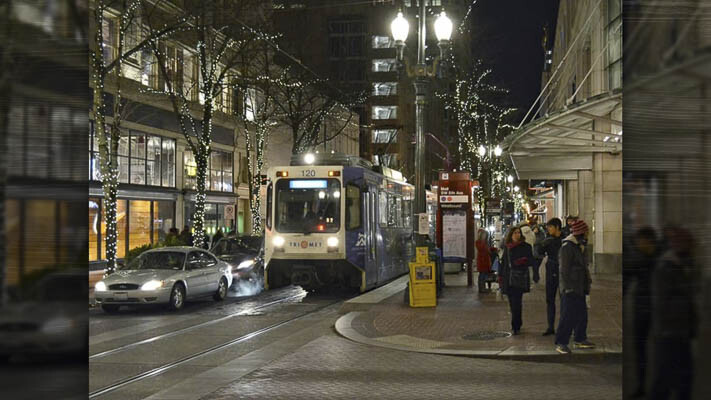
John A. Charles Jr. believes that recent evidence suggests that it’s time to reconsider the basic purpose of the agency
John A. Charles Jr.
Cascade Policy Institute
For those of us who came of age in the 1970s, the conventional wisdom was that cars were gas guzzlers and the environmentally correct way to travel was via transit.
That is no longer the case.
Last month the Federal Transit Agency (FTA) released its 2022 National Transit Database. According to Oregon economist Randal O’Toole, the results show that transit used more energy per passenger-mile than the average car or light truck in every urban area. Transit vehicles also emitted more greenhouse gasses than the average car or light truck in every urban area except New York.
Local planners seem to have missed this development. Metro’s proposed Regional Transportation Plan, which the agency will adopt in early December, recommends that we provide more funding for TriMet and take measures to increase ridership as a means of reducing greenhouse gas emissions. Obviously this strategy will fail, because transit itself is failing.
TriMet’s share of all regional trips today is about 4%, which means it’s irrelevant to most regional travelers. This suggests that it’s time to reconsider the basic purpose of the agency. Ridership peaked in 2012, and there is no evidence that it will ever come back. If there are few riders and transit vehicles are less efficient than cars, what is the point?
John A. Charles, Jr. is president and CEO of Cascade Policy Institute, Oregon’s free market public policy research organization.
Also read:
- Opinion: Portland’s War on Cars Part 4 – A smarter automobile strategy to end gridlock
 O’Toole argues fuel wasted in Portland-area congestion has sextupled since 1982, generating 250,000 tons of extra greenhouse gases annually.
 - Opinion: Transit ridership trends are dismal but regional plans are oblivious
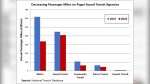 Puget Sound transit passenger-miles fell 31% from 2015 to 2024 despite a half-million-resident population increase.
 - Interstate Bridge Replacement Program seeks qualified firms for bridge replacement contract
 The CRBR project is backed by $5.7 billion from state funds, federal grants, and future tolling.
 - Opinion: Bankrupt – A $3.5 billion Rose Quarter Freeway widening project
 Joe Cortright argues ODOT’s Rose Quarter project has grown from a $450M approval to a $3.5B estimate, with a $2B funding gap.
 - Opinion: Portland’s War on Cars 3 – Ending the war on automobiles
 O’Toole argues Portland should add toll lanes, fix safety hazards, and redesign TriMet routes to end its anti-auto policies.