



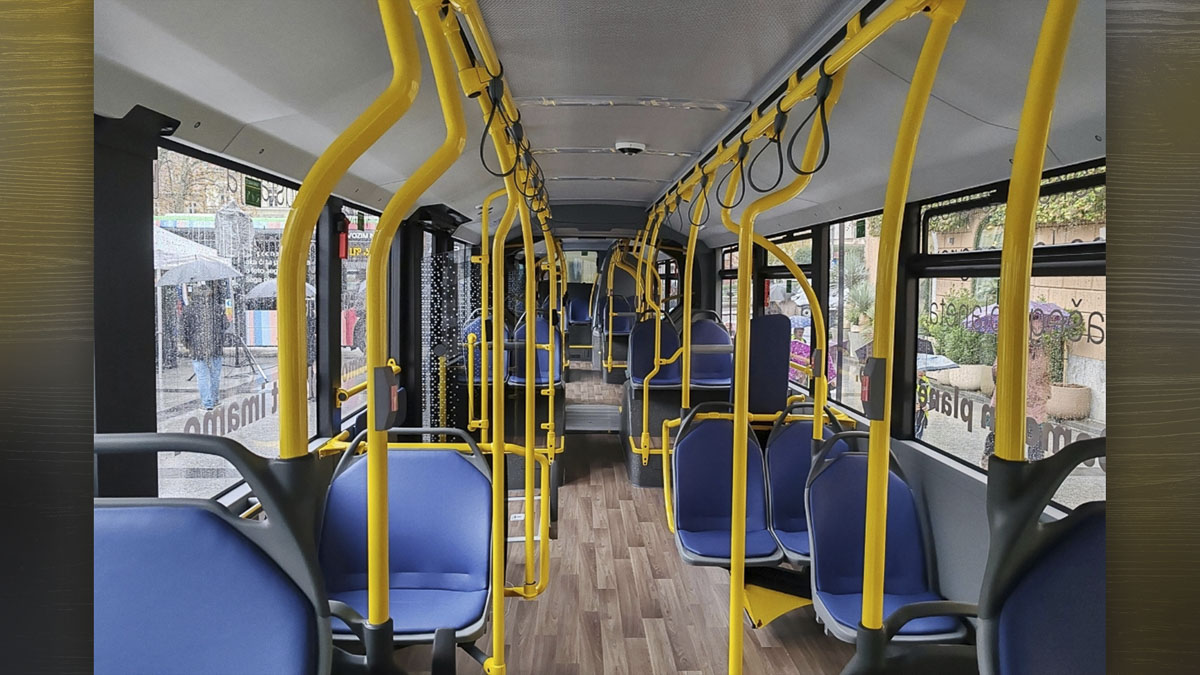
Charles Prestrud explains that even if board representation is broadly proportional geographically it may not be representative of public preferences
Charles Prestrud
Washington Policy Center
Public transportation features prominently in city, county and regional plans. The legislature has been very accommodating and has enabled five different types of transit authorities, each with dedicated revenue sources (also known as taxes). The most common type is the Public Transportation Benefit Area (PTBA). These agencies are governed by boards usually comprised of nine city and county council members who are appointed though a caucus process. Twenty-two such agencies have been formed with taxing districts encompassing more than three and half million Washington residents who pay a total of nearly $900 million per year in transit taxes, mostly sales taxes that range from .2 to 1.2%.

The PTBA enabling legislation was intended to provide proportional representation by requiring the appointed board members to represent cities and county areas roughly in proportion to their population. In practice this has proven difficult because cities vary greatly in size and there are often more cities than there are board seats, which means some residents need to rely on elected officials from other jurisdictions to represent their interests. Because board members are appointed, not directly elected residents have little or no say in who is selected, and often aren’t even aware who is supposed to be their board representative.The public has no ability to vote for or against most of the board, nor can they run for a seat on the board. As a result, the PTBA boards are insulated from public opinion and lack accountability.
Even if board representation is broadly proportional geographically it may not be representative of public preferences. For example, earlier this year the Clark County Council voted to remove Council Member Michelle Belkot from the C-Tran board because she indicated she would not support extension of Portland’s light rail system to Vancouver Washington because she did not believe it was in the best interests of her constituents. This incident set off a series of lawsuits and a tweak to state law regarding the proportional representation requirement. This situation highlights the inherent conflicts of interest created when elected officials are appointed to agency governing boards where they end up wearing three hats. Is a transit board member obligated to represent the interests of their constituents? Or, should they take the position preferred by the jurisdiction in which they hold office? Or, is the expectation they will go along with the majority of the transit agency board regardless of impacts on their constituents?
In past sessions the legislature has amended the laws governing transit agencies, but the changes don’t address that fundamental question, in fact, the changes have made transit agencies even less accountable. One change was to require appointment of non-voting labor representatives to transit agency boards. These board members are chosen by the union with no public input. In 2025, the legislature allowed PTBAs to appoint two voting members intended to represent transit dependent constituents and related organizations, but there is no requirement for these appointees to live in the district they are supposed to represent and the public has no say in who is appointed. As a result of these changes transit agency boards are even less accountability to the public.
If transit performance trends were all heading in a positive direction this lack of accountability might not matter, but costs are rising while total transit ridership in the state was lower in 2024 than it was ten years earlier. Ridership is still below pre-COVID levels for most PTBAs. This is not due to a lack of funding, revenue has increased for every one of the PTBAs and total transit revenue in the state has nearly doubled since 2014. In addition to the local tax revenue transit agencies collect, the legislature has also been generous in increasing state subsidies, which have more than tripled since 2019 and to over $360 million dollars in 2024.
Transit agencies are facing a tsunami of change as travel patterns shift, more people work from home, and rapid advances vehicle technology, which is on the cusp of bringing robotaxis into widespread service. These sweeping changes are creating challenges and opportunities for transit agencies, but the governance structure has created boards dominated by go-along to get-along members and cheerleaders rather than innovators or critical thinkers. Local elected officials who are critical of existing transit plans or that are anxious for agencies to adapt to emerging trends find it difficult if not impossible to get appointed to board positions. As a result, change comes slowly, or not at all, and transit mode share languishes in the low single digits.
Representative John Ley has introduced a bill, HB 2143, that would address the question of proportional representation in Clark County, but it doesn’t go far enough to resolve the basic conflict of interest problem created by the existing governance structure or increase transit agency accountability.
If the legislature truly expects transit agencies to accommodate a meaningful share of the state’s growing travel demand then they will need to face up to the reality that transit boards as currently constituted aren’t going to get us there. Much greater accountability and clearly defined performance objectives are urgently needed, not increased subsidy.
Charles Prestrud is the director of the Coles Center for Transportation at the Washington Policy Center.
Also read:
- Opinion: Half the road, full stop – Understanding pedestrian right-of-way
 Doug Dahl explains how Washington’s law requires drivers to stop when a pedestrian is within one lane of their half of the road, not just when directly in front.
 - Opinion: What is the cost of a bridge?
 John Ley argues the I-5 Bridge replacement’s soaring cost stems from costly extras like light rail, noting other states deliver larger, toll-free bridges for much less.
 - Letter: Vancouver Mayor Anne McEnerny-Ogle makes several serious and incorrect engineering statements
 Bob Ortblad critiques engineering claims by Vancouver Mayor Anne McEnerny-Ogle, highlighting cost and safety advantages of an immersed tunnel for the I-5 crossing.
 - Washington’s studded tire deadline is March 31
 Drivers must remove studded tires by March 31 or face a $137 fine, with WSDOT urging early action due to busy service centers and no planned deadline extension.
 - VIDEO: WA diesel hits record $6.53, crushing truckers and school budgets
 With diesel nearing $6.53 per gallon in Washington, trucking businesses and school districts now confront sharply higher fuel expenses affecting budgets and workers.
