



Jason Mercier of the Washington Policy Center asks will other local governments instead take the opposite approach and install income tax speed bumps by joining the 28 municipalities with bans?
Jason Mercier
Washington Policy Center
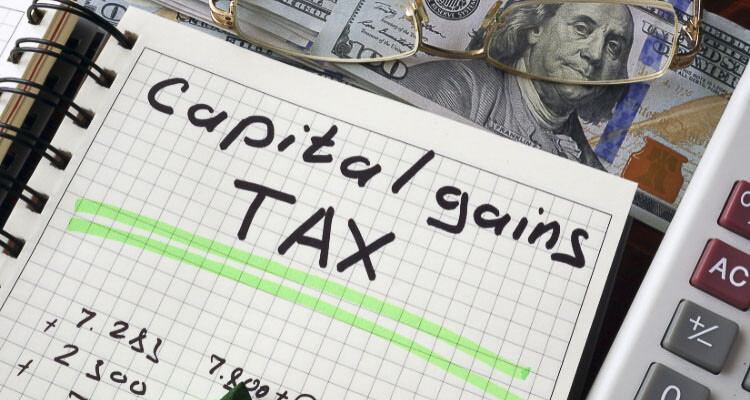
That didn’t take long. Just weeks after the state Supreme Court ruled in a 7-2 decision that an excise tax could be applied to income (known in the rest of the world as an income tax) a bill has already been proposed in the legislature to impose an excise tax on compensation and now the city of Seattle is looking at adopting a local capital gains tax.

According to KUOW:
“Seattle officials tell KUOW they’re considering a local tax on capital gains.
This follows last month’s state Supreme Court ruling that a state tax on capital gains is constitutional . . .
‘The Supreme Court upheld the capital gains tax as a valid excise tax. As we do with any potential revenue option, the City will further evaluate the efficacy and consequences of implementing a similar local excise tax,’ the statement said.”
This effort to impose a local excise tax on capital gains income is only possible since an amendment was rejected in 2021 that would have preempted local capital gains taxes. That simple failed amendment on SB 5096 said:
“Cities and counties are prohibited from imposing any tax on individuals derived from the sale or exchange of capital assets.”
While Washington calls a tax on capital gains income an excise tax, the rest of the world treats taxes on income as income taxes. With that in mind it is worth noting that according to the Tax Foundation, only 15 states allow local income taxes.
As Seattle looks to dive headfirst into a local income tax, er excise tax, at least 28 local governments in Washington have acted instead to adopt an income tax ban.
There are now at least 12 counties (Asotin, Benton, Chelan, Cowlitz, Douglas, Franklin, Grant, Kittitas, Lincoln, Spokane, Whitman and Yakima) and 16 cities (Battle Ground, Benton City, DuPont, Grand Coulee, Granger, Kennewick, Liberty Lake, Longview, Moses Lake, Pasco, Richland, Spokane, Spokane Valley, Union Gap, West Richland and Yakima) with local income tax bans.
Joining these local governments in advertising no income tax as being a benefit for employers and employees are Sound Transit and Washington’s Department of Commerce.
For example, here is what Commerce said on December 13, 2012 (emphasis added):
“We offer businesses some competitive advantages found in few other states. These include no taxes on capital gains or personal or corporate income. We also offer industry-specific tax breaks to spur innovation and growth whenever possible.”
Although they have already acted, these local governments may want to review their current income tax bans to address any loopholes that may have been created by the state Supreme Court saying that an excise tax could be applied to income.
Unconcerned about the impact on competitiveness, Washington and Seattle are speeding away from our prior no-income tax advantage faster than a Lamborghini can go from 0-60 mph.
Will other local governments instead take the opposite approach and install income tax speed bumps by joining the 28 municipalities with bans?
Jason Mercier is the director of the Center for Government Reform at the Washington Policy Center.

Also read:
- Opinion: Lawsuit filed against the unconstitutional income tax in Washington state
 Former Attorney General Rob McKenna and Supreme Court Justice Phil Talmadge challenge the 9.9% income tax in Klickitat Superior Court.
 - Letter: ‘Oregon and Washington aren’t refusing to clean their rolls — they’re contesting federal jurisdiction and timing’
 Camas resident challenges Lars Larson’s fraud claims, explaining legal disputes over federal jurisdiction.
 - Opinion: ‘When are we going to get the full and complete details of the Interstate Bridge Replacement Program’s I-5 Bridge replacement project?’
 IBR team buried key details about light rail ending at waterfront with massive elevator system required.
 - POLL: Do you support extending light rail beyond the waterfront to connect with C-TRAN at Library Square?
 Readers can weigh in on Anne McEnerny-Ogle’s proposal to extend light rail beyond the waterfront to Library Square for improved C-TRAN connections.
 - Opinion: Passing a cyclist – Law, myth and a little patience
 Most drivers can’t legally pass cyclists in-lane due to vehicle width versus road measurements.
 wpDiscuz
