


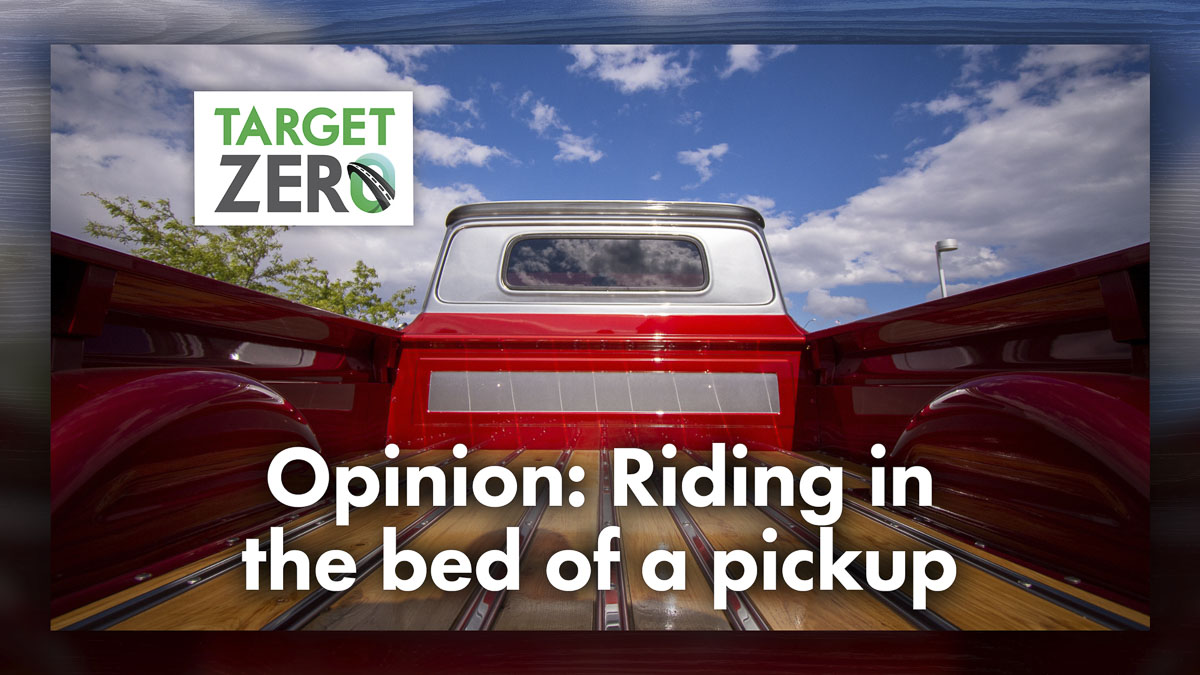
Target Zero’s Doug Dahl discusses Washington state traffic laws regarding riding in the back of a pickup
Doug Dahl
The Wise Drive
Q: While discussing attending a protest and the legality of riding in the back of a pickup truck, I thought it was legal only if all seat belts inside the vehicle were in use, and my boyfriend thinks that doesn’t matter. If it does matter, do passengers have to be using the seat belts, or can I have a load of cargo in the front blocking the seat belts? I know the safety rules; I am looking at how to basically be in a parade in the back of the truck, legally.
A: Are you ‘basically’ in a parade, or actually in a parade? Because that matters. If you’re part of a permitted parade, you’re operating under a different set of rules. Without a permit, a parade is mostly a series of minor traffic violations. Think back to the last parade you saw. There were probably people riding on trailers, parade floats without brake lights or turn signals, vehicles rolling through stop signs, pedestrians walking down the middle of the road. In a permitted parade you’re governed by the local rules of the municipality issuing the permit (or the Washington Department of Transportation if you’re using a state highway), rather than (most of) the traffic laws in the Revised Code of Washington. The serious stuff, like driving while impaired, still applies.

In a non-permitted event, you have to follow the state traffic laws. Let’s assume there’s no permit, so we have something to talk about, and consider two laws: one on when seat belts are required, and one about riding on the outside of a vehicle.
The seat belt law is the easy part; the law is clear. Everyone driving or riding in a vehicle with seat belts needs to be wearing a seat belt. However, the law doesn’t apply to a person if there is no seat belt available because all the “designated seating positions… are occupied.”
While the law doesn’t specifically call out cargo blocking the seat belts, the logic of putting cargo in the passenger area and passengers in the cargo area doesn’t pass the sniff test. I think you’d have a hard time convincing an officer or a judge that it was okay to not wear a seat belt because there was a box in the passenger seat.
But let’s say all the seats in the cab are full. Can you ride in the bed of a pickup? Well, is the bed of the pickup on the outside part of the vehicle? The law prohibits people from riding on “the running board, fenders, hood, or other outside part of any vehicle” (with exceptions for emergency vehicles and garbage trucks.)
I’ve asked around about this before, and the answer isn’t consistent. In the Q&A section of a 2008 version of the Washington State Patrol’s website, it says it’s legal for children to ride in the back of a pickup as long as no seats are available in the cab. They add that if adults are also passengers, the kids get priority for the seat belts.
Some lawyers think it’s legal; some don’t. I’ve spoken with police officers who say it’s legal. I checked with a legislative aid who said it’s not legal. I’m not a lawyer; don’t trust my opinion. But here it is anyway. If you’re going to haul a box with your truck, you’d put it ‘in’ the truck bed. I’ve never heard someone use ‘in’ to refer to the outside. But either way, except for controlled environments like a parade, if you’re concerned about safety riding in a pickup bed is the wrong choice.

Also read:
- Opinion: Were Republican voters just sleeping during the August primary election?
 CCRP Chairman Matt Bumala says 60% of primary no-shows in the 17th and 18th districts were Republicans.
 - Opinion: WA Cares’ launch showcased care WA Cares did not provide
 Gov. Ferguson showcased a caregiving arrangement at the WA Cares launch that the program had not paid for a single day of.
 - Opinion: Portland’s War on Cars Part 4 – A smarter automobile strategy to end gridlock
 O’Toole argues fuel wasted in Portland-area congestion has sextupled since 1982, generating 250,000 tons of extra greenhouse gases annually.
 - Opinion: The Tooth Fairy’s secrets to making brushing & flossing magical
 Delta Dental of Washington’s Tooth Fairy Experience offers free resources to help children build lifelong brushing and flossing habits.
 - Opinion: Transit ridership trends are dismal but regional plans are oblivious
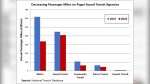 Puget Sound transit passenger-miles fell 31% from 2015 to 2024 despite a half-million-resident population increase.