




Long-time Clark County citizen and journalist Marvin Case shares his thoughts on tolling and light rail
Marvin Case
Vancouver resident
I think the concept of tolling I-5/I-205 in Oregon should be decided by a vote of the people. It is a very big governmental step and should be decided by those affected, not staff members or hired engineers who think they know best.
Those eligible to vote should be people who use either corridor occasionally or on a regular basis, and should include residents of both Washington and Oregon.
I am not opposed to tolling. I use both corridors and think tolling probably has a place in funding decisions. However, I strongly oppose tolling without end. Tolling should be connected to construction costs and should end when those costs are paid off. I do not favor the use of higher tolls during peak commutes. That is tantamount to punishing hard-working commuters who may have no choice as to work hours.
A public vote is also appropriate on light rail. That’s a very expensive and controversial project with continuing costs. My guess is that light rail would fail if it were put to a public vote. All those who live in southwest Washington and northwest Oregon should be asked to vote for or against light rail, and should be given the option of dedicated bus lanes. Voting on issues like these would push more and better information into the public arena.
I understand that public voting is expensive and that public votes cannot be used to make routine decisions. But these are very large decisions that have far-ranging impacts on life and economies. The cost of these elections would be a drop in the bucket compared to the price tags of projects under consideration and the costs and impacts of tolls. I am also aware that project planners are often reluctant to put plans before a public referendum, fearing failure. That should tell them something. If the public would likely vote against something, why in the world would planners move forward?
I am a Clark County resident. If asked — and I hope I am — I would vote in favor of temporary tolling designed to pay for something specific and when those specific construction costs are paid off, then tolling ends. I would vote against light rail on I-5 and in favor of dedicated bus lanes as far less costly and more efficient. I would vote for light rail on I-205, connecting Clark County to the airport. I would vote to widen I-5 in the Rose Quarter area if that project were on the ballot. And I would vote emphatically for another river crossing route and the sooner the better.
Gas taxes are designed in part to pay for maintenance of roads and bridges. Washington has the third highest gas tax in the nation at 49 cents per gallon. Oregon is not far behind at 38 cents. On the other end of the gas tax list are states as low as 9 cents per gallon and 7 states under 20 cents.
But despite all these details, my main point is: put tolling in front of voters.
Also read:
- VIDEO: WA diesel hits record $6.53, crushing truckers and school budgets
 With diesel nearing $6.53 per gallon in Washington, trucking businesses and school districts now confront sharply higher fuel expenses affecting budgets and workers.
 - Opinion: In plain sight – yielding to pedestrians
 Drivers often fail to see pedestrians due to inattentional blindness, which highlights the need for more focused awareness at intersections and stronger safety practices.
 - Expect delays on SR 14 in Vancouver for guardrail repairs Wednesday
 State Route 14 travelers in Vancouver should plan for morning delays as WSDOT will close two eastbound lanes for guardrail repairs, affecting mileposts 6.0 to 7.0.
 - Overnight closure planned on westbound SR 14 Camas Slough Bridge Tuesday
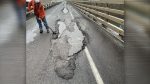 WSDOT crews will close westbound SR 14 at Exit 14 in Camas to collect bridge deck samples and plan future repairs; detours will be in effect.
 - Opinion: Stay in your lane – seriously, it’s the law
 Drivers must choose the nearest lane when turning in Washington, and left turns bring added risk. Even with signals, every driver must help prevent crashes by following law.
 wpDiscuz
