


🎧 Portland’s War on Cars: The Cost of Anti-Auto Planning
Randal O’Toole provides the first in a series on Portland losing the war on the automobile
Randal O’Toole
Cascade Policy Institute
Editor’s note: This is part 1 in a series “Portland’s War on Cars” from a new Report by the Cascade Policy Institute, The Portland Transportation Disaster: The High Cost of Anti Auto Planning in Portland.
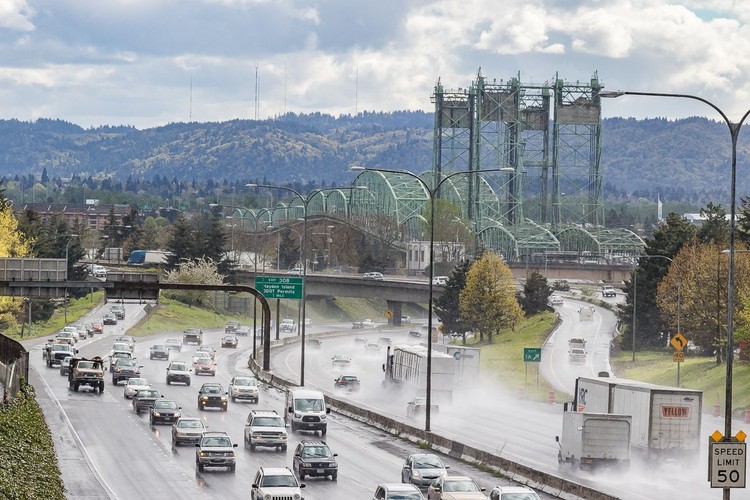
Portland and Metro are losing their war on the automobile. The war began around 1982, when the region’s leaders decided not to build more freeways after the completion of I-205 in the hope that people would drive less if they didn’t have more roads to drive on.
Thanks to the no-more-freeways policy, the amount of time the average Portland-area commuter wastes sitting in traffic has tripled since 1982 and the amount of fuel wasted in congestion has sextupled from 5.7 million gallons to 34.7 million gallons generating 250,000 tons of additional greenhouse gases.
Despite congestion, driving has more than doubled and per capita driving has grown by 16 percent since 1982. In 2024, the Portland area’s share of commuters driving alone to work was the highest it has ever been.
To give people an alternative to driving, Portland built more than 80 miles of rail transit including five light rail lines, three streetcar lines, and a commuter rail line. Despite spending billions on these projects, the number of transit trips taken by the average resident has fallen from 42 in 1982 to 36 in 2024.
Portland is turning traffic lanes on major streets such as Foster Road and 82nd Avenue into exclusive bus lanes. Lanes that once carried up to 1,000 automobiles per hour will be dedicated to—at most—8 buses per hour. There is no evidence that this will increase bus ridership, but it will make auto travel more difficult.
Portland has also installed bike lanes on many streets, sometimes by reducing the number of automobile lanes. This protects bicycle riders from being hit from behind by automobiles, but such accidents are rare. Most bicycle fatalities take place at intersections, where bike lanes disappear. The annual number of bicycle fatalities in the city of Portland has almost tripled since the early 2010s, mostly due to increased accidents at intersections.
Despite growing the bike route system to more than 400 miles, Portland-area cycling peaked in 2014. Since then, the number of Portland-area workers commuting by bicycle fell by more than 40 percent while the number driving alone to work increased by 5 percent.
By fighting a war they can’t win, Portland and Metro are imposing huge costs on the region. Those costs include the time and fuel people waste in congestion, the added greenhouse gases from burning that fuel, and the added costs of transporting goods around the region.
Read the full report, The Portland Transportation Disaster.
All numbers cited in this commentary are from or calculated from the U.S. Department of Transportation, Department of Energy, or Census Bureau data. For more information, see O’Toole’s full report, The Portland Transportation Disaster.
Randal O’Toole is an adjunct scholar at Cascade Policy Institute, Oregon’s free market public policy research organization. He is a transportation and land-use policy analyst and the author of several books, including American Nightmare: How Government Undermines the Dream of Homeownership and Romance of the Rails: Why the Passenger Trains We Love Are Not the Transportation We Need. He writes from Central Oregon.

Also read:
- Opinion: Were Republican voters just sleeping during the August primary election?
 CCRP Chairman Matt Bumala says 60% of primary no-shows in the 17th and 18th districts were Republicans.
 - Opinion: WA Cares’ launch showcased care WA Cares did not provide
 Gov. Ferguson showcased a caregiving arrangement at the WA Cares launch that the program had not paid for a single day of.
 - Opinion: Portland’s War on Cars Part 4 – A smarter automobile strategy to end gridlock
 O’Toole argues fuel wasted in Portland-area congestion has sextupled since 1982, generating 250,000 tons of extra greenhouse gases annually.
 - Opinion: The Tooth Fairy’s secrets to making brushing & flossing magical
 Delta Dental of Washington’s Tooth Fairy Experience offers free resources to help children build lifelong brushing and flossing habits.
 - Opinion: Transit ridership trends are dismal but regional plans are oblivious
 Puget Sound transit passenger-miles fell 31% from 2015 to 2024 despite a half-million-resident population increase.