



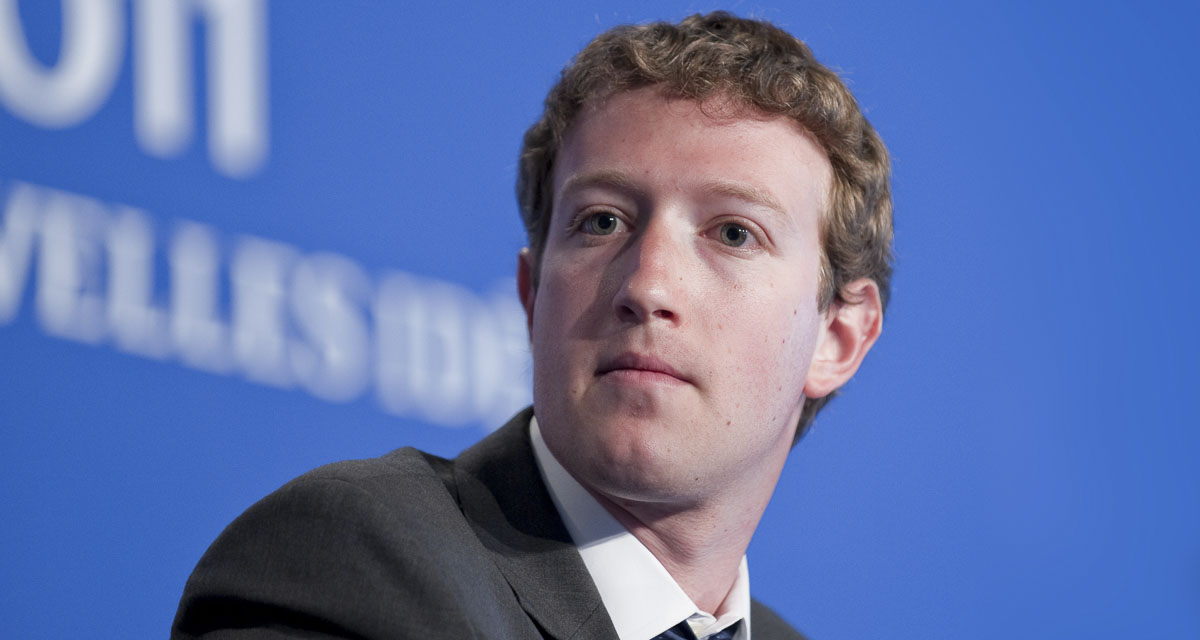
In a video, Zuckerberg noted how the federal election was a ‘cultural tipping point’ in the direction of free speech and how he still holds free expression as a core value
Donald Kimball
Washington Policy Center
In a video published this morning, Facebook founder and CEO of Meta Mark Zuckerberg laid out his vision for the future of free expression on Facebook. While Facebook was notorious for suppressing political speech and censoring outspoken voices in the past five years, Zuckerberg noted how the federal election was a “cultural tipping point” in the direction of free speech and how he still holds free expression as a core value. In this video, he committed to drastic changes in favor of free expression.

Earlier last year, he had written a letter to congress explaining how the U.S. government had pressured Facebook to censor the Hunter Biden laptop story. When that released, I had written a piece skeptical of his seemingly newfound commitment to free speech – after all, talk is cheap, and when standing up for free speech really counted, Facebook was one of the biggest censors. In that piece I listed out a few changes Zuckerberg could make if he really wanted to put his words into action:
1. Review every account suspended for misinformation, publicly release a full list, and restore the wrongfully silenced.
2. End aggressive shadow-banning policies and commit to a much more robust and transparent appeal process for blocked content.
3. Democratize its content warnings to be more like X’s Community Notes feature.
His newly laid out future of Facebook embraces a few of these ideas. For starters, he specifically calls out changing from fact checkers to community notes – the political bias, particularly in the U.S. he asserted, was too strong to be reliable in a politically charged environment. With the roaring success of X’s Community Notes, it’s no surprise he’s moving in this direction, but it’s a welcome change.
He also promised to resurrect political topics on Metas platforms. The reach and visibility of political posts was greatly diminished in the past few years, and paid advertisements were nearly entirely out. Hopefully this addresses my second concern with shadow banning, but it will harder to measure right away.
Additionally, he added that he would create a higher bar for content to be taken down or suspended, focusing more on illegal or high violations of community guidelines rather than auto-targetting all violations, and work to promote free speech expression across the world by working with the U.S. government.
His video is a breath of fresh air from the recent history of Facebook’s censorship. While I’m still skeptical if all his commitments will be seen through, I’m cautiously optimistic. Perhaps it is only due to the change of federal administrations, but regardless we should welcome this change in tone and tangibly laid out progress. Now that we have concrete promises on how he seeks to increase free expression, tracking accountability becomes easier.
Donald Kimball is the communications manager for the Washington Policy Center.

Also read:
- Opinion: Inviting courts into health care policy discussion
 Elizabeth New (Hovde) warns that Senate Joint Resolution 8206 could invite lawsuits by placing vague health care mandates into Washington’s Constitution.
 - Opinion: 24 States In. Washington Out? $732 Million Lost?
 Vicki Murray argues Washington risks forfeiting $732 million in federal education funding if state leaders do not opt into the federal tax-credit scholarship program.
 - Opinion: Nationwide strike in support of illegals and opposing the rule of law?
 Lars Larson argues that a reported nationwide strike reflects opposition to immigration enforcement and the rule of law, criticizing political leaders and media coverage.
 - POLL: Should councilors serving on boards be required to vote the way the full council decides?
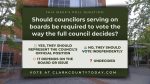 A new poll asks whether Clark County councilors serving on boards should be required to vote in line with the full council’s position or retain independent judgment.
 - Opinion: Olympia wants a 4-day work week. It won’t work out as the politicians think it will
 Mark Harmsworth argues that House Bill 2611’s proposed 32-hour workweek would raise costs, strain small businesses, and undermine Washington’s economic competitiveness.

Cautiously optimistic, yes. Will they become ethical “postmen” and deliver our mail. We will see.
I have had as much removed in the past few days as the past few years. Who are they kidding?