



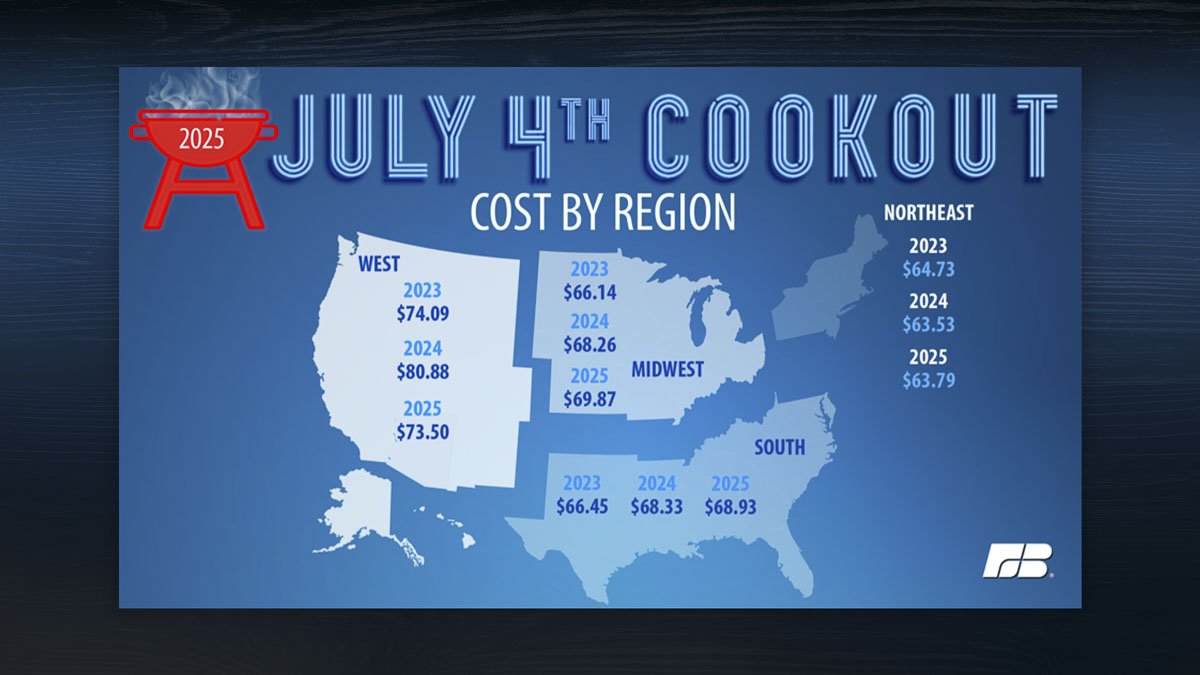
As in years’ past, the American Farm Bureau Federation highlights our food production history by examining the cost of cooking for our family and friends on the Fourth of July
Pam Lewison
Washington Policy Center
America was once a proud, agrarian nation. This Independence Day, let us remember our forebears who tilled the land, raised livestock, and had a vision for a nation free from the tyranny of taxation from afar.

As in years’ past, the American Farm Bureau Federation highlights our food production history by examining the cost of cooking for our family and friends on the Fourth of July in the present. The West Coast has retained the dubious distinction of being the most expensive region of the country to host a Fourth of July cookout. Between labor costs, fuel taxes, and continuing regulatory concerns, celebrating our independence will average $7.35 per meal versus $6.98 per plate for the next most expensive region in the country.
The annual data collection includes a set list of menu items like ground beef, hamburger buns, cookies, strawberries, chips, chicken breast, pork chops, and potato salad, among other grocery staples purchased in each state and Puerto Rico. The report noted one significant price change is the highest ever recorded. Ground beef had an average price of $13.33 for a 2-pound package, or $6.66/lb., making it the most expensive item purchased. The biggest year-over-year overall price increase noted was for potato salad. The increased price of eggs contributed to a 6.6 percent increase between 2024 and 2025, from $3.32 to $3.54 in the total cost of the picnic staple.
The West Coast has long been among the most country’s expensive regions for food, making this year’s cookout results no surprise. The cost by region breaks down with the West Coast average costing $73.50 to feed 10 people followed by the Midwest at $69.87, the South at $68.93, and the Northeast at $63.79. Despite retaining its crown as the most expensive region to host a cookout, the West Coast recorded a significant decrease in cost year-over-year. In 2024, the Fourth of July cookout cost was $80.88 for a 10-person meal. When examining the food costs from last year, there are no obvious culprits for the $7.38 overall decrease in cost.
Regardless of the decrease in overall food costs, the cost of farming in the United States remains troublesome. More than 160,000 farms have been lost in the U.S. since 2017 a loss rate that does not appear to be slowing. Grocery prices also remain volatile with a 2.7 percent decrease in the price of eggs and a 1.1 percent increase in cereals and baked goods, according to the May Consumer Price Index.
In his Eighth Annual Address to Congress in 1796, then President George Washington said, “It will not be doubted that with reference either to individual or national welfare, agriculture is of primary importance. In proportion as nations advance in population and other circumstances of maturity this truth becomes more apparent, and renders the cultivation of the soil more and more an object of public patronage.” As our region, and nation, mature, it is time for us to recognize the wisdom of Washington’s words and consider the primary importance of our food producers once again.
Pam Lewison is the director of the Center for Agriculture at the Washington Policy Center.

Also read:
- Opinion: Tax day is painful enough without Washington adding its own
 Washington’s new 9.9% income tax mirrors federal pattern: start narrow, expand to hit everyone within years.
 - POLL: What do you believe is the biggest reason school districts are facing budget shortfalls?
 Districts across Washington warn of budget gaps as debate grows over rising costs versus inadequate state funding.
 - Opinion: The high cost of hiding – Why IBR’s delayed revenue study is a $15 billion warning sign
 IBR delays critical toll revenue analysis until June 2027, hiding financial details until after project approval.
 - Opinion: The high cost of hiding – Why IBR’s delayed revenue study is a $15 billion warning sign
 IBR delays critical toll revenue analysis until June 2027, hiding financial details until after project approval.
 - Opinion: Washington fails the test for affordability
 Mountain States Policy Center analysis reveals Washington ranks 5th most expensive state as residents migrate to Idaho and Texas.
 wpDiscuz
