




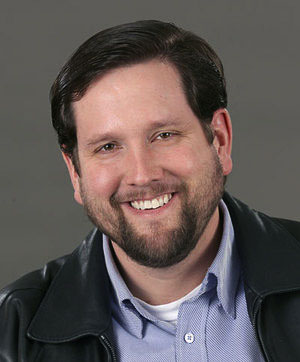
David Boze of the Washington Policy Center brings attention to the problematic numbers of students not meeting grade standards and the number of students abandoned in schools that underperform year after year
David Boze
Washington Policy Center
A new column by Discovery Institute’s Keri Ingraham, originally published in The Puget Sound Business Journal, but also found here, is a reminder of how, despite all the innovation and technology we see around us, our approach to education is mired in the past. From the column:
Public education today operates nearly the same as it did decades ago, and not entirely different from its inception more than 175 years ago based on Horace Mann’s framework.
Known as the father of public education, Mann developed the American education model based on the Prussian system during the industrial age. The approach is a one-size-fits-all model based on the faulty notion that all students of the same age will learn the same amount in the same length of time, and in the same way.
While I’ve read similar analysis many times over many years, it’s always shocking to see and to witness how resistant to change government systems can be, even when the evidence for a need for change is overwhelming and obvious.
Here I find myself thinking of when I was a boy, talking to friends who still had a “party line” and needing to get off the phone so a neighbor could use it, and thinking how far we’d come when they disappeared. I recall when answering machines first became available and how cool they were, then the first cell phones on shows like “Miami Vice” and movies like Lethal Weapon where people were holding brick-sized phones and seemed like the height of civilization in doing it.
Because the phone industry was subject to the marketplace and choice, innovations flourished and today we have phones that are calculators, movie theaters, typewriters, diaries, scanners, cameras, video games, and more all wrapped into one small device. It’s astonishing.
Keri Ingraham goes through several examples of this innovation in her piece and she could have made a hundred more examples without slowing down, all to make the point that educational choice is not only needed for schools now, but it’s needed to see what schools are capable of becoming.
That’s one of the many reasons why WPC and Liv Finne are dedicated to expanding choice options for parents in Washington state. Also, consider that this state just came off extended school closures (2020-21) that caused major learning loss and social harms to Washington’s students. The learning loss has received a lot of attention, but not enough has been paid to the problematic numbers of students not meeting grade standards in key subject areas and the number of students abandoned in schools that underperform year after year.
In our lives, we choose cell providers, doctors, lawyers, plumbers, electricians, providers of food, pharmacies, computer manufacturers — we choose all kinds of services and products and the results and options are continually improving. But in education, students are largely assigned by zip code. It doesn’t make sense.
David Boze is the communications director at the Washington Policy Center.

Also read:
- Letter: Freeze the scope and build the bridge
 Vancouver resident calls for project discipline after 22 years of planning and nearly half a billion in costs.
 - Opinion: Public workers’ First Amendment rights are getting attention – in Idaho, not Washington
 Idaho moves to stop public schools from collecting union dues through government payroll while Washington continues favoring unions over worker choice.
 - Opinion: Lawsuit filed against the unconstitutional income tax in Washington state
 Former Attorney General Rob McKenna and Supreme Court Justice Phil Talmadge challenge the 9.9% income tax in Klickitat Superior Court.
 - Letter: ‘Oregon and Washington aren’t refusing to clean their rolls — they’re contesting federal jurisdiction and timing’
 Camas resident challenges Lars Larson’s fraud claims, explaining legal disputes over federal jurisdiction.
 - Opinion: ‘When are we going to get the full and complete details of the Interstate Bridge Replacement Program’s I-5 Bridge replacement project?’
 IBR team buried key details about light rail ending at waterfront with massive elevator system required.
