



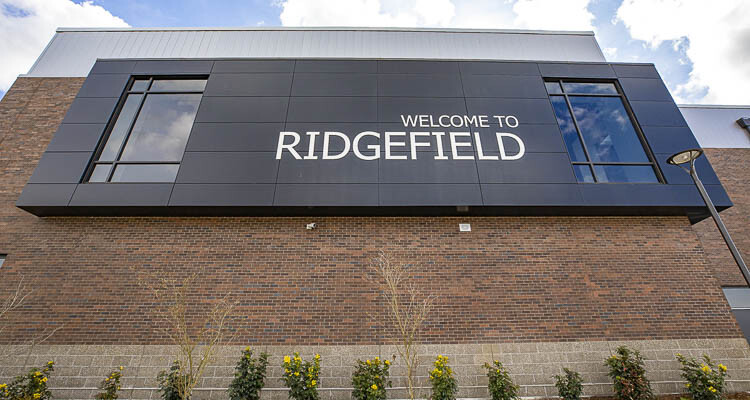
Ridgefield resident Heidi Pozzo points out that should both school bond proposals pass, Ridgefield will have the highest debt per student in the state at roughly $71,000 per student before interest
Heidi Pozzo
for Clark County Today
If the $190 million bond is approved in the April 23 special election, the Ridgefield School District will claim the number one spot in a few places. But being number one isn’t always a good thing.

Washington state has 295 school districts. Should both proposals pass, Ridgefield will have the highest debt per student in the state at roughly $71,000 per student before interest. Tacoma is next with its recent bond at roughly $54,000 per student. Kalama follows at roughly $47,000 per student. There are roughly 25 school districts that have more than $25,000 per student debt. (see methodology below)
Should both propositions pass, Ridgefield will have the highest tax rate in Clark County at $3.89. This is my least favorite chart because it obscures the dollars that people pay. Ridgefield has higher than the average home values in Clark County. The average home value per the Assessor’s Office is $500,000. Ridgefield School District shows the average home price is $627,852. The difference in actual taxes paid between the average home in Clark County vs. the average home in the Ridgefield School District using the same rate is about $500.
Having the highest rate in the area and higher than above average home values means you pay significantly more in total dollars than the rest of Clark County to fund schools on top of what the state pays.
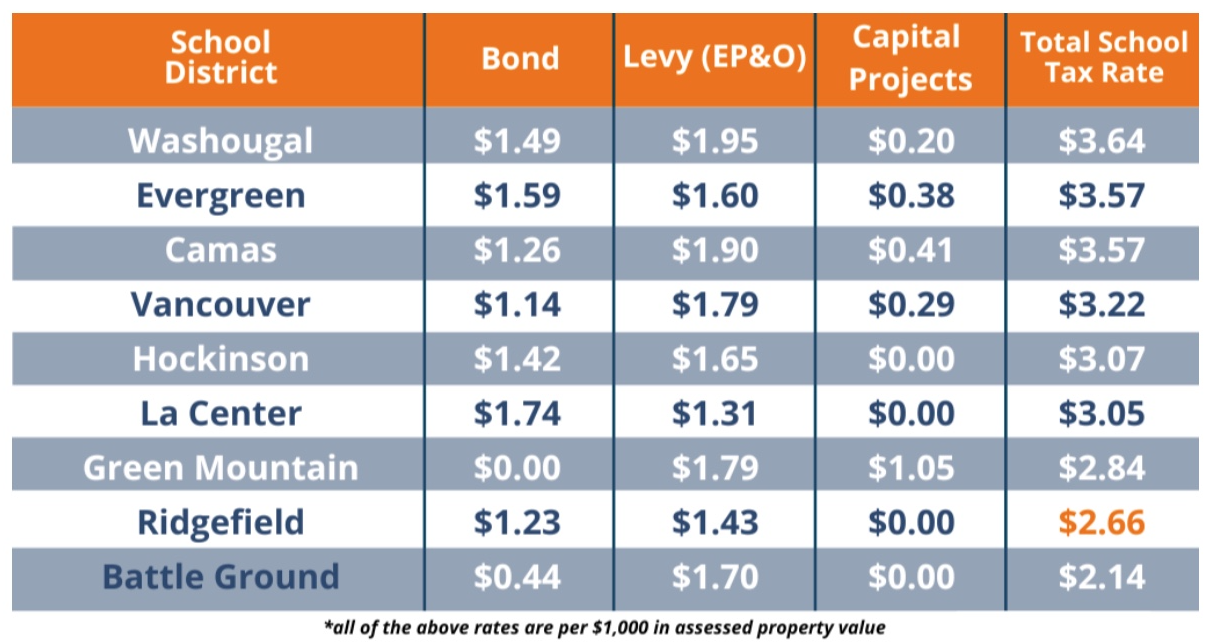
But having the highest rate isn’t enough.
At the March 12 School Board meeting, to a question about maintenance needed as outlined in the Information and Condition of Schools report, the response was that funds are not available and a capital levy or another bond would be needed for repairs.
There’s also the challenge of absorbing the overhead from the three new schools proposed in the bond measure (the 5-8 school is operated as two separate schools). There will be some small number of new students that will be funded by the State beyond funding currently received for the existing student body. That means all the staff, operating the facilities, utilities, etc. need to be covered by money coming from somewhere else.
The current levy ends in 2025. The worksheet provided by the district that reflects the new bond rate also shows the levy going back up to $1.50 per thousand. That’s built into the new rate of $3.89.
Will that be enough?
The 2023-2024 budget anticipated a loss of nearly $3 million. That loss is expected to decline to a forecasted $1.3 million loss for the school year. Funds need to come from somewhere to cover losses. Adding in more costs from three new schools will only exacerbate the situation.
Remember, every dollar spent through bonds (capital) has an impact on the operations (levy) side. That’s why it is so critical to be judicious in how capital is spent to focus on actual needs. Spending too much on a bond means needing to spend more on levies in the future.
Methodology for calculating debt per student:
Debt balances from the most recent F196 reports for fiscal year end (2022-2023) were obtained. Debt for bond measures that passed in February 2024 and Ridgefield’s April 2024 proposal were added to arrive at total debt. Total debt was divided by 2022-2023 enrollment, which includes early learning and online/alternative learning.
Heidi Pozzo has been a Ridgefield resident for 16 years. She is a concerned citizen who would like students to get a good education and thinks we can do it in a more cost-effective way.

Also read:
- Opinion: Someone explain the Democrat Party to me please
 Lars Larson criticizes Democrat politicians for shutdown threats, Homeland Security funding refusals, and positions on election laws, housing, and gun rights.
 - POLL: Do you agree with requiring board members to follow council direction?
 Disagreement among county councilors centers on whether C-TRAN board members should reflect the council’s collective wishes or act independently, highlighting ongoing concerns about public accountability.
 - Opinion: In plain sight – yielding to pedestrians
 Drivers often fail to see pedestrians due to inattentional blindness, which highlights the need for more focused awareness at intersections and stronger safety practices.
 - Opinion: The legislature has committed $2.4 billion to recurring pension increases since 2018
 Six legislative COLAs have raised public employer costs by $2.38 billion since 2018, driving up unfunded pension liabilities and increasing burdens on county and city budgets.
 - Opinion: ‘Just because they got away with it doesn’t mean they weren’t wrong’
 A Skamania County deputy’s report found violations of county rules and the Open Public Meetings Act, but no prosecutor acted on the findings.
