



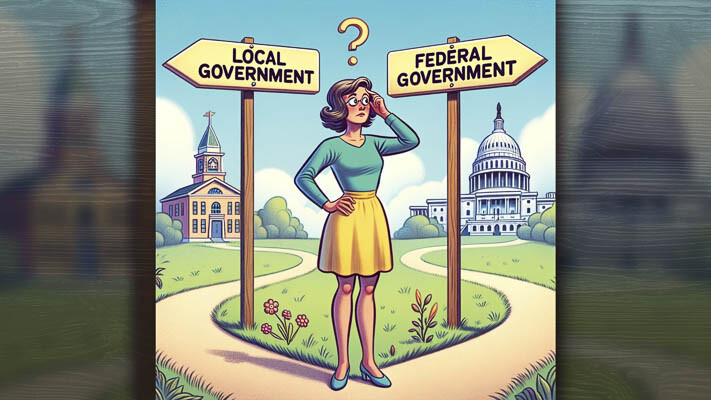
Donald Kimball of the Washington Policy Center believes fostering a renewed commitment to the idea that the strength of change lies fundamentally in the hands of local communities
Donald Kimball
Washington Policy Center

“People almost invariably arrive at their beliefs not on the basis of proof but on the basis of what they find attractive.” French thinker Blaise Pascal voiced this bit of wisdom some 300 years ago, but modernity has vindicated his insight in a number of ways. One fascinating example is a recent national poll conducted by the State Policy Network (SPN). In it, respondents express conflicting views about the importance and effectiveness of local versus national government. The findings suggest that while Americans fundamentally distrust the federal government compared to local authorities, they will overwhelmingly vote to strengthen federal agencies to solve local issues.
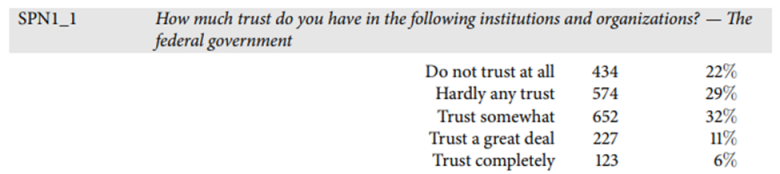
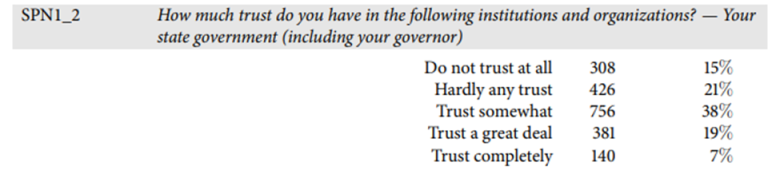
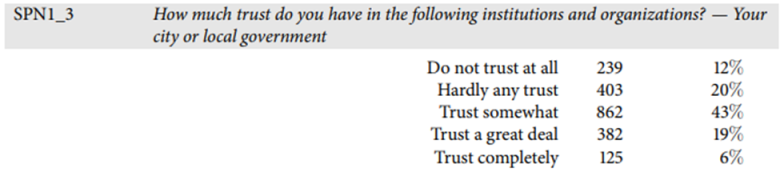
The first category of questions shows the breakdown of trust: Only 49% indicate any sense of trust in the federal government, with higher totals of 64% in state government and 68% in city and local government. This is a reasonable skew, as the smaller and closer governments are to the public the more generally accountable they become.
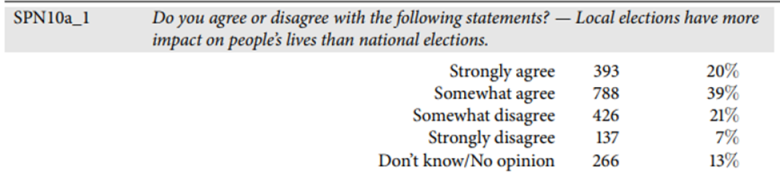
The next set of questions continues this line of reasoning, with respondents consistently and overwhelmingly affirming the importance and effectiveness of local government, contrasted with the ineffectiveness and bloated nature of the federal government.
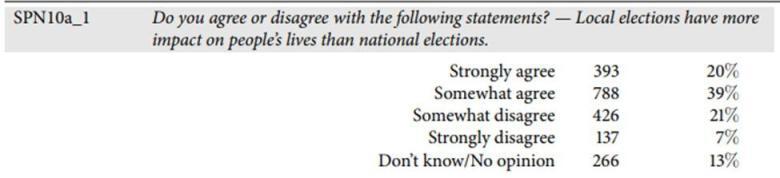
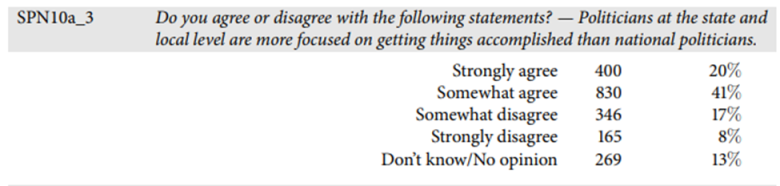
With all of these responses in line, the results of the final question I’m highlighting seems contradictory. Even after affirming a higher level of trust, effectiveness, and importance of more local governments, we see a majority of respondents say that, between the two choices, a strong federal government is the best way to solve our nation’s problems, rather than a strong local government.

While there are certainly points to be made about the unique role the federal government plays in our nation, it is interesting to note how little faith people have in the institution they believe must be strengthened to fix problems (with a majority specifically admitting the scope of the federal government is already too big). National politics often takes the spotlight in the media, but the other survey responses suggest people acknowledge that impactful change is more achievable at the local and state levels.
While the enormity of problems might tempt us to shift responsibility to a distant, large government, many Americans recognize deep down that this isn’t an ideal solution. It’s crucial to re-engage citizens in caring about local governance, reinstating responsibility for problem-solving at the state, local, and community levels. Removing legal and regulatory barriers is a significant step in empowering individuals for change. Additionally, reinforcing transparency measures at every level of local governance is key to enfranchising citizens in the decision-making process. Taking practical steps to match actions with internal beliefs about local change can catalyze permissionless innovation, a concept my colleague Todd Myers extensively explores in the environmental sphere.
In navigating the paradox between stated preferences for federal solutions and the underlying belief in the efficacy of local governance, we ought to forge a path that aligns actions with convictions, fostering a renewed commitment to the idea that the strength of change lies fundamentally in the hands of local communities.
Donald Kimball is the communications manager, free markets destroy lead and tech exchange editor at the Washington Policy Center.

Also read:
- POLL: What do you believe is the biggest reason school districts are facing budget shortfalls?
 Districts across Washington warn of budget gaps as debate grows over rising costs versus inadequate state funding.
 - Opinion: The high cost of hiding – Why IBR’s delayed revenue study is a $15 billion warning sign
 IBR delays critical toll revenue analysis until June 2027, hiding financial details until after project approval.
 - Opinion: The high cost of hiding – Why IBR’s delayed revenue study is a $15 billion warning sign
 IBR delays critical toll revenue analysis until June 2027, hiding financial details until after project approval.
 - Opinion: Washington fails the test for affordability
 Mountain States Policy Center analysis reveals Washington ranks 5th most expensive state as residents migrate to Idaho and Texas.
 - Opinion: Washington fails the test for affordability
 Mountain States Policy Center analysis reveals Washington ranks 5th most expensive state as residents migrate to Idaho and Texas.
