



La Center resident Barry Wells says it’s time for a serious conversation about transparency, affordability, and fairness in our state’s energy policies
Editor’s note: Opinions expressed in this letter to the editor are those of the author alone and may not reflect the editorial position of ClarkCountyToday.com
As a longtime Washington resident, I’m deeply concerned about the relentless rise in gas prices — driven not just by market forces, but by our own legislature’s decisions. Since 2016, Washington state has steadily increased its gas tax, and recent hikes have pushed us into the top tier of the most expensive states for fuel. As of July 2024, the gas tax rose to 55.4 cents per gallon, a 6-cent jump from the previous rate. And that’s just the beginning — annual inflation adjustments and future increases are already baked into the law.

But what’s truly frustrating is the added burden from the Climate Commitment Act (CCA), enacted in 2023. This cap-and-trade program requires fuel suppliers to purchase carbon allowances at quarterly auctions to cover their emissions. These costs — now exceeding $64 per allowance—are passed directly to consumers at the pump. Yet unlike the state gas tax, this carbon cost isn’t itemized. It’s embedded in the price, making it a hidden tax. Analysts estimate it adds roughly 46 to 51 cents per gallon for gasoline and even more for diesel.
Drivers see the pain at the pump — over $4.38 per gallon, more than a dollar above the national average — but they’re not told why. There’s no transparency, no breakdown, just higher prices. And while the state touts this as a climate solution, there’s little evidence yet that it’s reducing emissions. Meanwhile, nearly $3.5 billion has been collected under the program, with no updated carbon inventories released since 2021.
I support responsible environmental stewardship, but not when it’s used as a blank check to tax working families. These policies disproportionately hurt rural communities, low-income drivers, and small businesses. Legislators must be held accountable for the financial strain they’ve placed on everyday Washingtonians under the guise of climate action.
It’s time for a serious conversation about transparency, affordability, and fairness in our state’s energy policies.
Barry Wells
Fargher Lake
Also read:
- PeaceHealth celebrates National Cancer Survivors Day
 Vancouver actor Myronie McKee filmed a breast cancer commercial, then received her own diagnosis the next day.
 - Washington facing sharp budget deficit, ‘significant impact’ to services expected
 OFM Director K.D. Chapman-See warns agencies the 2027-29 budget shortfall spans both operating and transportation funds.
 - Why AG Nick Brown wants the Supreme Court involved in WA’s redistricting fight
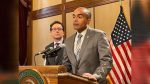 AG Nick Brown calls Louisiana v. Callais “a horrible decision” that undermines voting power of Black and Brown communities statewide.
 - Opinion: The men who wrote the Declaration of Independence
 Five men were tasked with drafting the Declaration of Independence — and one nearly wasn’t chosen at all.
 - Opinion: IBR program’s $13-17 billion fraud and mismanagement, perpetuated by Vancouver Mayor Anne McEnerny-Ogle and Oregon Gov. Tina Kotek
 Gary Clark argues IBR hid a $17B cost estimate from lawmakers while spending up to $280M with no public benefit.
 - Opinion: The IBR shell game for TriMet at Ruby Junction
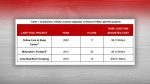 IBR allocates $320M for a TriMet maintenance facility 20 miles from the actual bridge project.
 - Washington and Oregon transportation commissions discuss tolling options
 I-5 tolls could range from $1.55 to $4.70 depending on the plan, with final rates set in late 2027.
 wpDiscuz
