


Retired engineer Bob Ortblad raises safety concerns about the I-5 Bridge replacement project
Editor’s note: Opinions expressed in this letter to the editor are those of the author alone and do not reflect the editorial position of ClarkCountyToday.com

The Interstate Bridge Replacement Program (IBR) is bribing C-TRAN with a promise of eight double-decker electric buses in exchange for C-TRAN’s support of IBR’s freeway expansion and
dangerous bridge.
These double-decker buses will travel in a bus-on-shoulder lane only three feet from the guardrail The IBR’s bridge will have a steep 4 percent downgrade as well as a curve
plus a frequently wet or icy bridge deck.
AdditIonally, a 60 mph crosswind (occurring 175 hours/year) could potentIally blow a double-decker bus sideways and up and over the guardrail. A loaded bus of 80 riders could plunge 150 feet into the Columbia River or drop 100 feet onto downtown Vancouver.
The same deadly wind and road conditions will cause recreational vehicles, trailers, and empty semi-trucks to be blown out of their lane or completely over.
This is the latest example of IBR’s incompetent leadership. Previously, the IBR has fraudulently disqualified a safer Immersed tunnel alternative that would protect traffic from wind, rain, and ice.
Bob Ortblad MSCE, MBA
Retired Professional Engineer
Seattle
Also read:
- Opinion: Portland’s War on Cars Part 4 – A smarter automobile strategy to end gridlock
 O’Toole argues fuel wasted in Portland-area congestion has sextupled since 1982, generating 250,000 tons of extra greenhouse gases annually.
 - Opinion: Transit ridership trends are dismal but regional plans are oblivious
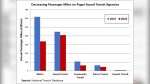 Puget Sound transit passenger-miles fell 31% from 2015 to 2024 despite a half-million-resident population increase.
 - Interstate Bridge Replacement Program seeks qualified firms for bridge replacement contract
 The CRBR project is backed by $5.7 billion from state funds, federal grants, and future tolling.
 - Opinion: Bankrupt – A $3.5 billion Rose Quarter Freeway widening project
 Joe Cortright argues ODOT’s Rose Quarter project has grown from a $450M approval to a $3.5B estimate, with a $2B funding gap.
 - Opinion: Portland’s War on Cars 3 – Ending the war on automobiles
 O’Toole argues Portland should add toll lanes, fix safety hazards, and redesign TriMet routes to end its anti-auto policies.