


Hockinson resident Carolyn Schultz-Rathbun says ‘the heart of our community is slipping slowly away’
Editor’s note: Opinions expressed in this letter to the editor are those of the author alone and may not reflect the editorial position of ClarkCountyToday.com
Brian Hebert’s recent letter to the editor urges support for the current Hockinson School District levy because it would increase property values. But Hockinson property values have been increasing at a dizzying rate already. And for most of us, those inflated property values just mean ever-higher property taxes: over 54% higher since 2015.
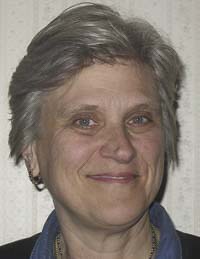
Hebert suggests that rising property values strengthen our community. Let’s think about that for a moment.
Hockinson is experiencing rural gentrification, a process in which affluent people move into small towns and rural areas, get involved politically and civically, and shift civic priorities away from the needs of existing residents, toward their own wants and needs. They also, simply by moving to the area, increase property values, which in turn forces existing residents out.
The ever-higher property values levy proponents prize matter a great deal, of course, to people who sell and move on. But those folks aren’t the heart of the community.
And neither, for that matter, is HSD, although it has adopted the boilerplate “heart of the community” advertising slogan used by school districts across the state.
A comparison of OSPI’s personnel data with the Secretary of State’s registered voter database shows that over two-thirds of HSD employees live outside Hockinson.
The heart of our community are people who put down roots here. They have no plans to leave. They don’t want to leave. But the effect of skyrocketing property values, and of the resulting skyrocketing property taxes, is to keep forcing out members of our community who are on the economic margins – the old, the disabled, single moms.
I’ve watched a steady exodus over the past 10 years of friends and neighbors driven out by rising property taxes. And, ironically, rising property values make it almost impossible for our kids, educated in Hockinson schools, to settle in Hockinson and raise families here after they graduate.
A community draws its strength from its diversity. But in Hockinson those who can afford to remain are, increasingly, affluent people in their prime earning years.
The heart of our community is slipping slowly away.
Continuing to run up property values – which means continuing to force out neighbors who make less than we do – is not how we build or maintain a strong community.
We are a strong community only to the extent that we are a real community – not simply a bunch of people who live in proximity to each other, but people who know each other, care about each other, and look out for each other.
One of levy proponents’ main talking points is that a vote for the levy is a vote to increase property values. Let’s be honest about what that means. A vote for the levy is a vote for still-higher property taxes – and a vote to force out a few more of our neighbors.
Carolyn Schultz-Rathbun
Hockinson

Also read:
- Opinion: Were Republican voters just sleeping during the August primary election?
 CCRP Chairman Matt Bumala says 60% of primary no-shows in the 17th and 18th districts were Republicans.
 - Opinion: WA Cares’ launch showcased care WA Cares did not provide
 Gov. Ferguson showcased a caregiving arrangement at the WA Cares launch that the program had not paid for a single day of.
 - Opinion: Portland’s War on Cars Part 4 – A smarter automobile strategy to end gridlock
 O’Toole argues fuel wasted in Portland-area congestion has sextupled since 1982, generating 250,000 tons of extra greenhouse gases annually.
 - Opinion: The Tooth Fairy’s secrets to making brushing & flossing magical
 Delta Dental of Washington’s Tooth Fairy Experience offers free resources to help children build lifelong brushing and flossing habits.
 - Opinion: Transit ridership trends are dismal but regional plans are oblivious
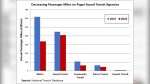 Puget Sound transit passenger-miles fell 31% from 2015 to 2024 despite a half-million-resident population increase.
 wpDiscuz