


Bob Ortblad appeals to members of the Vancouver City Council not to endorse the LPA on July 11
Editor’s note: Opinions expressed in this letter to the editor are those of the author alone and do not reflect the editorial position of ClarkCountyToday.com
Vancouver City Council:

On July 11, please do not endorse the Interstate Bridge Replacement team’s “Modified Locally Preferred Alternative” (LPA). It will be downtown Vancouver’s concrete death shroud.
The LPA will create an Embarcadero Freeway/Alaskan Way Viaduct through the heart of Vancouver. Like the infamous Cross Bronx Expressway, the LPA will divide the city with noise, pollution, and cause urban decay. The LPA will be the steepest (4 percent) and most dangerous of all interstate bridges. The LPA’s 100-foot climb will be extremely difficult for cyclists and walkers.
The Columbia River at Vancouver is 27 feet deep with 200 feet of soft river bottom. An immersed tunnel is a better solution; safer, less grade, less cost, less environmental impact, and is faster to permit and build with local labor.
Bob Ortblad MSCE, MBA
Seattle
@BOrtblad see Twitter for more details

Also read:
- Opinion: Were Republican voters just sleeping during the August primary election?
 CCRP Chairman Matt Bumala says 60% of primary no-shows in the 17th and 18th districts were Republicans.
 - Opinion: WA Cares’ launch showcased care WA Cares did not provide
 Gov. Ferguson showcased a caregiving arrangement at the WA Cares launch that the program had not paid for a single day of.
 - Opinion: Portland’s War on Cars Part 4 – A smarter automobile strategy to end gridlock
 O’Toole argues fuel wasted in Portland-area congestion has sextupled since 1982, generating 250,000 tons of extra greenhouse gases annually.
 - Opinion: The Tooth Fairy’s secrets to making brushing & flossing magical
 Delta Dental of Washington’s Tooth Fairy Experience offers free resources to help children build lifelong brushing and flossing habits.
 - Opinion: Transit ridership trends are dismal but regional plans are oblivious
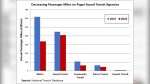 Puget Sound transit passenger-miles fell 31% from 2015 to 2024 despite a half-million-resident population increase.
 wpDiscuz