



Engineer Bob Ortblad claims the Interstate Bridge Replacement Program is misrepresenting the risk of the current I-5 bridges collapsing during an earthquake
Editor’s note: Opinions expressed in this letter to the editor are those of the author alone and do not reflect the editorial position of ClarkCountyToday.com
The Interstate Bridge Replacement Program (IBR) is misrepresenting the risk of the current I-5 bridges collapsing during an earthquake.

The IBR claims that liquefaction will cause the I-5 bridges to fail, similar to the Niigata Bridge in Japan, which had only nine 52-foot-long, widely spaced piles per pier. In contrast, the I-5 bridges have 100-foot-long, tightly spaced wood piles (90 per pier) that compact the soil, making them resistant to liquefaction.
A Japanese study has demonstrated that closely spaced wood piles enhance soil compaction and serve as a “fail-safe against liquefaction damage.” The IBR plans to use only six drilled shafts per pier, which will not effectively improve soil compaction. Additionally, the IBR’s bridge design may be less resilient to earthquakes than the current I-5 bridges. The IBR’s bridge trusses will be twice as long, twice as wide, fifty feet higher, and five times heavier. Its 120-foot piers will rest on only six drilled shafts (up to 250 feet long) in uncompacted soil.
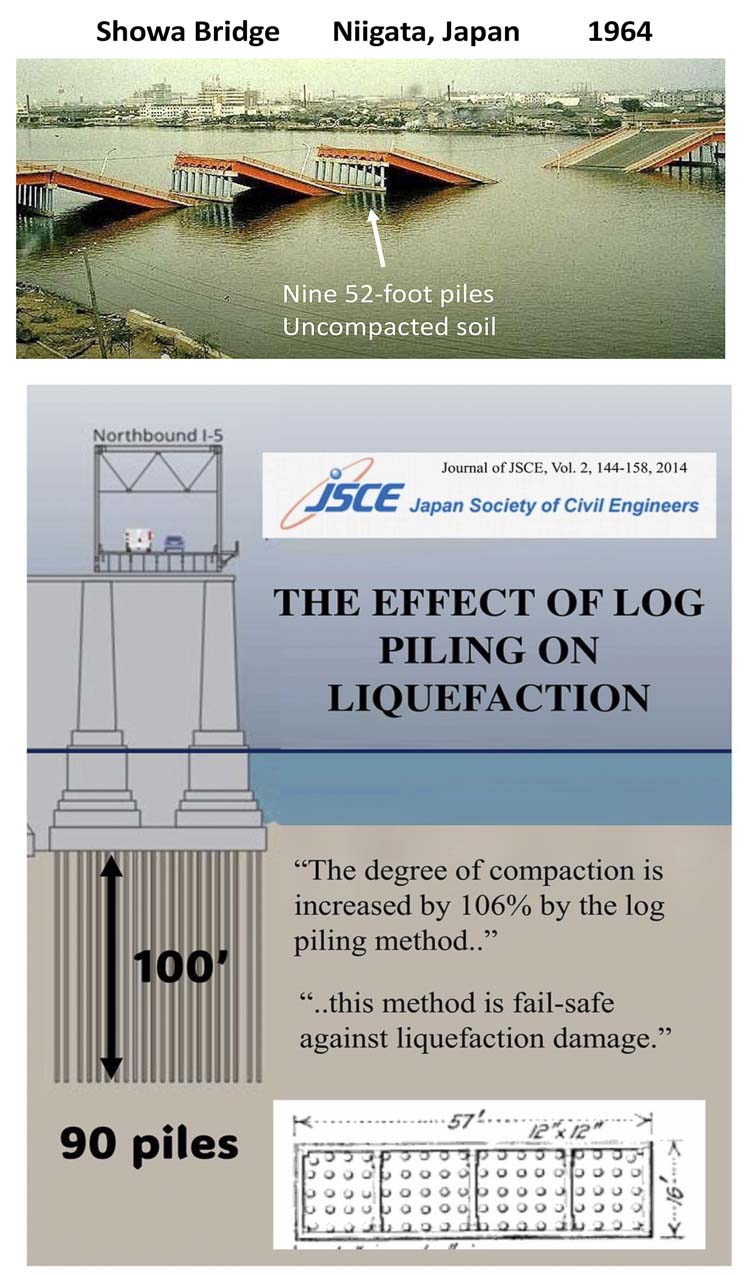
The increased weight and height of the IBR bridge, combined with its support on uncompacted soil, may make it less resilient than the current bridges during an earthquake. Resilience is defined as the capacity to withstand or quickly recover from damage. Consequently, repairing any earthquake-induced damage to the existing bridges would be much faster than repairing a significantly larger and heavier IBR bridge.
Bob Ortblad MSCE, MBA
Seattle
Also read:
- Washington’s studded tire deadline is March 31
 Drivers must remove studded tires by March 31 or face a $137 fine, with WSDOT urging early action due to busy service centers and no planned deadline extension.
 - VIDEO: WA diesel hits record $6.53, crushing truckers and school budgets
 With diesel nearing $6.53 per gallon in Washington, trucking businesses and school districts now confront sharply higher fuel expenses affecting budgets and workers.
 - Opinion: In plain sight – yielding to pedestrians
 Drivers often fail to see pedestrians due to inattentional blindness, which highlights the need for more focused awareness at intersections and stronger safety practices.
 - Expect delays on SR 14 in Vancouver for guardrail repairs Wednesday
 State Route 14 travelers in Vancouver should plan for morning delays as WSDOT will close two eastbound lanes for guardrail repairs, affecting mileposts 6.0 to 7.0.
 - Overnight closure planned on westbound SR 14 Camas Slough Bridge Tuesday
 WSDOT crews will close westbound SR 14 at Exit 14 in Camas to collect bridge deck samples and plan future repairs; detours will be in effect.
