


Editor’s note: Opinions expressed in this letter to the editor are those of the author alone and may not reflect the editorial position of ClarkCountyToday.com
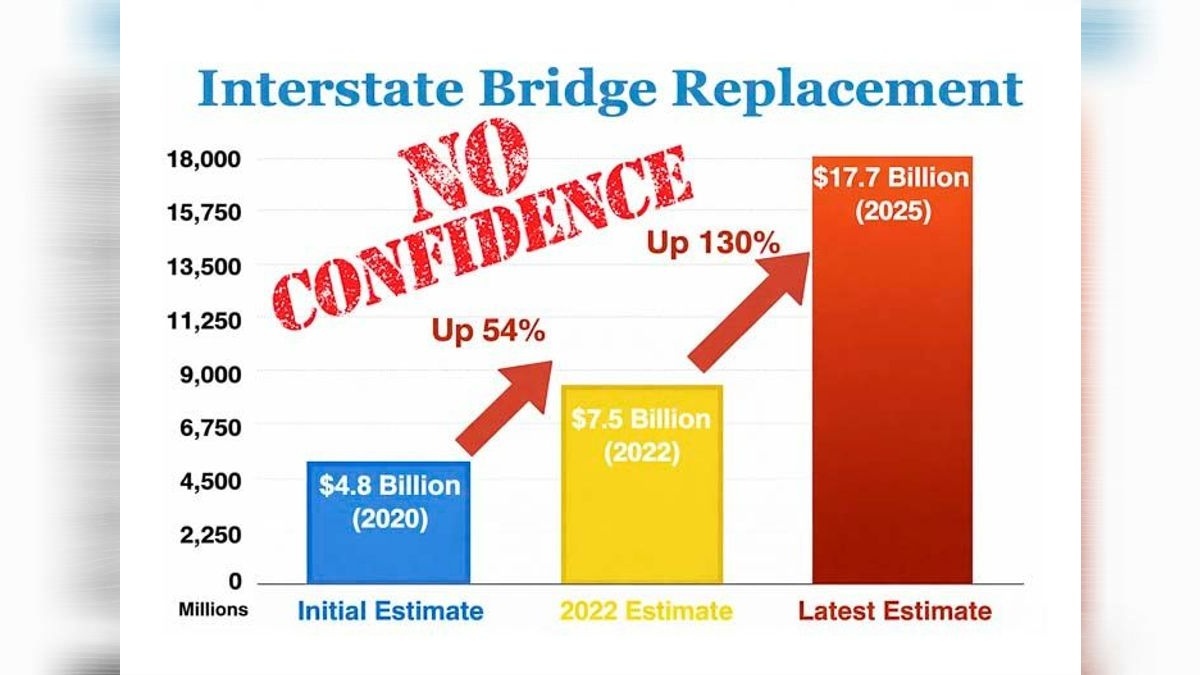
At the June 12 Joint Interim Committee meeting on the I-5 Bridge, 16 legislators from Washington and Oregon discussed the Interstate Bridge Replacement Program (IBR). IBR executives presented updates, including the huge cost increase, now estimated at $13.5-$15.2 billion. Both states are facing severe budget short-falls.

Douglas Tweet
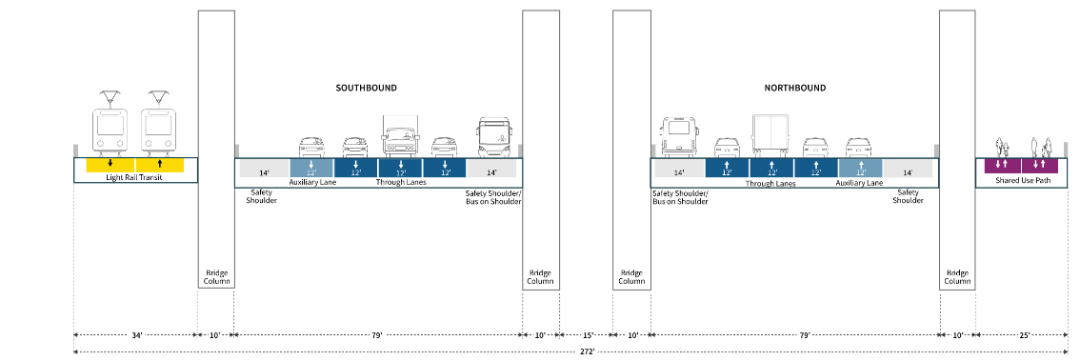
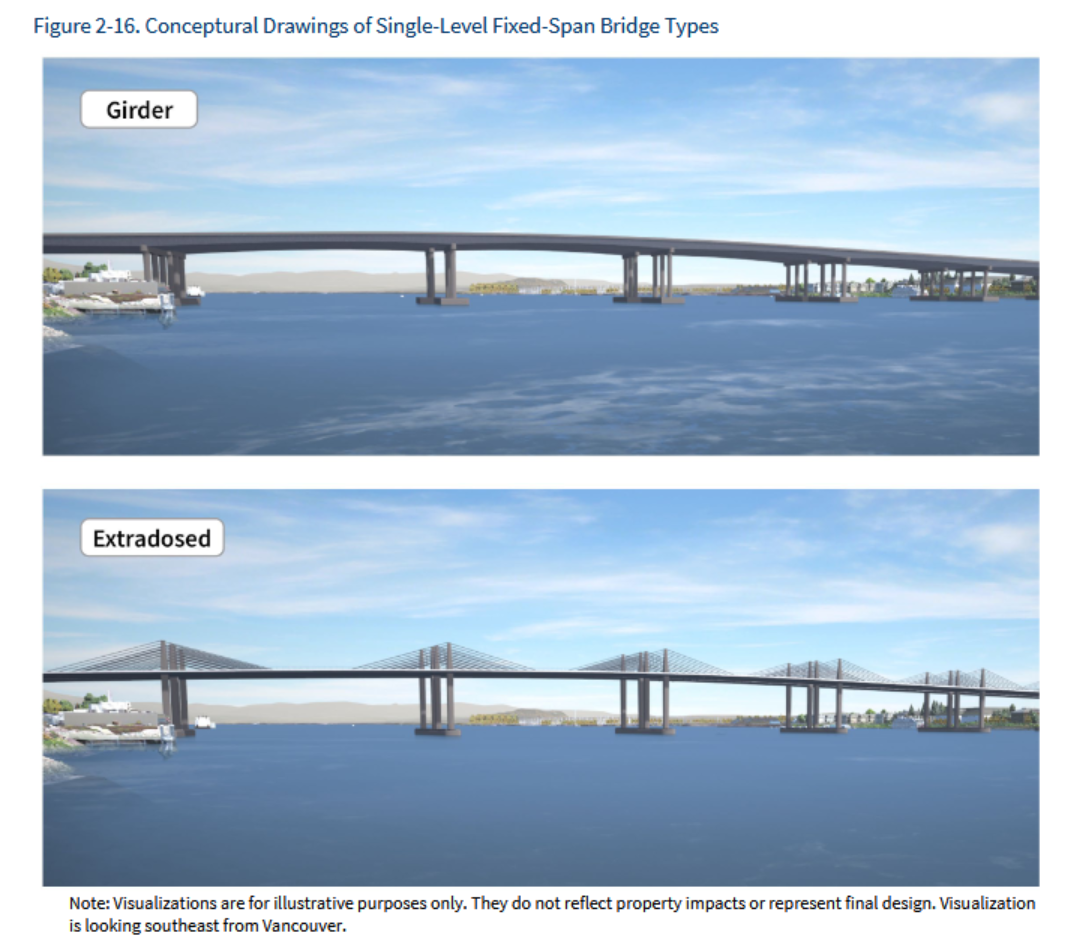
IBR’s recommended option includes light rail and one auxiliary lane in each direction. Two designs are being considered: “Girder” and “Extradosed,” as seen in these cross-section figures from p. 2-31 of FSEIS Chapter 2.
Figure 2-18: Girder Type

Figure 2-17: Extradosed Type
As reported by Washington Representative John Ley, legislators expressed concerns about building just one auxiliary lane, rather than two lanes. They were worried about congestion and freight.
Improving congestion, safety, and freight mobility are primary needs and purposes for replacing the I-5 Bridge.
A previous letter analyzed the effects on congestion of one vs two auxiliary lanes. Both were discussed in the IBR’s Final Supplementary Environmental Impact Statement (FSEIS), which clearly shows the superiority of the Two Auxiliary Lane design in their predictions for 2045.
- The Two Aux Lane design is better than One Aux Lane in every measure of congestion.
- The Two Aux Lane design shows dramatic improvement over 2019 for northbound, reducing congestion by 33%, travel time by 60%, and extent of congestion by over 90%.
- One Aux Lane is worse than 2019 conditions for all measures except northbound travel time and extent.
Significantly, IBR expects that Two Aux Lanes will be safer:
“This forecasted decrease in crashes would have more benefit to traffic safety compared to the one auxiliary lane design option…The two auxiliary lanes design option would reduce congestion, travel times, and crashes more than the one auxiliary lane design option.” FSEIS Appendix K, Table 2, pp. 2-6, 2-7.
And yet, IBR recommends the design with just One Auxiliary Lane in each direction.
When Legislators repeatedly questioned this decision, IBR executives mentioned money and space. They explained that the cost of adding a second aux lane in each direction is between $600 Million to $1 Billion. However, at the April 21, 2026 C-TRAN board meeting IBR representatives estimated that the light rail cost is $3.5 Billion, or 25% of the total project!
If light rail was canceled and 2 aux lanes each way were built instead, cost savings of $2.5+ Billion could be achieved. Bus ridership across the bridge today is half of what it was 20 years ago, and is very low. Light rail is unnecessary, and needs can be easily met with buses. Reducing congestion by adding a second aux lane will also help bus transit through the I-5 corridor and over the bridge.
As for space, per the FSEIS, light rail occupies ~34 feet of bridge width, whereas “The two Auxiliary lane design option would add approximately 8 feet to each bridge (i.e., 16 feet to the total width).” See figures above. The 25 ft wide pedestrian and bicycle path could also be narrowed to 12 ft total (10 ft is the standard shared path width). Just a few hundred pedestrians and bicyclists cross the bridge on a fair-weather day.
Space savings: -34 ft (remove light rail) – 13 ft (narrow “Shared” path) + 16 ft (add Auxiliary lanes) = -31 ft of reductions. Substantial capital cost savings would also be realized.
Another size and cost issue is the choice of bridge type: “Girder” (232 ft wide) vs “Extradosed” (272 ft wide). See figures above. The narrower Girder type could save significant costs with less environmental impact. The Extradosed bridge also includes structures and cables well above the bridge deck which could potentially impact flights from nearby Pearson airfield and PDX, especially in an emergency. See figure below.
By removing light rail, reducing the width of the “Shared Use” path, and building 2 auxiliary lanes in each direction, bridge width could be reduced by about 31 feet, and the total cost reduced by $2.5 Billion or more. Traffic congestion would be reduced substantially and safety improved.
Removing light rail would also eliminate $millions in annual Operations & Maintenance costs, an unnecessary ongoing burden on the people of both states.
Douglas Tweet, PhD
Camas

Comments
Loading comments…