



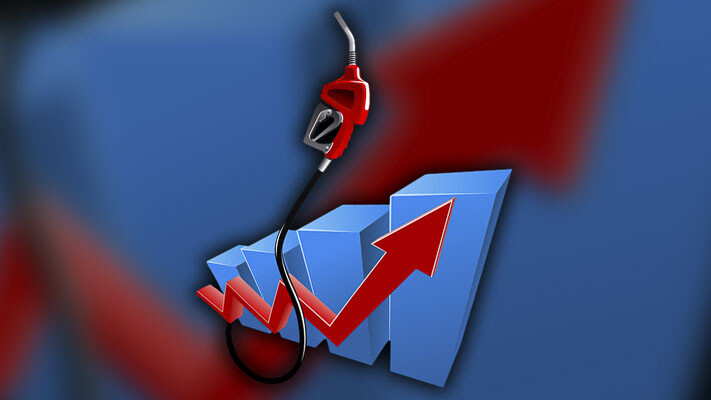
Todd Myers of the Washington Policy Center shares that, despite the sensitivity, neither the governor nor legislators have made any proposal to reduce the cost of CO2 allowances
Todd Myers
Washington Policy Center
The state held its special auction for CO2 allowances last week. When the results were announced, they indicated that higher gas prices may be coming.

As part of the state’s new tax on CO2 emissions, known as the Climate Commitment Act, organizations that emit CO2, like BP or Washington State University, must purchase permits for every metric ton (MT) of CO2 emitted by their operations or products. There are a limited number of permits available, so the price is set at an auction. Regular auctions for CO2 permits are held quarterly.
In May, the permit price was so high they triggered a special auction to make more allowances available in the near term. That auction was last week and the results offer warning signs about future prices.
At the special auction, a small number of permits were offered at two price levels: $51.90 and $66.68. The demand for them was enormous.
According to the Department of Ecology’s report, there were nearly 13 times as many bids for permits at the lower price than available credits. At the higher price, which is about 19 percent higher than the final price of $56.01 at the last auction, there were three times as many bids as permits available.
The combination of the limited number of allowances and the unusual fixed-price system makes it difficult to estimate the impact on gas prices. Averaging the prices based on the number of bids yields an average cost of about 43 cents per gallon. For the allowances costing $66.68 per MT of CO2, the price impact would be just under 53 cents per gallon.
The third regular quarterly auction will be held on August 30 and the demand for permits at the higher price indicates prices may continue to go up.
There were just over 1 million allowances offered at the special auction and the regular quarterly auction will offer about 8.6 million allowances, so we should be careful about extrapolating too directly from these results. However, there were bids in the special auction for about 8.4 million permits, which is nearly equivalent to the amount to be offered in the next regular auction.
Additionally, given the structure of the auction, it is difficult to know the actual price bidders would have been willing to pay. Some who bid at the $51.90 or even the $66.68 level might have been willing to pay more.
Whatever happens at the next auction, Washington residents are still paying much more to reduce CO2 emissions than California. In The Seattle Times, James Bushnell, an economics professor at the University of California, Davis noted, “it doesn’t make a lot of sense for customers in one state to pay outrageously more than anyone else to reduce the carbon emissions of just that one state.” Indeed.
He went on to note, “Although it’s politically very awkward to talk about higher fuel prices, from an environmental economics perspective, that’s kind of the point.” As we’ve noted many times, increasing the price of gasoline and other fossil fuels is the point of taxing CO2 despite the denials of Governor Inslee, activist organizations like Climate Solutions, staff at the Department of Ecology, and other legislators.
One thing noticeably absent after this auction were statements lauding the large amount of money that would be going into government coffers. After the previous auctions, some legislators celebrated the taxes generated by the auction. There were no such statements this time, indicating the cost of the program has become a sensitive issue.
Despite the sensitivity, neither the governor nor legislators have made any proposal to reduce the cost of CO2 allowances. With costs continuing to increase and the number of CO2 allowances declining rapidly next year, it is likely that Washington’s energy costs will continue to rise rapidly this year and next.
Todd Myers is the director of the Center for the Environment at the Washington Policy Center.

Also read:
- Opinion: Tax day is painful enough without Washington adding its own
 Washington’s new 9.9% income tax mirrors federal pattern: start narrow, expand to hit everyone within years.
 - POLL: What do you believe is the biggest reason school districts are facing budget shortfalls?
 Districts across Washington warn of budget gaps as debate grows over rising costs versus inadequate state funding.
 - Opinion: The high cost of hiding – Why IBR’s delayed revenue study is a $15 billion warning sign
 IBR delays critical toll revenue analysis until June 2027, hiding financial details until after project approval.
 - Opinion: The high cost of hiding – Why IBR’s delayed revenue study is a $15 billion warning sign
 IBR delays critical toll revenue analysis until June 2027, hiding financial details until after project approval.
 - Opinion: Washington fails the test for affordability
 Mountain States Policy Center analysis reveals Washington ranks 5th most expensive state as residents migrate to Idaho and Texas.
 wpDiscuz
