



The warning comes as the Washington state government has spent more in recent budgets than it ever has
TJ Martinell
The Center Square Washington
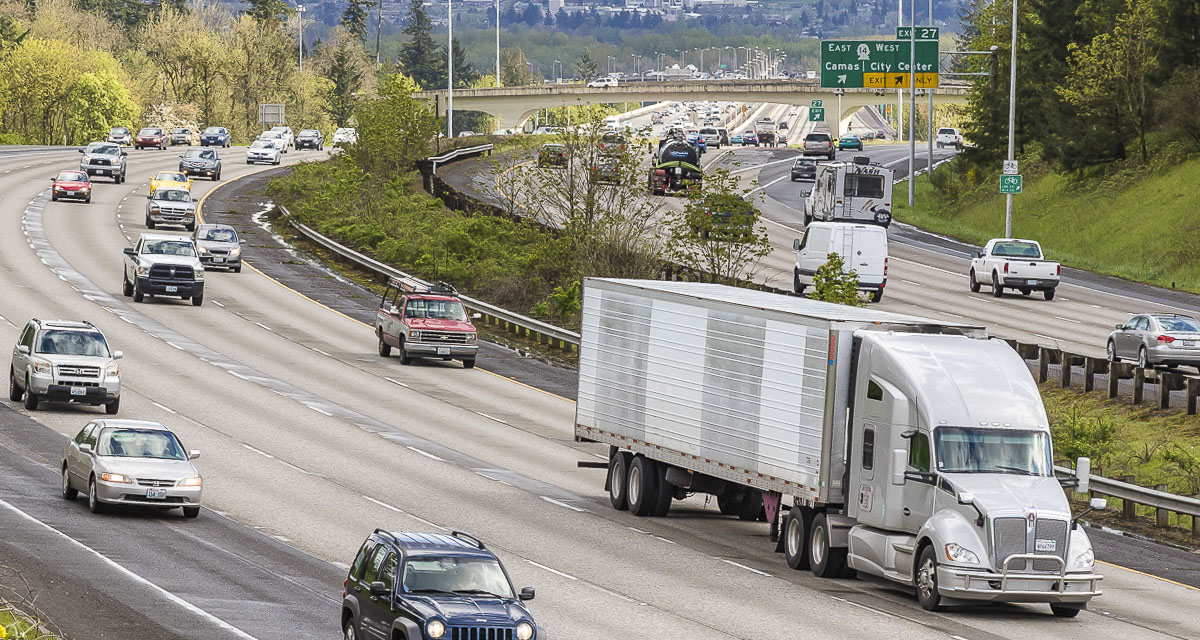
The Washington state highway system is in “early stages of failure” due to a lack of maintenance and preservation for not only the highway infrastructure itself, but also regarding the equipment and facilities that need to be replaced or upgraded, according to a recent presentation by the Washington State Department of Transportation.
The warning comes as the Washington state government has spent more in recent budgets than it ever has, and WSDOT officials have previously said the issue is not due to lack of funding but how that funding is prioritized.
Addressing the Senate Transportation Committee at its Friday meeting, WSDOT Deputy Director Capital Program Development and Management Tim Rydholm told members that “we’ve got the state highway system in early stages of failure,” which is “pushing our program to be reactive and cost effective instead of proactive and cost efficient.”
The problems facing the state agency are multifold. One is that many of its maintenance responsibilities aren’t receiving the funding levels needed to keep them in good repair. According to a presentation by WSDOT State Maintenance Engineer Pasco Bakotich III, 17 out of their 30 maintenance activities were rated at a “C” grade or below.
“Yes, it’s passing, but it’s maintaining everything,” he said. “The reality is, we’re not funded to achieve that state of good repair. The bottom line is with the volume of system additions and the volume of additional things have been added to the highway system, we can’t keep up with it. We don’t have all the resources.”
Another dilemma facing WSDOT is its equipment, which ranges from snow plows to surveying tools and, in the future, electric vehicles. According to Bakotich, 29% of their equipment has passed their end of useful life, while 35% is considered to be in “poor condition.”
There’s also the facilities and maintenance sheds WSDOT uses to store their vehicles and equipment. Bakotich said that 40% of the agency’s buildings are 51 years or older.
“So they’re obsolete functionally; we make it work,” he said. “There’s lots of things that still need to be fixed, but we don’t have the funds to fix all the things.”
However, he said that within the next 20 years 94% of their buildings will be 50 years old. He added that at a certain point “when things start getting that old, you can’t just remodel them. Most local business building codes have a threshold … and then that triggers all modernization and all current codes and all things in these facilities.”
According to the WSDOT presentation, the highway system would require an additional $1.5 billion annually to bring it into a “State of Good Repair.” Meanwhile, the presentation notes that highway preservation funding has fallen compared to 2001, when adjusted for inflation.
This report was first published by The Center Square Washington.
Also read:
- Opinion: The high cost of hiding – Why IBR’s delayed revenue study is a $15 billion warning sign
 IBR delays critical toll revenue analysis until June 2027, hiding financial details until after project approval.
 - Opinion: The high cost of hiding – Why IBR’s delayed revenue study is a $15 billion warning sign
 IBR delays critical toll revenue analysis until June 2027, hiding financial details until after project approval.
 - Expect delays on I-5 in Clark County for guardrail repairs April 16
 WSDOT crews will close the left lane of southbound I-5 between Exit 11 and Northeast 179th Street from 10 a.m. to 2 p.m.
 - Increasing interest in motorcycle riding means increasing risks for inexperienced riders
 WSP launches early safety campaign as fatality rates for motorcyclists reach 27 times higher than car occupants.
 - Opinion: Everything about TriMet screams ‘poor management’
 Rep. John Ley examines TriMet’s $850 million operating loss and 75% cost increase for MAX light rail service.
