


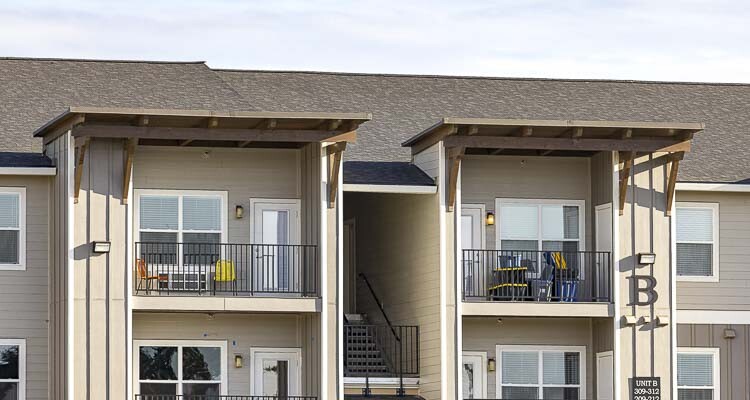
While most cities and counties have opted not to add additional regulations, some local governments have enacted much stricter restrictions on landlords
TJ Martinell
The Center Square Washington
With Washington state currently ranked sixth in the nation for highest monthly rent rates, state legislators are looking at local ordinances cities and counties have enacted to potentially implement, or avoid, at the state level.
Currently, the state maintains certain minimum requirements for tenant protections, such as requiring landlords to provide 60 days notice of a rent increase, that those increases cannot occur during the terms of an existing rental agreement, and allowing tenants to make monthly installment payments for deposits and last month’s rent.
Recently, the Legislature added other mandates on landlords, including:
- Providing written documentation of any money they keep from a security deposit.
- Returning security deposit to renter within 30 days after moving out.
- Restricting reasons to not renew leases to certain scenarios
While most cities and counties have opted not to add additional regulations, some local governments have enacted much stricter restrictions on landlords. The city of Seattle requires landlords to give a rental unit to the first qualified applicant to apply, while also allowing tenants to add roommates who are not required to sign a lease; the roommate can only be screened and removed by the landlord if they are not family members, though the city broadly defines what constitutes “immediate family.” The city also prohibits landlords from denying a lease to an applicant due to criminal history.
Oskar Rey is a legal consultant for the Municipal Research and Services Center. He told the House Housing Committee at Thursday’s meeting that Seattle “is, and has been, I think, kind of on the forefront of adopting additional tenant protections that may not be followed in other parts of the state.”
Another major Washington city to enact additional rental regulation is Tacoma, which allows tenants to pay deposits, fees, and last month’s rent in three monthly installments if the lease is three months or more. The city council recently updated its Rental Housing Code that puts mandates on landlords that include:
- Prohibiting evictions of families with students during the school year, or in or between the months of November-April.
- Financial assistance to relocate a tenant if the rent increase is over a certain amount and the tenant chooses not to renew.
- Prohibiting rent increases if the landlord is in violation of tenant protection laws related to health and safety.
- A cap on fee amounts.
However, Rey noted to the Housing Committee that the state constitution’s protection of legal contracts ultimately restricts the extent to which government can regulate lease agreements.
“We’re talking about an area where there is a contractual relationship between the landlord and the tenant and I think there might be certain types of local provisions that could run afoul of that,” he said. “The ability to regulate in this area is based on a local government’s police power. A local government would need to be able to establish a public health, safety or welfare basis for their regulations and show that it’s not a violation of the contracts clause, that it’s a reasonable regulation in light of the existing contractual relationships that might be out there.”
Tacoma voters will be able to affirm or reject the update to the city’s Rental Housing Code Nov. 7 via Initiative 1.
This report was first published by The Center Square Washington.
Also read:
- Opinion: Were Republican voters just sleeping during the August primary election?
 CCRP Chairman Matt Bumala says 60% of primary no-shows in the 17th and 18th districts were Republicans.
 - High school football: New coach prepares for long-term success at Prairie High School
 James Young-Lewis, a Clark County native who graduated from Evergreen in 2009, became Prairie’s head coach in May after working as an assistant coach across various programs since 2015, joining Prairie’s staff in 2024.
 - Cost to battle 20 wildfires in WA has topped $200M
 Twenty wildfires have cost Washington $207M in one month, more than two-thirds of what DNR spent all last fiscal year.
 - Opinion: WA Cares’ launch showcased care WA Cares did not provide
 Gov. Ferguson showcased a caregiving arrangement at the WA Cares launch that the program had not paid for a single day of.
 - Former State Rep. Liz Pike provides update on husband Neil Cahoon
 Neil Cahoon, a Camas resident, has undergone multiple surgeries including five on Aug. 15 after the Aug. 10 crash near La Center’s Daybreak Airport.
 - Opinion: Portland’s War on Cars Part 4 – A smarter automobile strategy to end gridlock
 O’Toole argues fuel wasted in Portland-area congestion has sextupled since 1982, generating 250,000 tons of extra greenhouse gases annually.
 - $1,000 first prize for Camas Plein Air Art Event honoring Marquita Call on Sept. 26
 Plein air artists compete Sept. 26 in Camas for $1,000 first prize honoring gallery founder Marquita Call.